Tuesday, November 09, 2010

Pyramids (Discworld)


By Terry Pratchett

Teppic is the son of the Pharaoh, or rather the Discworld's version of a pharaoh. His father is the king of Djelibeybi, a narrow land stretched along the two banks of a desert river. And like a pharaoh, he is considered to be a god, responsible for causing the sun to rise and the crops to grow.
Teppic was sent off as a lad to Ankh-Morpork to Assassin's school and just as he was all set to start his new career, his father died and now Teppic has to go home to run the kingdom. But being king isn't quite what he thought it would be as he is completely under the thumb of the high priest Dios and finds himself pressured to do only what the high priest approves. Succumbing to the pressure, and even though the kingdom is bankrupt, Teppic orders a pyramid to be built as a tomb for his father. This will be the biggest pyramid ever built. What nobody understands, though, since pyramids influence time, this huge new pyramid will have catastrophic effects on the kingdom. And Teppic finds himself on the run from his own high priest who finally tires of Teppic's resistance and sets out to kill him. And the only thing that maybe able to set things right is a camel named You Bastard.

This was a pretty funny and interesting book. Teppic isn't much of an assassin nor is he much of a king and the massive new pyramid certainly turns things upside down in Djelibeybi as the dead come back to life and the old gods become real. My favorite character in the book was Teppic's dead father, who didn't want to be buried in a pyramid and who doesn't particularly want to live forever either. He just hangs around watching the embalmers dismember his body, plucking his eyes out of his head and his brains out through his nostrils and stuffing his interior with sawdust. That is probably one of the funniest parts of the book. One of the other funniest parts is when the priests are doing the play-by-play as various suddenly real gods vie for control of the sun. Absolutely priceless.

A Short History of Nearly Everything


By Bill Bryson

This book isn't about your classic history, like when Columbus discovered America or the signing of the Magna Carta or the fall of the Roman Empire. The history it delves into is scientific history and it starts with physics and chemistry, then geology, and evolution. Bryson brings forward the unsung and overlooked heroes of science, people who made massive contributions to our collective knowledge that were somehow forgotten for the most part in the course of time. His explanations of science and scientific discoveries are very readable and clear. He cuts out the technical jargon and lays out theories in a straightforward, uncomplicated way.

Bryson starts off with the origins of the universe and physics and I have to admit I found it pretty dry going. I put the book down for several weeks as reading it was making me sleepy. But eventually, I was able to get through the physics and chemistry and into geology and the history of life on our planet and I found that a lot more interesting. I can't say that a lot of the information stuck with me, but my overall impression of its contents are: human beings are damn lucky to exist at all and that we are walking a tight rope, teetering on the brink of disaster. His book is a list of all the terrible things that have happened, can happen and may likely happen in the near future. Let me see if I can remember some of it. Solar rays, if the sun has a really big solar flare, if it is big enough it will destroy the Earth's protective magnetic fields and fry all life on the planet. Or a giant meteor could strike the Earth and fry all life on the planet. Or a huge volcano could blow up and fry all life on the planet. Apparently Yellowstone National Park is just a huge volcano that erupts every 600,000 years and, guess what? It's been 600,000 years since its last eruption. And when it does blow, not only will it wipe out the whole Midwestern United States, but the ash cloud will plunge the world into cold and darkness for years resulting in crop failures and starvation for every living thing on the planet. Or the Earth's magnetic field could reverse and mess up the ocean currents which moderate climate with catastrophic results. Also, the Earth is about due for another Ice Age with glaciers creeping across most of Europe and North America. Or we could all die from some horrible new pandemic, some innocuous virus that suddenly mutates into a killer germ. Life on this old planet is a history of disasters and mass extinctions. But the good news is that you and I have 60 percent of the same genes as a banana. I like that.

Monday, November 01, 2010

You Suck


By Christopher Moore

The saga of Jody and Tommy continues. In the previous book, Tommy had Jody and the evil vampire who turned Jody made into bronze statues. For some reason, he made ear holes in the bronze Jody and she turned into mist and got free and promptly attacked Tommy so now, in this story, he is also a vampire.
So Jody tries to teach Tommy the ins and outs of being a vampire. They acquire a minion, a goofy teenage girl named Allison but who calls herself Abby Normal. Meantime, the guys at the grocery store known as the Animals have spent all the money they got in the last novel on an aging prostitute called Blue that they picked up in Las Vegas. She is called Blue because she dyed herself blue. The animals are completely overwhelmed by her charms and when she finds out that ex-Animal Tommy is a vampire, she demands the Animals capture and deliver Tommy to her as she wants to be turned. Tommy is captured and tied up and the hooker has her way with him and is soon stalking the streets of San Francisco and her first victims are the hapless Animals.
Unfortunately for the citizens of San Francisco, the evil bronzed vampire is released when someone takes a shot at the statue and puts a bullet hole in it and he again takes up his evil murderous ways and again attracting the attention of the two police detectives from the first story. The evil vampire wants Jody and he also wants to destroy all the new vampires on the scene, including Jody's lover, Tommy. Meanwhile the minion, Abby, meets that Asian scientist from the first story and together they kick a lot of vampire ass.

This was a very funny story, from beginning to end. Abby is one of the best parts of the book, her journal entries are hilarious. Tommy's struggles to adapt to vampirehood are also very funny and he and Jody take up with an alcoholic who carries a placard that reads, "I'm homeless and I have a huge cat." Which he does, the cat is enormous and the cat becomes Tommy's first victim. He and Jody borrow the cat from the guy and Tommy tries to drink its blood but gets fur all in his mouth so they shave the huge cat and then Tommy drinks some of its blood and they dress in it a red sweater and give it back to the guy. It's just a really funny book and I enjoyed it a lot and I am looking forward to reading the third installemnt in the series, Bite Me.

Monday, October 25, 2010

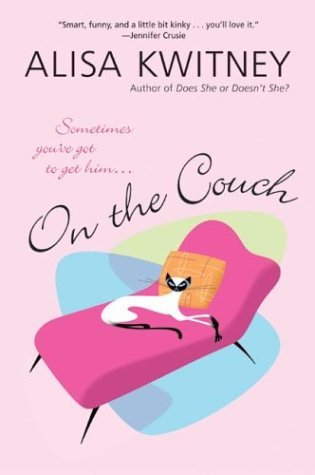
On the Couch


By Alisa Kwitney

Marlowe is a psychologist in New York City. One night she receives a phone call from a stranger who later is found dead. It was a wrong number but the policeman investigating the death doesn't know that. He thinks that Marlowe is a call girl and that she may have been involved in the man's untimely death. He contacts Marlowe and she quickly realizes he believes her to be a call girl and, because she finds him rather appealing and also because her life, at that point, is rather barren and dull, she pretends she is a call girl, not realizing that the policeman, Joe, thinks she may have had a hand in the victim's death. The attraction she feels towards Joe is reciprocated and involves into a real relationship. Joe, however, is still yearning for his ex-wife and, combined with Marlowe's pretending to be a prostitute, this promising relationship may end up on the rocks.

I enjoyed this story a lot, mainly because I found it to be very amusing and not the usual "chick lit" story. Yeah, the premise is kind of goofy and unlikely, but the humor made up for that, as far as I am concerned. It was a fun and lighthearted read.

Mort


By Terry Pratchett

Mort is an awkward young man who doesn't seem to fit into the small rural community where he lives. His dad has tried to teach him farming but it didn't seem a good choice for Mort. So his dad takes him to an apprentice fair in a nearby town. At the fair, employers come looking for lads to hire as apprentices. Mort and his dad wait at the fair all day and evening but no one wants to hire Mort. Finally, at midnight, when Mort is the last boy left, someone finally shows up who wants to hire Mort -- Death.
Death has been performing his duties for forever and he is frankly getting a little tired of it. So he has gotten the bright idea of taking on an apprentice, training him in all he needs to know, and letting the apprentice take over his duties so Death can have some time off.
Problem is, Mort is human, and although he learns all the tricks of the trade, his heart gets in the way. Death is off trying to have fun and Mort screws up big time when he prevents an assassin from killing a beautiful young princess. Now the march of history is totally bollixed up and when Death finds out, Mort will be up that proverbial creek.

This was a pretty interesting book as Mort grows into the roll of Death and Death turns his hand to being a short order cook in an inn in Ankh-Morpork. The best parts though, were learning the back story about Albert, Death's decrepit servant and then Albert's brief return to the land of the living. While not as funny as some of Pratchett's stories, this was still a pretty good read.

Monday, October 18, 2010

Songmaster


By Orson Scott Card

This is the story of Ansset, a Songbird, one of the most coveted singers in the empire. Trained since a tiny child, Ansset doesn't sing just any old song. He sings what people feel, what he himself feels and his songs have the power to soothe, influence, instruct and lead.
Not just anyone can have a Songbird. The Songmaster of the Songhouse judges who is worthy to have a Songbird. (It is also very expensive to have a Songbird.) A person can only have a Songbird if they have the ability to truly appreciate it. Traditionally this meant that Songbirds could never go to someone who had killed, who was greedy or a glutton, to a person who loved power. So when the terrible, ruthless conqueror Mikal showed up at Songhouse demanding a Songbird, the Songmaster naturally assumed Mikal did not have the qualities required to possess a Songbird. But amazingly Mikal did have the required appreciation and so the Songmaster promised to send him a Songbird as soon as they found a child best suited to sing for Mikal. They warned him it might take a while to find the perfect candidate. It ended up taking more than seventy years until Ansset, the beautiful young boy singer who was exactly what Mikal needed.
So after spending his early childhood training at songhouse, Ansset is sent to Earth to live with Mikal in the imperial palace. He sings for Mikal and gradually a strong trust and affection is built between the two, as Ansset comes to veiw Mikal as his foster father. But uneasy lies the head that wears the crown and Mikal is very old and there is much plotting going on as factions struggle to gain control of Mikal's throne. And little Ansset is smack in the middle of it all.

This book was not to my taste. Ansset was too perfect for me. I found him rather repulsive and felt the whole book reaked of pedophilia. Ansset was just too precious for words and not in a good way. Plus, I don't really care for books about politics and all the dynastic stuff. Still, it was an interesting story, even if I found the characters all pretty unsympathetic. So I will rate it a fair read.

Murder Must Wait


By Arthur W. Upfield

Mitford, a small town in Australia, has a serious problem. Four baby boys have been snatched. No ransom has been demanded and the local police are at a loss. Now a fifth baby boy has been stolen but this time the baby's mother has been killed. Fortunately for the local cops, Inspector Napoleon Bonaparte has been sent to oversee the investigation of the missing babies. Using his canny wits, his uncanny tracking ability and with the help of a keen young policewoman, Bony will unravel this strange mystery.

This was a pretty interesting book. Reading about Australia of the 1950s and about Upfield's half Aboriginal detective, Bony, was very interesting. I have only read a couple of these mysteries, as they are hard to find anymore, but I have always enjoyed reading them, this one included.

Sunday, October 17, 2010

Fevre Dream


By George R. R. Martin

Abner Marsh is a riverboat captain in the middle 19th century and he has had some really bad luck. His riverboat company is down to one small vessel when the rest of his fleet was destroyed in an ice jam. So when wealthy young Joshua York offers to become his partner and build him a beautiful new boat, the boat of Abner's dreams, Abner thinks maybe things are finally turning in his favor. But what he doesn't know is that his new partner, who only comes out at night, is a vampire. And soon Abner finds himself involved in a nightmare that will plunge him into financial ruin and maybe even cost him his life.

This was an OK book. The hero of the story turns out to be ugly, fat, middle-aged Abner Marsh, an unlikely hero indeed. The story is mainly about the conflict between Joshua, a forward thinking young vampire who wants to lead his fellows away from preying on humans, and Damon Julian, an ancient, ferocious vampire who is stuck in the old, bloody way and who will not change, with Abner there to help Joshua and to back him up as best he can. I thought it was a kind of depressing story, grim and gruesome, with old Julian having the upper hand throughout most of it and poor Abner losing everything that meant so much to him. Especially at the end, when Abner finds his beautiful dream riverboat, beached in a backwater, rotted and decaying, rusty and falling apart and beyond repair. Just a dark, sad story.

Thursday, October 07, 2010

Switcheroo


By Olivia Goldsmith

Sylvie knew that her husband was spending a lot more time at work. What she didn't know, yet, was that it wasn't work that was detaining Bob, it was a younger version of herself. After her suspicions became aroused when neighbors reported seeing her and Bob together in places where she knew she had not been, a little snooping in Bob's desk revealed several incriminating receipts, receipts she was able to use to track down her rival. A rival that looked enough like Sylvie herself that it was like looking at herself only ten years younger and several pounds lighter.
This younger woman, Marla, was getting all the affection from Bob that Sylvie herself craved. And although her first impulse was to leave Bob, upon reflection and after meeting Marla and liking her, Sylvie came up with an improbable scheme. With the help of a plastic surgeon, a hair dresser, and several weeks of diet and exercise, Sylvie would switch places with Marla. She would become Marla and be Bob's lover and Marla would gain some weight, die her hair and become Sylvie and get to be the wife that she yearned to be. And maybe Bob would learn something in the process too.

This was a silly story and not in a good way. The idea that a few pounds, a face lift and a new hairdo would fool not only her husband but her two grown kids is just silly. The first time she and Bob had sex wouldn't he immediately tumble to the fact that he was boinking his old wife and not his young mistress? I just couldn't buy the whole premise and that spoiled the story for me. Also, Marla discovers that marriage to Bob isn't quite what she thought it would be in that all his spare time is spent with his mistress, who is really Sylvie. Like that would really matter to a woman who sees nothing wrong with dating married men because they are proven to be the marrying kind. Bob is her sugar daddy, leasing her a condo and a BMW, and buying her jewelry and taking her on expensive vacations. Once she got into that big, fancy house of his you'd have to blast her out with dynamite. I just didn't find the story at all believable, especially the unlikely happy ending. Forgive and forget? No way!

Wednesday, October 06, 2010

Blind Submission


By Debra Ginsberg

Angel Robinson loves books. So a job at a literary agency would be the dream job. Except for one thing: her boss, Lucy Fiamma. Lucy is demanding, unreasonable, self-centered and impossible. Angel finds herself swamped with tons of work, surrounded by hostile coworkers, trying to satisfy her difficult new boss and explain to her boyfriend why having his girlfriend working for a famous literary agent does not translate into getting his novel accepted by the agency.
But it turns out Angel has a knack for spotting potential new books and for helping the authors fine tune their books to make them more saleable. Lucy gives her a huge raise and takes her on a trip to New York to meet with some very important publishers.
But it isn't all good news. Angel's boyfriend is upset that his book was rejected by Lucy and he blames Angel. And Angel has received an anonymous manuscript for a book that seems to be based on Angel's own life. More and more chapters are sent to the agency and Angel is afraid that someone close to her is writing a rather hateful book in which the character based on Angel is conniving, selfish and homicidal. Who would do such a mean thing? And why?

Reading this book was kind of like reading The Devil Wears Prada again. Angel's boss Lucy is very similar to the boss in The Devil Wears Prada, unreasonable, demanding, ambitious & successful. The stuff about working in a literary agency was interesting. But, as I got further into the book, it seemed to be dragging on too long and I just wanted it to be over.

Tuesday, October 05, 2010

Shades of Grey: The Road to High Saffron


By Jasper Fforde

Eddie Russet is an average young man with high ideals. As he comes to find out, high ideals won't get you anywhere in his world. What his society values above all is conformity. What it doesn't want is someone like Eddie with his impertinent questions, his new ideas on how to make things better and his refusal to look the other way.
In Eddie's world, social status is defined by color. Not by the color of one's skin. But by the color you can see. Everyone in Eddie's world is colorblind. People of Eddie's bloodline can see shades of red, to varying degrees. Other groups perceive violet, blue, green, yellow, or orange. No one sees the full spectrum and at the bottom socially are the Greys, who see no color at all. To them the world is just shades of grey.
Which makes for a pretty drab world. Except for the work of National Color. National Color pipes artificial dies of the brightest hues to towns and villages across the land and these dies are used to color the grass, the flowers, whatever and these artificial colors can be seen by all the citizens, even the Greys.
Not only are the people of this world unable to see the full spectrum of visible color, they are very susceptible to the artificial colors created by National Color, which act on them like a narcotic and like medication. Eddie's father is a Swatchman, a kind of physician. He carries a pallet of swatches of color that he uses to treat his patients simply by placing the swatch in the person's line of sight. And if the patient is suffering from a fatal disease, he can view "Lincoln" which is an intense shade of green that induces pleasant hallucinations and eases pain as the person is dying. Naturally, there is a black market in swatches for people using the colors just to get high.
Eddie gets in trouble with the authorities for playing a prank and is sent to a village on the outskirts of society to do a chair census, to count the number of chairs in the village. Going along with Eddie is his dad the Swatchman. The village's resident swatchman has died under suspicious circumstances and Eddie's dad is to fill in until a new swatchman can be found.
Since class is based on color perception, the rule for society is to marry to improve your children's color vision. Reds are only one step up from Grey, and Eddie's family, the Russets, are pretty low in Red. So Eddie has set his sights on a young woman of the Oxblood family, who not only are higher in the social scale but who also own a string factory and are very well off. The Oxblood girl has other suitors and Eddie is sorry to have to leave town and loose his advantage to the other guys.
But while Eddie and his dad are doing some sightseeing, they stumble across a crime scene that may involve black market swatches. And Eddie meets a angry young Grey girl named Jane. Jane knows a lot more about the true state of things than poor, naive Eddie does and as Eddie gets to know Jane better, he finds out that his society is not quite an innocent and benign as he has been brought up to believe.

Eddie lives in a strange world, a world where lightning strikes are frequent and people have to be on the look out for killer swans. Spoons are good as gold. People get high by looking at swatches of color. Most people die of the Mildew, which is a kind of fungus infection that kills within a few hours of exposure. Everything and everyone is tightly controlled, even to the kind of clothes worn in various situations. Being different gets a person a trip to Reboot and no one ever comes back from Reboot. Their society lives on the remains of the highly advanced society that came before, a society so technologically advanced that the roads they created repair themselves.
I found this wonderfully complex new world of Jasper Fforde's simply fascinating. And much more accessible than his Thursday Next series or the Nursery Crime series. Eddie is an innocent who stumbles on the grim truth about Reboot and National Color and even about his own father's profession of Swatchman. It's a strange world, but it works. And I really enjoyed reading about it. Apparently there are two more in the works, Painting by Numbers and The Gordini Protocols. Looking forward very much to reading them when they are published.

Sunday, September 26, 2010

Mallory's Oracle


By Carol O'Connell

Kathy Mallory was a street kid who was adopted by a compassionate policeman and his wife. They did their best to instill values into the girl but she never fully recovered from the hard life of her early years. Yet, despite her criminal tendencies, Mallory chose a career in law enforcement. Due to her excellence with computers and hacking, she worked behind the scenes, she didn't go on patrol or on investigations. But when her adoptive father is murdered while he is investigating a series of killings, Mallory sets out to take over her father's investigation and track down his killer. She has been given compassionate leave from her work for the police force so her investigation is done without police authorization or approval. She teams up with a friend of her father's, Charles Butler, and together they try to understand how an experienced cop like her father could let a suspect get the best of him. Their investigation is oddly tangled up in the building where Charles lives and the ring of rich elderly women who have been and are the potential victims of a serial killer. Also involved is psychic, an insider-trading scheme, and an elderly cousin of Charles' who seems harmless but who is hiding an treacherous heart. Danger abounds but Mallory believes her criminal instincts and her intellectual prowess will keep her from the same fate that overtook her father. However, her inexperience just may be her Achilles heel.

In this story, Mallory is portrayed as cold, emotionless and duplicitous. She doesn't weep for her murdered father. It makes it kind of hard to really identify with the main character. The plot has lots of red herrings, what with the insider trading and the vicious psychic, Charles' weird relatives, the odd tenants of the apartment building, and the wealthy victims' heirs. It is so convoluted it was hard for me to follow what was going on, just too much to keep track of. Also, so many of the characters in this story are strange, twisted people, including the main character, Mallory. It was like visiting a side show at the carnival, sordid and distasteful. It was a weird story and I can't say that I really enjoyed reading it.

The Far Shore of Time


By Frederik Pohl

Book 3 of the Eschaton Sequence

In the conclusion of the trilogy, Dan finds himself captive once again, but this time he is being held by the Horch, one of the few species that have been able to resist the Scarecrows, also known as the Beloved Leaders. His Horch captors subject him to rigorous interrogations similar to what he endured as a prisoner of the Scarecrows. But when he has been wrung dry of all he knows he is released back onto the prison planet where he had been held by the Scarecrows and put under the care of a small community of freed Docs, one of the Scarecrow enslaved races. Also on the planet is a group of freed Horch who have lived there as captives for generations. Dan develops a good relationship with one of these Horch, Beert, and it is through Beert that Dan, Beert, one of the Docs and another alien end up on a transit station located on the edge of the universe. The station has been liberated by the Horch and from the station Dan, the Doc & Beert are able to get transferred to a transit portal inside a Scarecrow submarine off the shores of New York.
Dan, the Doc, Beert and a couple of Horch robots are able to capture the sub. Dan then turns the sub over to the authorities but finds himself (and his alien allies) once again retained for interrogation. At least this time he isn't tortured. And the food is marginally better. He learns that Earth is aware of the threat posed by the Scarecrows who have promised to destroy the Earth if the people of Earth do not surrender. Dan tells them that the Scarecrows have the power to send an asteroid crashing into the Earth or that they could cause our sun to go nova. But he is reassured that the governments of Earth are on top of it and have taken steps to protect the Earth from asteroid strikes and that our sun is not the type that can go nova. But Dan completely forgets to inform them of the third weapon in the Scarecrows' arsenal: methane liberated from the ocean depths which will blanket the Earth in a cloud of poison gas.

This was a good, imaginative story. The Horch, who should be our allies against the Scarecrows, are pretty intimidating and implacable. It isn't until Dan meets the more backward Horch who have been held captive for such a long time on the prison planet that he is able to finally make a connection with a Horch. The Horch are not appealing to look at, but Pohl manages to make them interesting and somewhat sympathetic, especially the one who becomes Dan friend and who gives up everything to help Dan get back home.
I enjoyed this book a lot, it's a lively and fascinating story with lots of intriguing aliens.

Wednesday, September 22, 2010

Witches Abroad


By Terry Pratchett

This is Discworld, which travels through space on the back of four elephants which themselves stand on the shell of Great A'Tuin, the sky turtle...Discworld exists right on the edge of reality.


Discworld is a place of magic and has all the usual magical creatures, like vampires, werewolves, trolls, witches and wizards. In this story, the focus is on five witches: the maiden (Magrat), the mother (Nanny Ogg), the crone (Granny Weatherwax), Mrs. Gogol (Voodoo queen), and the "other" one (Lily). Magrat has just inherited a magic wand and with it the responsibilities of a fairy godmother. (In Discworld, you apparently don't have to be a fairy to be a fairy godmother.) Along with the wand came instructions that she and Nanny Ogg and Granny Weatherwax were to journey to Genua to help out Princess Emberella, the fairy god-daughter. Lily is very attached to stories and is using magic and mirrors to make fairy tales come true and she is determined that Emberella will marry the Prince, even though Emberella is dead set against it. The other four witches will band together to face the awesome powers of Lily, the mad, bad witch who believes she is the good guy and is determined that everything shall be done her way. There will be zombies, voodoo dolls, frog princes and there will even be brief appearances by a vampire who runs afoul of Nanny Ogg's mean tomcat Greebo, and Little Red Riding Hood and the big bad wolf, who turns out to be a starving, pathetic victim of Lily's obsession with stories.

I always enjoy Discworld stories and this is no exception. The three witches, Magrat, Nanny Ogg and her cat Greebo, and Granny Weatherwax are always fun to read about as they have their adventures in Discworld and this story certainly has its moments of high comedy. The Discworld series is one of the best fantasy series ever. It doesn't take itself seriously, it is quirky, amusing and just a whole lot of fun. Discworld Forever!

Monday, September 20, 2010

Quozl


By Alan Dean Foster

The Quozl are aliens from another planet who end up on our planet. The Quozl used to be a very violent, warlike people but who have learned to control themselves. They look somewhat like rabbits and they also breed like rabbits. And even though they have mastered birth control, they are still very crowded on their home world, so crowded that sending ark ships out to unknown planets is considered to be worth the risk. Believing themselves to be the sole intelligent beings in the galaxy, they are surprised to find their new home is already occupied. Since their ships are not designed to return home, they have no choice but to land. Being the clever engineers they are, they land the ship in a mountain valley and cover it up with rock and soil in a way that completely disguises it.
Exploring their new home, they happen upon a ranch house and, while investigating it, are forced to kill the rancher when he starts shooting at them. After this bad outcome, they decide to remain hidden underground for the time being.
One day a Quozl child, chaffing against the restrictions about going above ground, sneaks away from the Burrow and has an encounter with a human child who saves him from drowning. They become friends and meet every summer to renew the friendship. The child's sister finds out about the Quozl kid and she comes to know him too. They promise to keep the Quozl's secret.
But when the two human kids grow up, the sister creates a cartoon show based on the Quozls, breaking her promise to keep the secret. Even worse, she tells her boyfriend and the Quozls are exposed.

This was an OK story. The picture on the front showed a bunch of goofy-looking Quozls exploring a human dwelling. The description in the book of the Quozls with their big rabbit ears; big feet; garish, colorful clothing and overdone accessories sort of imply that this is going to be a humorous book. It isn't. The Quozls take themselves very seriously, what with the blood-thirsty history and all. So that was disappointing. Also, the Quozls are so superior to humans, with their logic and their self-control that they are presented as the answer to all our problems. They just are not very appealing even despite their rampant sexuality, which we find out towards the end also extends to humans. They have to have sex several times a day or they become stressed out. But even that could bring to this story the lighthearted tone it was aching for. It was an interesting story but not amusing and too preachy for my taste.
I kept waiting for the fun to begin but it never did.

Thursday, September 16, 2010

Growing Up


By Russell Baker

Russell Baker's mother Lucy Elizabeth always wanted a better life for her son than the one she had. She came from a prosperous family that fell on hard times. She had even been attending college but had to quit to go to work as a teacher. This was how she met Benny, the man who became Baker's father. Benny's family were country folk that didn't believe in higher education. Most of them left school before graduating from grade school. If Baker's mother hadn't become pregnant, she might have thought twice about marrying a man from a background so different from her own. But she did become pregnant (with the author) and Benny's mother never forgave her for trapping her son into marriage.
But Benny Baker was not a well man. It was the 1920s and he was a diabetic. At the time there was no treatment for this disease. Plus Baker liked to drink moonshine even though he became violently ill afterward. In fact, that is what killed him when Russell was only five years old.
So Russell's mom was left to raise her young family all on her own. This was at the beginning of the Great Depression and opportunities for work for a young, single mother were nil. So she moved her family to New Jersey to live with her brother and his wife.
Baker's mom was a woman of determination and one of the things she was determined to do was make a good man out of Russell. But Russell was not as driven and ambitious as his mother would have liked. She forced various jobs on him such as selling magazines and newspapers and she worked with him after school, helping him with his homework and using her experience as a teacher to help him achieve better grades than he might have under his own steam. In fact, his grades were high enough to get him a scholarship to attend college, that is until the United States was dragged into World War II. Russell enlisted in the Navy and became a pilot but never flew any combat missions to his youthful disappointment. After the war he returned to college. And after college he got a job on a newspaper which led to great success later in life. His mother must have been very proud that all her struggles to put her son on the right track paid off.

This was a very interesting book. So many years after the fact, we forget what life was like during the Great Depression. We forget what a struggle it was for many people just to get by. Baker's book makes clear the suffering that many people had to endure and just how hard it was to find enough money to pay the rent and buy groceries, never mind fancy stuff like new clothes and health care. But even more than the trip back to a harder, more desperate time, this book is a look at the relationship of a son and a mother of opposite personalities. Russell portrays himself as a born slacker and his mother as the relentless force behind him that pushed him into success. It's a tremendously interesting memoir of growing up in hard times, very well done.

Tourist Season


By Carl Hiaasen

These anti-development terrorists start killing tourists in Florida. Their plan is to frighten people so much that they go back to where the came from: New York, Iowa, all the cold, snowy places people fled from to begin with. The terrorists want to return Florida to the natural paradise it was before it was developed.

So that's the premise of this book. We get to read about the murder of an old, helpless woman who was snatched while walking her little dog. Her crime: retiring to Florida. Her punishment: being fed alive to a crocodile.

I hated this book. It was just too callous and mean for me.

Tuesday, September 14, 2010

The Ladies of Missalonghi


By Colleen McCullough

Missy lives with her mother and aunt. Due to Missy's dad dying young and leaving them unprovided for, all they have ever known is poverty. Missy has grown up to be a shy, thin, submissive woman, ground down by poverty.
In the back country town in which they live in Australia, a relative of theirs is planning a grand wedding to the young heir of a large fortune based on the local bottled water business. As relatives of this family business, Missy and her mom and aunt have shares in the business, shares for which they have never received any dividends, having been repeatedly told that the bottling company is not making any money. And yet the largest shareholders live in wealth and privilege.
Missy likes to read but her mother has asked the local librarian to restrict her daughter's reading materials to worthy and uplifting books. And even though Missy is now a grown woman no longer in her first youth, she accepts these limitations. But now there is a new librarian and she introduces Missy to romance novels in which winsome young women have exciting adventures in the pursuit of true love. These novels give poor downtrodden Missy a glimpse at a different way of life than the one she has always known and she starts to think for herself.
Invited to a party at the engaged woman's house, Missy overhears the woman and her friend sneering not only at Missy but at her mom and her aunt too. When the woman sends her a dress to wear to the wedding because Missy doesn't have anything nice to wear, Missy, in anger, dumps the dress into the pigsty and, after it is all dirty and mucky, she takes it back to the woman.
Also, there is an intriguing new man in town, and unlikely as it may be, skinny, old-maid Missy has decided that he is the man for her. And she is going to do her best to get him even if she has to stalk him, lie to him and trick him. Because Missy is thinking for finally herself, with the help of a few trashy novels and her new librarian friend.

This was a pretty good story. There were things about it that I didn't care for or even approve of but to go into detail would give away too much of the plot. It starts out as ordinary fiction but in the end it turns into a kind of fantasy. Overall I liked it but with reservations.

No Shirt. No Shoes.... No Problem!


By Jeff Foxworthy

Foxworthy looks back on his growing-up days and relates lots of funny stories about his relatives, his friends and himself. As it quickly becomes apparent, a lot of his "Redneck" jokes are based on things he saw or heard about or even did himself. Reading about the things he and his friends used to get up to makes me wonder not if they were rednecks, but if they were completely bonkers.

This is funny stuff. Laugh-out-loud funny, in fact. I enjoyed the book tremendously. And there are some handy quizzes in the back for the reader take to expose out their own redneckedness.

However, I am going to label this book as fiction too, because I just don't believe some of the stories he tells in the book. They have just got to be made-up.

The Ghostway


By Tony Hillerman

Albert Gorman is looking for his brother Leroy. Albert and Leroy are both criminals from Los Angeles, although they are of Navajo heritage, they are city-raised. The crime boss they work for has been indited and Leroy is the main witness against him. So the FBI has taken the precaution of relocating him away from Los Angeles and Alfred is trying to find his brother. The only clue he has is a photograph he received in the mail and this had led him to Shiprock, New Mexico. But while trying to find Leroy, Albert has a confrontation with another man from Los Angeles and they both get shot. The man dies but Albert manages to drive away.
And this is where Jim Chee comes into the picture. As a Navajo and a policeman, he is naturally going to have a role to play in any investigation, even one involving the FBI. And his investigation leads him to the hogan of a relative of Albert's. Surveying the hogan, it is pretty clear to the knowing eyes of a man like Chee that the relative is a person who follows the traditional ways. It is also clear that someone has died in the hogan and, as is the Navajo way, the hogan has now been abandoned, contaminated by the ghost of whoever died there. Which just doesn't make sense to Jim because he knows that, as it becomes apparent that a person is dying, a wise Navajo would move the dying person outside, thus saving his home from contamination by the dead person's ghost. Yet Albert's relative didn't do this and thus lost a very snug, well-situated, nice hogan. And when Jim finds the body of the dead man, Albert, he notices that the body has not been properly prepared as a traditional Navajo would do. Again, this is contrary to the obviously traditional character of the owner of the hogan.
But this is an FBI case, and they prefer to handle it themselves. Jim Chee has a new case, a teenage runaway, the granddaughter of the man who owned the hogan. She is also tied into the murder case and Chee ends up trailing her from the hogan to Los Angeles and back to New Mexico, finally running her down at a ceremony to heal her from the contamination she experienced by entering the abandoned hogan. But it seems that Chee is not the only one interested in locating the girl. The gang from Los Angeles is also gunning for her. But what does she know that is so dangerous that she must killed? Before Jim Chee can figure this out not only will her life be at risk, but his own life will be on the line too.

This was a very good story. I like the Jim Chee character and it is interesting to follow him as he struggles with his conflicting desires of whether to move into the mainstream and make his Anglo girlfriend happy or to remain on the reservation and pursue his interest in learning the old traditional ceremonies and make himself happy. As always, Hillerman's depictions of the Navajo way are fascinating and captivating and a large part of the charm of his books is the background of Navajo culture.
Sometimes Hillerman's plots can be a little complicated, but this story is pretty straight forward. Frankly, I think that makes for a better read. I find convoluted plots confusing and hard to follow. And I think The Ghostway is one of the best of the Joe Leaphorn, Jim Chee novels. I really liked it.

Wednesday, September 08, 2010

London Is the Best City in America


By Laura Dave

Emmy faces the truth that her fiance doesn't really love her and so one morning, while they are on a trip, she takes off her engagement ring, leaves it on her pillow and walks away. She finds a job at a tackle shop in the area and just kind of exists for the next three years.
Her brother is getting married and Emmy goes home to attend the wedding. While there she discovers that her brother is in love with someone other than his fiance. They get into a disagreement over whether he should go ahead with the wedding, Emmy saying he should be honest with the wife-to-be and the brother not wanting to hurt her by cancelling the wedding. Meanwhile, Emmy gets interested in an old friend of her brother's and this man seems interested in her too. But the old lover shows up, and Emmy begins to think they could make another go of it.

This was an OK book. Pretty typical of chick lit. Girl loves wrong boy. They break up. Girl meets new boy, possible love connection, but wrong boy comes back into the picture. Girl realizes she is messing up her life, not only in the romance department, and that wrong boy is not for her and new boy is the right one. She straightens out and gets back on track and makes her new love connection. End of story, girl is wiser and more centered now. Eh.
I read this book because on the back it is described as "a triumph," "a delicious comedy of manners," "fine, funny, surprising," "suspenseful," and "immensely appealing." It wasn't any of these things. It was just another ordinary book in the chick lit genre.

Monday, September 06, 2010

The Hephaestus Plague


By Thomas Page

After an earthquake, strange bugs appear. They are hard, black, beetle-like bugs that chirp like a cricket. And they can start fires. They start fires because they eat pure carbon.
Naturally, people have to eliminate this new threat. But these bugs seem totally resistant to pesticide. Also, since they eat carbon they are quickly transported around the country in vehicle exhaust systems.
Scientists are frantically studying the bugs to figure out how to kill them. But one scientist takes a shine to the bugs. He is the one who discovers that the bugs are not beetles but are a kind of cockroach. He is also the one who figures out how to kill them. But he is also the one who proceeds to breed a new bug, a cross between a hissing roach and the fire roaches. But these hybrid bugs are a whole lot smarter than any bugs humankind has ever encountered. And they don't like people trying to get rid of them.

This science fiction horror story was pretty good. The bugs are certainly strange and different, almost like something from another world. The story is mostly about the reclusive scientist who gets way too interested in these bugs and lets his scientific curiosity override his better judgment, wreaking havoc on his town and neighbors in the process. The only problem I had with the book were the rather detailed descriptions of the bug's innards. I don't really want to know about the internal structure of a cockroach, even if it is a superbug. But, overall I enjoyed the book.

Sunday, September 05, 2010

Wartime Lies


By Louis Begley

Maciek was born in Poland in 1933, the son of a successful and prosperous Jewish physician. Right from the start, though, life was a struggle. His mother died giving birth to him. Her older sister, his aunt Tania, stepped in to help care for and raise Maciek. But Tania was a strong, independent woman who perhaps was a bit unavailable to her young charge. A sweet Polish girl became Maciek's nanny, but as the German's start their pogrom against the Jews and it becomes more acceptable to openly hate and revile Jews, the girl's father removes her from Maciek's home as he doesn't want her lowering herself to work for Jews.
As the crisis deepens and Maciek's father heads for Russia, Maciek and Tania, with the grandfather's help try to maintain their home and dignity. When the Germans arrive, Tania develops a relationship with a sympathetic German officer who arranges an apartment for them and they also acquire fake papers identifying them as Catholic Poles. They eventually have to flee and move to Warsaw, moving from apartment to apartment, living on the money and jewelry Tania brought with them. They get caught in the Polish uprising in Warsaw and are almost packed off to a concentration camp but Tania is able to charm and bamboozle a German officer into letting her and Maciek board a train to another town. The two end up working for Polish peasants, milking cows, digging vegetables, selling bootleg vodka. They even manage to locate Maciek's grandfather, but just as they hope to see him again, he is killed.
All this happened to Maciek at a very young age and although his aunt constantly drills him on the necessity of passing as Christian Poles, little Maciek is troubled by all the deceit and lies. Forced to pretend to be Christian, Maciek finds himself studying with a priest for his first communion. He feels guilty and sad that he cannot make a perfect act of contrition because to do so would be to reveal all the lies and risk his and Tania's very lives. He finds the unending subterfuge a heavy burden, but, even in his struggles, he remembers and he is successful at maintaining his fake identity.
His story is told by his older self, a middle-aged man, who is still struggling with the events and memories of that terrible time in the formative years of a young boy's life.

This captivating and astonishing story is based on the author's own experiences as a Jewish boy in Poland during World War II. He and his mother went through the same trials as Maciek and managed to survive. It's a very moving and personal look at two people doing the all they have to do to make it out alive. I found it very interesting and it is the kind of story that stays with you long after you have read it.

Bergdorf Blondes


By Plum Sykes

Ah, New York high society! Where the haves have it all and yet want more, more, more! Dripping with jewels, the latest designer clothes and accessories, groomed and doctored to the nth degree, these fashion butterflies are never content, never satisfied that they are all they can be. So when our heroine notices that girls who are engaged have a lovely glow about themselves, she figures the only way to get that same look is to find a PH or potential husband. And the search is on.
Well, finding a husband turns out not to be so easy. Yeah, she gets engaged right away to an up-and-coming handsome young photographer. But, before too long, her dream date turns into a callous cad and the engagement is over. Our heroine gets so depressed she tries to off herself with an overdose of over-the-counter pain pills, but only succeeds in making herself sick.
But things are looking way up when she meets a handsome, charming, seductive prince. He is everything she is looking for in a mate except for one thing...he has a wife and three kids. Maybe our heroine should listen to her mummy and take a serious look at the boy next door, the little Earl, whom Mummy has been trying to get her daughter together with since they were kids.

This was an OK book, it even has its funny moments. Of course, it is pretty clear from the beginning who the girl will end up with, but that's typical of romance novels, which this is, in its uptown, Park Avenue way. The only problem I really had with it was its heavy emphasis on fashion. Fashion is a closed book to me, I don't even know what a kitten heel is, so all the fashion references meant nothing to me. Still, you don't have to know fashion to know that the women in this book live and die by it and their obsession is not only funny but also kind of sad.

Friday, September 03, 2010

Sword-Dancer


By Jennifer Roberson

What do you do if raiders swoop down on your village, slaughter its inhabitants, take you captive and sell your little brother as a slave? Well, if you are Del, you manage escape and then you dedicate yourself to becoming a fierce sword fighter in order to eventually track down your lost little brother.
After being a student of the sword, young and beautiful Del is fully capable of taking care of herself and she sets off to rescue her little brother, who was taken five years ago. Taken into the harsh desert south, a place totally alien to the likes of Del, a pale, blonde northern lass. And even though Del is an accomplished swordswoman, she knows she is no match for the hostile environment of the South. So she enlists the aid of one of the best swordsmen of the South, Tiger.
Like Del, Tiger has a past full of pain and sorrow. And like Del's little brother, Tiger too was a young slave boy subject to all the neglect, suffering and indignities which that implies. So even though he thinks Del is on a fool's mission, he agrees to guide her across the desert to the slave dealer who may know her brother's whereabouts. But the challenges they come up against may be tougher than any even the hardened desert swordsman Tiger has ever faced.

This was, all in all, a rather disappointing book. Del's time as a captive of the raiders is completely glossed over. No description of her time there or how she managed to escape is given. At one point in the story, Del and Tiger are drugged and captured, Del sent to a harem and Tiger to labor as a slave in a mine. That time is also just skipped over with almost no details given, especially as to Del's experience in the harem. Seems like the most interesting details of their lives are omitted. But page after page goes on and on about Del's experience with a life-threatening sunburn. Too much detail there. It seemed to me like the best parts of the story were left out.

Scorpio


By Alex McDonough

Scorpio is a member of a gentle, peace-loving people who are being threatened with extermination. They share their planet with another intelligent biped who are hostile and intent on world domination. This people, known as the Hunters, has found three magical orbs with amazing power. Unfortunately, they have decided to use this power to exterminate Scorpio's people. In desperation, Scorpio sneaks into the Hunter citadel and steals one of the precious orbs. In the process of trying to escape, the orb, reading his need, transports him away from the danger zone and onto a strange planet, Earth. But not the Earth of our time, the Earth of the 14th century, to Avignon, France, at the time the home of the Catholic Pope.
Scorpio's people are water dwellers and chameleon-like in their ability to change their skin color to match the background. So when young Leah stumbles across Scorpio in a field outside the city, she naturally concludes that she is facing a demon. Scorpio, who only wants to get back home, needs to understand how the orb works and how he ended up where he did. He shows the orb to Leah and asks her if she has ever seen anything like it and she tells him it looks like the orb the Pope holds in a painting she has seen. So Scorpio decides he needs to visit the Pope.
Leah is the daughter of a Jewish physician and her father is about to become entangled in a power struggle between rival factions in the church hierarchy. He is set up as the fall guy in the murder of a church official and thrown into prison. Now Leah has the same mission as Scorpio, she needs to visit the Pope to convince him that her father is wrongly accused. She and Scorpio team up and help each other, with Scorpio disguised as a monk with leprosy, to account for his strange appearance. But, to add to the complications, the Hunters have tracked down Scorpio, using one of the orbs, and they want two things: the stolen orb and Scorpio dead.

This was a pretty interesting story, if a bit illogical. First off, how Scorpio and Leah can understand each other's language is never explained. One could assume it is the magic of the orb, but even when the orb is buried and not close by, they still have no trouble understanding each other. I wish that had been explained. Second, why are the Hunters so determined to destroy Scorpio's people? Apparently these two peoples have lived on their planet together for generations without undue conflict. And Scorpio's people are portrayed as peaceful, gentle agriculturalists. Why the Hunters suddenly turn against them is not explained. It's not like the Hunters need the habitat. Scorpio's people like wet, damp environments. Water is like acid to the Hunters, they can't even handle humidity, living in their climate-controlled citadel where all the water is wrung out of the air before it is piped in to the buildings. They are obviously a desert-adapted race and would have no interest in living in the swamps and waters of Scorpio's people.
But, getting past those problems, overall, it was a good story. Scorpio is a really likable, good-hearted fellow. He doesn't hesitate to help people out, even though he is desperate to get on with his own problems of dodging the Hunters and trying to understand the orb he has stolen. He even tries to help Leah get her father out of prison and to prove his innocence. I enjoyed the story and I am looking forward to reading the other two books in the trilogy.

Thursday, August 26, 2010

Elegance


By Kathleen Tessaro

Louise is a woman from Pennsylvania who is married and living in London, England. She finally admits to herself that her marriage is not working out, probably because her husband is a homosexual. One day she finds a book in a used book store titled Elegance by Genevieve Antoine Dariaux. Written in the 1960s, the author gives advice on how to be an elegant woman and Louise decides that the advice is just what she needs to get her life back on track. Turns out that the advice is exactly what she needs, even though she ignores it most of the time, because every time she screws up, she goes back to the book and discovers that the author was totally correct in her advice.

Anyway the book is about a woman trying to get herself together after her marriage falls apart. It was the typical chick lit story. Not especially interesting or compelling and pretty predictable, following the usual course of screwing up, dating the wrong guys, doing the wrong things, working for the wrong place, drinking too much and eventually landing a better job and a better boyfriend but, of course, learning to be her own woman. The usual routine. About the only thing that was really interesting in the story was the advice book which was based on a real book of the same title and author as in the story. Probably would be more interesting reading that book than this chick lit version of it.

Wednesday, August 25, 2010

The Broken Circle


By Rodney Barker

Farmington, New Mexico is in the northwest corner of the state and lies on the northern border of the Navajo Reservation. Starting out as a farming community because of its location at the confluence of the San Juan, Animas and La Plata rivers, when oil and coal were discovered in the area it became an energy boom town in the 1950s and 60s, but by the 1970s the boom was starting to fade. The local population, mainly white, were politically conservative and there was a quite a bit of resentment of the Navajos on the reservations who had the advantage of government help in many areas of their lives, like free health care. The Reservation was dry: no alcohol was sold to its citizens. So if a Navajo wanted to have a drink, they headed to the towns bordering the reservation, of which Farmington was one of the larger ones. Unfortunately, alcohol abuse is a major problem in these border towns and it was not uncommon to find Navajos passed out in alleys, abandoned cars, doorways and other areas around the bars in Farmington.
There developed among the teenage boys of Farmington (and probably of the other border towns) the game of rolling drunken Navajos. They would steal their money, jewelry, hats, clothes and sometimes even beat them up. The authorities looked the other way. So eventually one group of boys took it too far. And three Navajos were taken out into the desert north of town, beaten, striped, tortured, set on fire and ultimately killed. The three boys were just young teens, aged about 15 and 16. The Navajos were adults in their 30s and older but unable to defend themselves because they were completely inebriated.
The boys, instead of being tried as adults, were tried as juveniles and sent to reform school for a term of two years or until the age of 21. Naturally the Navajo community was riled at this injustice, resulting in a confrontation and near riot with authorities in Farmington. The United States Commission on Civil Rights eventually investigated and found widespread mistreatment and prejudice against Navajos.
The author came upon this story while stopping briefly in Farmington one day and he ended up in jail when he embroiled himself in the protest. His curiosity piqued and he decided to investigate the incident more fully, trying to understand how a bunch of high school boys could so casually cause the deaths of three helpless men. He also delved into the effects of the murders on the Navajo community.

This was a fascinating story. The author looks at both groups closely, trying to understand how things turned out the way they did. He goes into the history of Farmington and he also follows up on the lives of the three guilty boys, two of whom were admitted murderers (one claimed to have left the scene before the killings). It is a very interesting and heartbreaking story and well worth the read.

Monday, August 23, 2010

A Girl Named Zippy


By Haven Kimmel

Haven Kimmel grew up in a very small town in Indiana in the 1960s. A town of only 300 people, of course she knew most of them. But even in a small town, people are people and, as a little girl, Haven had her own ideas about her fellow towns folk, including her own parents. Her mother was apparently depressed and spent most of her time on the couch reading and snack foods. Her father, a tall, imposing man, had a very quick temper. She was the baby of the family, with a brother and sister who were almost teens when Haven came along.
Mostly things were good for Haven. Her parents didn't have a lot of money but Haven still had a rich childhood, with lots of pets, lots of visits with friends and family. She was a bit of a tomboy and most of her teachers felt she was disruptive. She certainly was a high-spirited, on-the-go youngster, racing around her small town in grubby clothes and wild hair. Like all kids she had some unpleasant encounters with the facts of life, some grisly, some sad. But it was all leavened by her boundless enthusiasm for life and by the quiet love of her two parents.

This was a very good read. Parts of the book are quite funny, and some parts a bit disturbing, like when their neighbors butchered their rabbits for meat. I was not familiar with that method of slaughter, it was gross and shocking. I can image it was pretty traumatic for the little girl witnessing it in the backyard next door (not to mention the rabbits). But even despite the grim bits of country life, it was a real joy to read about little Haven and her small town adventures.

Dark Is the Sun


By Philip José Farmer

Deyv, a young savage, is going out into the world to find a woman and make her his wife. That is if their soul eggs are compatible. The soul egg is a large crystalline stone that all people wear. Anyone without one is an outcast, considered no longer human. So Deyv becomes suicidally depressed when his soul egg is stolen one night while he was sleeping. Somehow, with the help of his two intelligent companion animals, a dog and large cat, he pulls himself together and he and the animals set off to track down the thief. Things start to look up when he encounters a beautiful young woman who is on the same quest he is, tracking down the same thief who also stole her soul egg. They are soon joined on the quest by a third victim of the thief but this victim is not human. It is a huge plant man, very old and wise, who can sense the trail of the thief even in places where the two animals cannot.
The setting is an Earth in its last days, some 15 billion years in the future. The universe is coming to an end and all will be destroyed before much longer. As the unlikely trio continues on their quest, it becomes clear that finding their soul eggs is the least of their worries, that the end of time is at hand. But with the help of an old witch woman and of a half snake, half woman-like being from another planet, perhaps a few can be saved if only they can find a doorway into a younger, thriving world.

This was a classic science fiction adventure with encounters with monsters, strange people, peculiar beings and threats to be face and conquered. I really enjoyed the story right up to end, when the author starts killing off some of my favorite characters. Sometimes, when reading a story, it seems as it gets towards the end that the author gets bored with it and wraps it up rather abruptly. Just kind of wham, bam, you're dead, you're out, it's over. This book felt like that at the end. But up to the very end, I enjoyed the book quite a bit, it was exciting and full of weird, wild stuff. Overall, I'd say it was a good read.

*batteries not included


By Wayland Drew (based on a screenplay)

An old apartment building is in danger of being torn down by a developer, which it might not be if the building is fixed up and shown to be of some historical value to the city. But the tenants have run out of time and have no money and the developer has sent some thugs to persuade the holdouts to move. One of the tenants sends out a desperate prayer for some kind of help and the prayer is heard and two miniature flying saucers show up. These saucers, which seem to be a male and female, like things nice and neat and clean and they soon get the place looking spic and span, including one of the tenants' cafe in the first floor of the building. Soon the cafe is doing a good business and the thugs, dismayed to see these holdouts prospering, bust up the cafe and break out its windows.
But the little saucers, joined my their tiny offspring, are up to the task and they get the cafe repaired overnight. What the thugs do next just may be the end for the people of the old apartment building and of the little flying saucers.

I think this book is basically meant for children, such an unlikely story and a pretty simple plot. I never saw the movie it was based on, so I don't know if the movie was any good. The book was an OK read, but pretty juvenile.

Friday, August 13, 2010

Veil of Roses


By Laura Fitzgerald

Tami is a young Iranian woman who gets to come the USA for two months. She is unhappy living under the oppressive religious regime running Iran and her hope is that she will find a nice Iranian man to marry while in the USA. She will be staying with her older sister and her sister will introduce her to all the eligible Iranian males in the area, which is Tucson, Arizona.
Tami finds America a little disorienting. She if offered a free sample at Starbucks and she doesn't understand the concept of a free sample, trying to pay the clerk for it. And when the police arrive a short time later, just to get a beverage, Tami is sure they have come to arrest her for stealing the sample. So even though she speaks English, she takes a class in conversational English to improve her understanding.
Her class is small and is composed of other foreigners. These people soon become like a second family, offering advice and helping her cope with American life. Tami is so closed off from living in Iran for almost all her life that she is constantly shocked by the openness and freedom she sees around her. At the same time she realizes that this is exactly what she wants. She is determined that she will find a man to marry before her two months are up.
Problem is that all the prospects are just not measuring up. One guy is already engaged. One guy is a loon. Meanwhile there is a guy who really likes Tami but she won't give him a chance because he is not Iranian. Her family would be really unhappy if she married a non-Iranian. Looks like she is doomed to go back to the Iran . . .

I liked this story a lot. Tami's friends in her English class give her a crash course in American Life and though she is somewhat dismayed she finds herself craving the freedom she sees all around her. Freedom to take her shoes off in public and walk in the soft, dewy grass. Freedom to hold hands in public with a man. Freedom to let her hair blow free in the wind. Freedom to sing and dance in public. Freedom from the constant censure that makes life back home so burdensome. Is was nice reading about life here through the eyes of someone new to it. It was a very enjoyable read.

Wednesday, August 11, 2010

The Original Big Hair Girls


By Stella Cooper Mitchell

Being a teenage girl in the early 1960s could be a lot of fun. It could also have its complications, but the heroines of this story manage to scrape through without permanent damage. Sadie and her friends are a tight knit group always looking for a chance to have a little fun even though they may end up in the police station, either as victims or perps.

This is a very lighthearted book, a nostalgic look back at American life in the 1960s before kids learned to "tune in, turn on and drop out." Before the days of war protest, draft card burnings, riots, the Beatles, Watergate, Vietnam and on and on. Maybe such a time never really existed, but still it was a fun trip to a sweeter, gentler time and place. I enjoyed it.

The Girl Who Remembered Snow


By Charles Mathes

Emma was raised by her grandfather, a Frenchman, in San Francisco. He was shot to death and Emma inherited his house. She goes out soon after the funeral to pour his ashes into the sea, where she meets a new Frenchman who seems very taken with her. They arrange to meet but before they can get together again, he is shot and killed in his hotel room, by the same gun that killed her grandfather.
Emma has a mystery on her hands and so she sets off for the Caribbean island where her grandfather lived before coming to California. She hopes something in his past lead to an understanding of why two men were murdered.

This was an OK book. Emma spends quite a bit of it wandering around this island with a local urchin, looking for clues to her grandfather's past. I found this part of the book pretty boring. Eventually she figures out the puzzle which was, I thought, rather improbable and also an unsatisfying way to end the story.

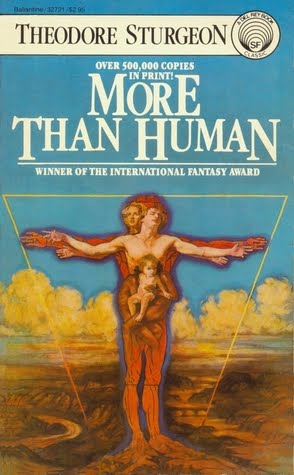
More Than Human


By Theodore Sturgeon

Lone was a wild man, living in the woods, unable to speak, unable to think very clearly. He was rescued by a farmer who saw possibilities in Lone and took him in. Under the farmer's care, Lone learned to speak a few words, to do chores, to be more human. All was good until the farmer's wife got pregnant. She didn't want Lone to be around the baby. So he went back to the woods and built himself a snug home in a cave. And gradually he acquired a family of sorts of little children on the run who needed a place to grow up, a place safe from the rest of us. Because they weren't ordinary kids, they were kids with powers. There is Baby, who never grows up; the twins Bonnie and Beanie, Janie and, later on, Gerry. Baby is an organic computer, unable to speak or walk, a seeming idiot. Bonnie and Beanie also never speak, but are able to transport themselves instantly anywhere. Janie also transports, but not herself, only things. Janie can hear Baby's thoughts and he keeps them informed and he guides them. Gerry is a powerful telepath, but he can't hear Baby. Lone serves as the front man, the one who goes out and buys food and clothes. He takes care of them until he is killed by a falling tree. At which point they move in with a woman from Lone's past. With Lone gone, the new front man becomes Gerry. Which is a real problem, because Gerry, an abused street kid, is lacking in morality and compassion. This band of misfits may be a new kind of person, homo gestalt, but until it learns some humanity, the rest of us could be in serious trouble.

This was a pretty good book. The story kind of jumps, which is not surprising since it was apparently put together from three short stories. I read this book a long time ago and even knowing how it came out, I still enjoyed rereading it.

Wyrms


By Orson Scott Card

Eight thousand years ago, a space ship happened to pass too close to the planet of the wyrms. Singing her siren song, Mother Wyrm called the captain of the space ship to her side. He landed the ship and was compelled to mate with the huge disgusting worm-like female, a mating that resulted in 4 new creatures: geblings, dwelfs, gaunts and unwyrm. Unwyrm was the only unwyrm born and at his birth he devoured Mother Wyrm and, in the process, gained not her memory and knowledge but the memory and knowledge of every mother wyrm before her. He then rested, high on the top of the mountain in his dead mother's cave, knowing that his time was not yet, that it would not be until eight thousand years in the future. At which point he would take a mate, a human woman, a woman who would either save her people from Unwyrm or send all humanity to its doom. The seventh daughter of the seventh daughter of the seventh daughter is that woman and her name is Patience and she is only fifteen when she is called upon to face her fate in Unwyrm's cave.

Well, this certainly was an imaginative and compelling story. The wyrms have got to be one of the best aliens ever thought up by an author. There will be a final clash between human and wyrm, as the son of wyrm, Unwyrm, makes a desperate bid to save his people from anihilation by humankind. It's survival of the fittest as two opposing species struggle to save their respective peoples and only one will come out alive. Who will be the ultimate ruler of the universe, Wyrm or Human? An epic battle will played out in the small confines of an icy, mountain top cave. Quite an unforgettable and fascinating story.

First Evidence


By Ken Goddard

Crime scene investigator Colin Cellars has been called in to look into the disappearances of several people in the Pacific Northwest. Before he can even get started on his investigation, he is called to a crime scene of a possible shooting at a cabin deep in the rugged forest landscape. What he doesn't know is that the cabin belongs to an old estranged friend of his named Bobby, the very man who had stood him up just a few hours before. Cellars' first discovery is the mauled body of a large dog. His next is the body of a man whose face is gone. He doesn't realize at first that it is his old friend, Bobby. But as Cellars tries to work the crime scene he realizes that he is not alone at this isolated cabin in the woods. Indeed, whoever killed Bobby is in the vicinity and is not happy that Cellars is collecting evidence of the murder.
Thus starts what is the weirdest case of his career, as Cellars comes face to face with visitors from outer space. Visitors that will do anything, including murder, to protect the secret of their presence on our planet.

This was a pretty good story, even though rather gruesome and creepy. The setting is gloomy and threatening, with the oppressive mountains, dense forests, constant rain and the shadowy aliens lurking at the edge of vision, not clearly seen but ever menacing. This kind of story isn't the sort of thing that I usually enjoy but this one was engrossing and suspenseful.

Monday, August 02, 2010

Girls of Tender Age


By Mary-Ann Tirone Smith

When Mary-Ann was about nine years old, a classmate of hers was molested and murdered by a pedophile. This book is Mary-Ann's exploration of that event and her memories of that time and also of what it was like growing up in the 1950s. Her brother was autistic, although at that time, he was just considered retarded, despite the fact that he reading at an adult level when still just a child. His condition required his parents to focus most of their energy on him, leaving Mary-Ann on the sidelines. In addition, Mary-Ann's mother was an indifferent parent, preferring to golf or play cards to being with at home with her children.
When the murder occurred, the adults in her life refused to discuss it with the children, leaving Mary-Ann with many unanswered questions. It was so traumatic to her that later in life she couldn't remember the two years of her life after the event. But as an adult, she started to confront that time in her life and to find out for herself exactly what happened to the little girl who was strangled to death in a backyard just a few houses down from where Mary-Ann lived at the time.

The subject of this book is sad and tragic, a young life cut short because of some man's depraved sexual appetite. But that isn't the only story in the book, mainly it is about Mary-Ann and her family, about growing up in the 1950s and about being sister to a brother with autism. It's a really interesting story.

American Wife


By Curtis Sittenfeld

Alice was just an ordinary girl from an ordinary family in an ordinary town. Her folks were neither rich nor poor. Alice was neither beautiful or ugly, neither brilliant or stupid. If fate had been a little kinder, she probably would have spent the rest of her life in her home town, married to a local boy, maybe teaching school, with a couple of kids, leading an ordinary life.
But fate stepped in and everything went awry and Alice went on to have the kind of life that very few ever experience: First Lady of the United States.
Alice had a crush on a boy in her high school and she was sure he liked her too. But driving to a party one night, Alice ran a stop sign and hit another car, a car that was being driven by the same boy she had a crush on. The boy was killed. Alice naturally felt terribly guilty. Her guilt drove her to seek a life away from her home town. She ended up in Chicago, where she met the man who would be her husband and who would become the President of the United States.

I picked up this book at a used book sale, not knowing anything about it. But I gradually came to realize that Alice was based on First Lady Laura Bush. In the book, Alice always carries a torch for the boy she killed and while she loves her husband, in her way, she never forgets that boy and she never stops wondering what kind of life they could have had together. Marrying Charles, Alice gets swept along on his quest to make his mark in the world. She doesn't agree with his politics and she doesn't like the public life but she does what is expected of her. She doesn't make waves and she behaves like a good little wifey should.
This book started out pretty good but after Charles & Alice are married, the story slows way down. At that point it was so boring that I stopped reading it for several weeks. Charles is not an appealing character and it was a puzzle as to why Alice stayed with him, especially since he was a conservative and she a liberal. The book doesn't go into a lot of detail about the political years and takes up the story of the presidency only in the second term.
So I did enjoy the first part of the book but after Alice and Charles get married the story was a lot less interesting.