Wednesday, August 31, 2011

The Many Loves of Dobie Gillis


By Max Shulman

A collection of short stories featuring the many incarnations of Dobie Gillis, a young college fellow with money problems and girl problems who, finagle though he may, usually ends up paying the price of his own stupidity. A really funny trip back to 1940s and 1950s middle America and still amusing decades later.

Daisy Fay and the Miracle Man


By Fannie Flagg

Daisy Fay is eleven years old in 1952 when her parents moved them to Shell Beach, Mississippi, a small resort community where her parents will be running a little malt shop. Too bad the philandering, alcoholic father is incapable of running a business profitably. Being in a resort community, the malt shop is only open during the summer months but after the first summer running the shop, the father not only didn't make a profit, but is in debt. So he sets fire to the malt shop only to find out too late that the insurance is inadequate. The mother finally gets fed up and walks out and Daisy Fay elects to stay with her father. But despite all the family drama and disaster, she still stays optimistic, energetic and a lot of fun to read about.

Probably not the best thing of Flagg's that I have read. I kept waiting for the "miracle man" of the story to appear and it wasn't until the end that I guessed that the drunken father is the miracle man. To me, though, it was a miracle that Daisy Fay managed to survive her father's inept care. But even though I found both parents unsympathetic, it was still an enjoyable and entertaining read.

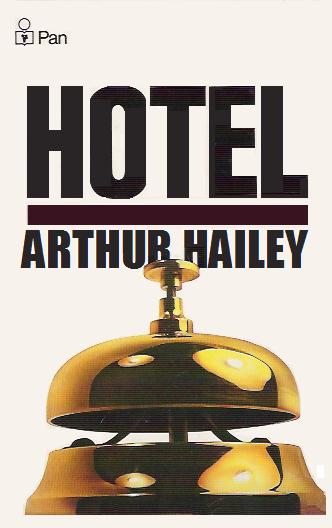
Hotel


By Arthur Hailey

A few days in the life of a privately-owned hotel in New Orleans in the early 1960s. Due to the ineptitude or indifference of the owner, an elderly man who lives at the hotel, it is experiencing difficulties including graft, criminal activity, and a dilapidated air conditioning system and faltering elevators. The owner is also in trouble since he can't find a lender who is willing to refinance the $2 million note on the hotel which is due in a few days. Meanwhile trouble is brewing among the guests with some upset about the hotel's refusal to allow a black man to stay at the hotel and a sneak thief at work in the hotel and a couple of guests who are guilty of a hit and run accident. Mix in employees on the take doing their best to enrich themselves at the hotel's expense, elderly employees who are set in their ways and maids walking out of the hotel with expensive beef steaks strapped to their thighs and you have a hotel in serious trouble.

This was a pretty good story if a little predictable. The characters are interesting even if the situations they find themselves in are not all that unexpected or different. I suppose at the time it was written the book was a lot more surprising and exciting than it is more than fifty years later. But it was still a good read with a nice bit of local color thrown in.

Wednesday, August 17, 2011

American Gods


By Neil Gaiman

There's a war brewing in America between the old gods who came to America with the immigrants from all over the world and the new gods of technology, entertainment, finance, etc. Caught in the middle of it all is Shadow, a guy with a history of bad luck who has just gotten out of prison and lost his wife in car crash.
He has been brought into the god war by Odin as a kind of protege of his and in the process of Odin's trying to organize his fellow old timers to take a stand against the pushy new American gods, Shadow finds himself up to his neck in various human incarnations of these old timey gods, helped out on occasion by his dead wife that Shadow accidentally reanimated when he tossed a magic coin into her grave.

This was a very interesting story with lots of old mythology and strange old gods and creepy new gods and poor Shadow trying to land on his feet in the midst of all the tumult. A very engrossing story and an enjoyable read.

Friday, August 12, 2011

Speech-less: Tales of a White House Survivor


By Matt Latimer

Even though Matt was raised by liberal, Democrat parents who, according to him, loved and treated him well, he turned against his upbringing and became a conservative Republican. He eventually ended up as a speechwriter to Donald Rumsfeld and then for George W. Bush in the White House. This book is the story of his experiences and his eventual disenchantment with politicians and their cronies.
As he discovered, a lot of the power in politics lies not with elected officials but with their handlers, their entourages. The handlers decide who gets in and who gets ignored, filtering even communications and leaving out anything that doesn't conform with their agenda.
After dealing with these types of people for years and seeing how much influence they wield over their patrons, Latimer has this to say about his party:

Professional Republicans no longer cared, it seemed, about supporting candidates who believed in our ideals. They were more interested in keeping their cushy houses in Georgetown or Cleveland Park, and their contracts with the revolving door of Republican bigwigs. It was all about being close to power for the sake of power. The Republican Party I believed in -- smaller, smarter government -- was unidentifiable. We'd thrown it all away amid excessive spending, corruption, dishonesty, and petty partisanship.

Of course, the same most likely holds true for the Democratic Party.

This was a really interesting book, often amusing, very informative and a true insider look at the real life of the talking heads of politics. I enjoyed it tremendously.

Thursday, July 28, 2011

Memories


By Mike McQuay

David Wolf finds his life invaded by a traveler from the future, a distant relative on a quest for an escaped murderer. The relative, Silv, is looking to stop Hersh, the killer, from changing the course of history as he has taken up residence in the mind of Napoleon Bonaparte of France. These travelers from the future do not travel in their physical bodies, but through the blood lines of their ancestors, taking over the minds and bodies and controlling them.
Wolf, whose descendant is Silv, is enlisted by her to travel back in time to France and attempt to reason with Hersch to return to his own time and stop meddling with the past. Wolf is a skilled psychiatrist who Silv hopes has the expertise to convince Hersh to go back to where he came from. While on his quest, Wolf will travel the blood lines of his distant ancestors, and in trying to persuade and understand Hersh, will come to an understanding of his own basic unhappiness and failures as a person.

Parts of this novel were really interesting and parts were like reading a history of Bonaparte. The parts about Wolf and his problems and about his relationship with Silv were very interesting and engrossing. But most of the story is about Wolf's and Silv's interactions with Bonaparte which I didn't enjoy. In fact, as I read further in the story, I found myself just skipping over those pages concerning Bonaparte. So I found the story half good and half boring.

Rally Round the Flag, Boys!


By Max Shulman

Is it a good thing or a bad thing that the U.S. Army wants to install a missile base on the outskirts of Putnam's Landing, Connecticut, a commuter community near New York City? Of course, there are those for and against. But young Lieut. Guido DiMaggio manages to sweet talk the locals, and, in short order, Putnam's Landing has a missile base. But that doesn't mean everything is all peachy-keen, especially when the soldiers start making time with the local maidens, putting their teenage rivals collective noses completely out of joint. Trouble is brewing and tempers are flaring and the Fourth of July is shaping up to be even more "explosive" than usual.

Although it is nominally about the conflict between the locals and the military, much of the story is taken up with Harry Bannerman and his wife, Grace. Grace is an enthusiastic participant in all things civic, while Harry is yearning for the good old days back in NYC before the arrival of the kids and the house and all the responsibilities he so much resents. His resentment and immaturity lead him into and ill-advised affair with a man-hungry local housewife who is looking for a new hubby to replace the current one.
Also featured are the aforementioned DiMaggio, who is enamored of a local girl, Maggie, a young school teacher who has recently been fired for teaching her second graders about sex, with helpful illustrations.
Parts of the story were mildly amusing and the big Fourth of July debacle at the of the story was really funny, but overall it really didn't appeal to me much.

The Year of Living Biblically


By A. J. Jacobs

A. J. Jacobs was raised as a secular Jew and, as an adult, described himself as an agnostic, not sure that God exists but also not sure God doesn't exist. So he went on a quest to follow the rules and advice given in the Bible, both the Old and New Testaments. In this way, maybe he would find God and, as an added bonus, he would write about his experience and hopefully make some money too.
No stranger to the Bible, he had an idea of what following all the laws of the Old Testament would entail. Still following the laws was quite a challenge, especially trying to follow all the advice given in books like Proverbs and Ecclesiastes. He let his beard grow, attached tassels to the "corners" of his clothes, bathed after ejaculating, wouldn't sit an any seat that had been occupied by a woman because of possibility of it being "unclean", smeared lamb's blood (actually lamb's juice because he couldn't find any where to buy the blood) on the door of his apartment, and so on, trying to follow the plethora of rules and admonishments in the Bible. Needless to say, it was not easy, not only for him but for his wife and young son, who, while not partaking of the experiment, were still affected by it. His wife found the rule about not sitting where a woman has sat who is menstruating so perturbing that she made sure to sit on every chair in the house so that they were all "unclean" and A. J. had to so out and buy himself a small, portable stool for his sole use.

This was quite a journey for the author and for the reader. Makes you wonder how anyone could ever fool themselves into thinking that it is truly possible to follow every law, rule and proverb in the bible. As the author found out, it is a hopeless task, as he repeatedly failed to meet his goals, especially in regard to controlling his thoughts, emotions and speech and remaining pure in mind, deed and body. Still it was fun and enlightening to read about his valiant attempt to live a pure and Biblically correct, godly life. Even though in the end, he went back to his regular life, the experience did affect him in profound and spiritual ways.

Monday, July 18, 2011

Life in a Medieval Castle


By Joseph and Frances Gies

A brief history of the medieval castle, with the main focus on castles in England. Explains their role as outposts, forts, military installations and as centers of government in their communities. Looks at the roles of the lord of the castle and at how the castle supported and also fed off the local populace. Goes into the knighthood and the relationship of the lords of the castles to the kingdom and how the castles functioned during times of war and rebellion. Concludes with a look at the decline of the castle system.

This was a pretty good book, especially in explaining how the castle functioned as a part of the community and in its role as a military installation, not only as a method of defense but often as a center of rebellion. The explanation of the relationship between the lord of the castle and the local people was very informative.
It was an interesting book, not at all difficult to read and with two handy glossaries in the back.

Tuesday, July 12, 2011

Heaven


By Ian Stewart and Jack Cohen

Second-Best Sailor lives on the planet of No Moon. As his name implies, he is a sailor. He is not a human, he is a squid-like creature, the male, free-swimming mate of the coral reef that lives in No Moon's ocean. His ancestors fled to No Moon to escape a deadly and implacable enemy. And now that enemy is once again after the denizens of No Moon and Second-Best Sailor is sent forth to discover a refuge his people can flee to before it is too late. For the enemy is nigh and they will demand complete submission to their will or they will destroy everyone.

This is a story of religion run amok. Similar to the Catholic Inquisition, the leaders of this religion believe that it is better for unbelievers to be tortured, even to death, if it means their souls are saved, although it hides its implacability from its adherents. And it has a huge carrot to offer to potential converts: a Heaven you don't have to die to enter. Converts' bodies are maintained for centuries by machines while their minds roam free in whatever fantasy they can imagine. It is a living bliss but it is based on a religion as cruel and intolerant as a religion can be, as one of their most fervent acolytes is shocked to discover as he rises higher in the church hierarchy.

I liked this story quite a bit, for the most part. I like reading about aliens, and this story abounds with aliens. What I didn't find very entertaining was the acolytes indoctrination into the Church's philosophy, that was pretty dull stuff. But other than that, it was a good read, full of aliens and adventures and lots of weird stuff and ideas, just what I enjoy most in a science fiction story.

Angry Housewives Eating Bon Bons


By Lorna Landvik

Thirty years in the lives of several women living in the same Minnesota neighborhood who share a love of books and who get together monthly for their book club, Angry Housewives Eating Bon Bons, a name they got from one of their husband, who said it rather snidely.

I enjoyed this book a lot. The characters are interesting, even if their problems are the usual: abuse, infidelity, homosexuality. Nothing very new or shocking in what the women are dealing with. But their stories are nevertheless very engaging and make for a good read.

Wednesday, July 06, 2011

The Light-Years Beneath My Feet


By Alan Dean Foster

A continuation of the story begun in Lost and Found, we find Marcus Walker and his companions stuck on the planet of the beings who rescued them from their imprisonment on the slave ship that stole them from their homes. Marcus has become a master chef and, when a representative from another planet desires to hire him, he and his friends figure why not? It just might be a step closer to getting home.
But it soon becomes apparent that his new employers have no desire to lose their unusual new chef and his strange and intriguing companions. So Marcus hatches a plot designed to spur his hosts into helping them on their way and he will soon be neck-deep in alien politics.

Gosh, this was such a boring story. All that political intrigue and warfare strategy was just a pain to read through. So disappointing after all the strangeness and fun of the first book. Also, Walker falls for an alien girl with a mouth like a sucker fish, three tails, arms like snakes and whose voice sounds like nails on a blackboard. Just unbelievable he could find that combination attractive. He might as well fall for his squid-like compatriot, Sque. All in all, just not a good read.

The Klone and I


By Danielle Steel

Stephanie's marriage ended suddenly when her husband of thirteen years declared one morning that he didn't love her, that he had never loved her. Of course, she asked him if there was someone else, which he denied. But of course there was.
All that didn't matter when Stephanie met Peter. Peter seemed like the ideal guy and it wasn't too long before it got serious. Then one day, Peter had to go on a business trip for a couple of weeks and he told Stephanie that he had a surprise for her to make up for his absence. The surprise turned out to be Paul.
Paul looked exactly like Peter and at first Stephanie assumed he was Peter pretending to be the wild, outrageous and just a bit crazy Paul. He wasn't. In fact, Paul wasn't even human, he was a bionic version of Peter, but with a few personality kinks that Peter didn't have. However, he was a lot of fun to be with and good with the kids and generous to a fault and Stephanie found herself falling hard for him. Then Peter returned from his trip and Stephanie loved being with him too. Now she has two lovers, one of which isn't really human, and can't make up her mind which one she wants.

This was an OK story. I don't know anything about bionics and in the story Paul has his head removed when he returns to the lab and his wiring replaced and yet, when reassembled, he is able to eat and drink and have sex and even catch cold. I mean, is he alive or is he a machine? It is never very clear in the story. I found that rather off-putting. Plus I just never believed any of it, not the bionic man, not Stephanie's dilemma, not Paul's ridiculous sexual acrobatics. It never really engaged me, I guess. It's an interesting idea but just not very well developed.

Sunday, July 03, 2011

The Legacy of Heorot


By Larry Niven, Jerry Pournelle, and Steven Barnes

Beowulf came to Heorot Hall to fight Grendel, the monster plaguing the people there. He was a professional monster killer and he soon took care of the terrible Grendel.
Like Beowulf, Cadmann Weyland is also a professional, a security expert with a military background. He alone of the 200 people settling on an island of the planet Tau Ceti Four sees a need for caution and defensive measures. But most of the settlers believe they have landed in a near paradise with a benign climate and no predators beyond a pterodactyl-like flying animal. They sneer at Cadmann's warnings and precautions and claim he is creating problems to justify his position.
But after months of calm, Cadmann is proven correct when a monster makes its presence known and many settlers die before it can be overcome.
Once this fierce predator is revealed, the settlers proceed to hunt down and destroy them all. What they don't know is that they have disturbed their island's ecosystem and that, as far as monsters go, they ain't seen nothing yet...

This was an OK story, typical science fiction horror story. It's not a genre I usually read or enjoy. It's a lot like the movie Alien, brave humans struggling to outwit and survive a terrible and strange beast bent on killing them all.

Monday, June 27, 2011

Gentle People: A Case Study of Rockport Colony Hutterites


By Joanita Kant

What is a Hutterite? Well, they are kind of like the Amish, but with trucks, computers and tractors. They embrace a similar religious lifestyle but they also are not afraid of modern devices or conveniences. They live in a commune and they dress different and they keep themselves separate from the rest of society because they wish to keep their focus on leading a Christian life, as they define it.
They came to the upper Midwestern United States to escape military conscription. They are pacifist and refuse to serve in the military.
Although they came to America from a region under Russian domination in the nineteenth century, they are not Russians and they are not really Germans, although they speak a dialect of German. They spent so many decades, centuries, even, wandering Europe, trying to find a safe haven, that they became pretty mixed with other Europeans. Kind of like a lot of people in the upper Midwest.
Anyway, they came to America hoping for religious freedom and tolerance and once again were disappointed. Other folks viewed them with a leery eye and their refusal to serve in the military became a very sore point during World War I, so sore, indeed, that most of the Hutterites left America and migrated to Canada. But not all, and later some of them returned to the places they left behind. And since the U.S. military has developed a program of alternate service for conscientious objectors, maybe they feel more secure back in America.
Still, they are different, the women in their long flowery dresses and head scarves, and the men with the black pants and suspenders and the plaid shirts. Religious fanatics, that's for sure, but unlike those Middle Eastern religious fanatics who also demand their adherents conform to an archaic dress code, Hutterites are non-violent pacifists. It's is a good thing to know, considering that the average Hutterite family has about seven kids. Which means we can expect to see a lot more of these oddly-dressed throwbacks to the nineteenth century from now on.

This was a very informative little book about the Hutterites in South Dakota. I see these people almost every time I go to Walmart. I knew they were some old-timey religious group, similar to the Amish but not Amish, since they don't arrive at Walmart in a horse and buggy but in large, multi-passenger vans and pickup trucks. But other than that, I didn't really know anything about them, except that they all live together in what is known as a colony. I also didn't know how widespread the Hutterites are but they have colonies all over the upper Midwest in Minnesota, North Dakota, South Dakota and Montana. And, of course, Canada, the land they fled to to escape persecution in the United States. Yes, the United States persecuted them, they even have two martyrs who died in federal custody where they were being held for refusing to serve in the military in World War I and these two martyrs are buried in Rockport Colony in South Dakota.
So if you too have noticed these odd-looking people and have wondered about them, this book is an easy primer with a short history of the Hutterites and of their society today. And at only 119 pages, it's a breeze to read.

Wednesday, June 22, 2011

A Transatlantic Tunnel, Hurrah!


By Harry Harrison

In an alternate history, where the American Revolution failed and George Washington was executed as traitor, his distant descendant Augustine Washington is one of the chief engineers in charge of building a transatlantic tunnel between Europe and North America. If he succeeds, he will redeem his family name from the disgrace brought on it by his traitor ancestor. And win the hand of the woman he has loved for many hopeless years.

The genre of this story is a branch of science fiction known as steampunk, a kind of Victorian take on modern times. Wikipedia describes the book thus: "Harry Harrison's novel A Transatlantic Tunnel, Hurrah! (1973) portrays a British Empire of an alternate 1973, full of atomic locomotives, coal-powered flying boats, ornate submarines, and Victorian dialogue." And that is pretty much what it is. If you like descriptions of mechanical devices and engineering exploits or you like reading tales of alternate history, this would be the book for you. But if you don't, then pass on by. It is heavy on engineering but pretty short on anything else to engage the reader. The conspiracy plot is very lean and the romance is practically nonexistent. I managed to finish reading it and it was a chore to get through, even skipping most of the engineering babble.
I generally avoid stories of alternate history as I usually find them very boring but the reviews I read about this one portrayed it as being funny and humorous, which is my weak spot. I love to read a funny story. But once again the reviews were misleading. I didn't find this story to be the least bit funny. I kept waiting for the funny part but it never showed up. Maybe the funny bit is supposed to be the Victorian machines, but since I am not mechanically-minded, all that mechanical engineering stuff meant nothing to me.
It's probably a good story but I was the wrong audience. For that reason, even though I personally didn't like it, I will rate it a fair read.

Farm Fatale


By Wendy Holden

Rosie has always dreamed of living in the country. She has been bugging her live-in boyfriend, Mark, to leave London and move to a small rural community but he is not interested. That is until it occurs to Mark that rural doings might make an interesting newspaper column and Mark's boss agrees to the idea. So Rosie and Mark start scouring the countryside for a small house in their very limited price range. After much fruitless searching they find one in the village of Eight Mile Bottom.
Meanwhile, Samantha, the wife of wealthy businessman Guy, has decided that she too wants to leave the big city for the charms of small town living. Samantha, who is socially ambitious, sees herself becoming the grand dame of the rural set but is unable to budge Guy, until Guy has a nearly fatal heart attack and is forced into semi-retirement. As Samantha argues, the quiet of a rural village is just what Guy needs during his recovery.
So two urban couples both end up, at opposite ends of the economic strata, in the small town of Eight Mile Bottom. And their lives will never be the same.

This was an OK story. Like most romances, it was pretty predictable. It quickly become apparent that our two couples are both mismatched. Samantha is selfish, ambitious and uncaring and Mark is self-indulgent and whiny. Both Guy and Rosie will figure out that they are better off without their current partners. Both Samantha and Mark are in for rude awakenings. And quiet, self-effacing Rosie ends up on top.

Like a Hole in the Head


By Jen Banbury

Jill is on the run from life. She nursed her dying mother and it took a terrible toll on Jill. So now she is OK with just getting by, living in her little apartment, working at her undemanding job as a clerk in a used book store. It's easy, it's quiet and it lets her just float through her days. Until that little man came into the store with a rare book to sell.
Normally she would summon her boss to handle such a transaction. But the man only wanted a few dollars for the book which Jill figured was worth at least $400. So she bought the book herself, intending to turn around and sell it for a huge profit. But then it turns out that the book was stolen, not once but twice. And the people it was stolen from are not nice. They really want that book back and will do whatever they have to to get it, up to and including torture and murder. Jill's quiet little world is about to turn really ugly and she will be in for the struggle of her life. And in the process maybe she will find out that life really is worth living.

This was an OK story. In the beginning, it was rather amusing. But it got really nasty and mean and just plain gruesome. And the ending was kind of disappointing and not very satisfying. But I did enjoy the humorous bits.

Animal Dreams


By Barbara Kingsolver

Codi's mother died shortly after giving birth to Codi's little sister, Hallie. Their father, Homer, had to raise his two little girls on his own. One thing that Codi never really understood about her father was how very much he loved his children. He wasn't a man for showing or telling his feelings. As a consequence, Codi grew up feeling alone and unloved; her closest relationship was with her little sister.
Homer was a physician in a small Arizona town. Previously the economy of the town was based on the local gold mine but after that petered out the towns people planted orchards and the economy was then centered on agriculture.
Codi and Hallie both moved away when they grew up. Hallie became an agronomist and Codi studied medicine but quit during the last few months of her residency. After that she just drifted from job to job. Hallie went to Nicaragua to help the peasants improve their farming practices. She was killed during the unrest there.
Codi finally ended up back home to keep an eye on her father, who had recently been diagnosed with Alzheimer's. She took a job teaching biology at the high school and it was during a class field trip that she and her students discovered that the river that was used to irrigate the orchards was seriously polluted with chemical run off from the old mine tailings, thus threatening the little towns very survival.
But the town's environmental problems are only part of the story. Mainly it is about Codi's struggle to understand herself and why she let life overwhelm her. Her time back home is her opportunity to clear up several misunderstanding she had about her childhood and realize that maybe things weren't as dire as she remembered.

This was a pretty good story. Codi is one of those people who likes to make mountains out of molehills and all the drama of her childhood was not nearly as terrible as she remembered. Her dad's weird ways were all based in love and in logic and he did the best he knew how as a man trying to raise two daughters on his own. He was standoffish and withdrawn, but not from meanness. As Codi reconnects with her neighbors and relatives she begins to get a better picture of what her childhood was really like and discovers that you really can go home again.

Wednesday, June 01, 2011

The Chapman Report


By Irving Wallace

Dr Chapman and his team of researchers is traveling the country interviewing married women about their sex lives in preparation for publishing a book on the subject. Their last stop is The Briars, an upscale Los Angeles community.
In the story, we get to meet a sampling of the ladies to be interviewed. There's the ambitious career woman, and the adulteress, the bored intellectual, the frigid one, the slut and daddy's little girl. Each begins to examine their own lives after being exposed to the searching and revealing questions of the sex survey.

This was an OK story if a little predictable. It wasn't to hard to figure out that one woman would end up raped, one would end up dead, and that the frigid one just needed a good screw to straighten her out. The premise of the sex survey promises to be titillating but actually, the sex survey part of the story was rather dull. It was the lives of the women themselves that held my interest, not the obsessed professor and his team of researchers. But even though it was predictable and some parts kind of boring, all in all I enjoyed it.