By Caitlin Moran
Johanna is fourteen year old and lives in poverty in Wolverhampton in the UK. Her parents live on welfare and they have four other kids beside Johanna. Her dad drinks to excess and has pinned his hopes on a career in music, a career that is going nowhere fast.
Johanna is not happy and decides to reinvent herself. Amazingly she gets a job writing music reviews and starts calling herself Dolly Wilde and dressing all in black, with a top hat and lots of eyeliner.
Her new career throws her in with a fast group of people and, before much longer, she is drinking alcohol daily, smoking cigarettes, having sex and even using the occasional illegal drug.
She falls in love with one of the performers she is reviewing and the crush lasts two years, unrequited, because he is very busy with his career and his travels. Since she can't have him, she hooks up with one of the other reviewers at the magazine she works for and loses her virginity to him. Their affair lasts until the day she overhears one of his posh friends refer to her as his "bit of rough".
Eventually, she is successful enough to leave home and move to London and have her own apartment.
I don't really know what to make of this story. I found her behavior to be outrageous. Her parents seem not to care at all about the trouble she may be getting herself into. Booze, drugs, smoking, promiscuous sex just seem like a recipe for disaster. Somehow, though, the worst thing that happens to her is a urinary tract infection.
Beside that though, I just didn't find the story all that interesting. It was OK, I guess.
The New York Times has a review.
Friday, September 28, 2018
Princess
By Jean P. Sasson
A memoir from a member of the Saudi royal family, a minor princess who goes by the fake name of Sultana in the book to hide her identity and protect from government wrath.
Sultana was born into wealth and influence. Although she certainly enjoyed the wealth but, due to her gender, she was deprived of influence. Although she was a passionate child and was not above throwing a tantrum to get her own way, it often did not work for her any more than it worked for any women living under a repressive Muslim regime.
As she grew up, she observed many instances of the imbalance in Saudi society: women beaten and murdered, divorced on a whim, unbridled male lust preying on little children, child abuse, child marriage, men chasing after child brides and putting aside their first, second & third wives, women locked away in darkness as a kind of perverted punishment for wanting to live like modern women, women servants preyed upon by their male employeers.
Sultana sees it all and chafes against the restrictions. But when her turn comes, she willingly accepts the arranged marriage and marries a man she barely knows and proceeds to bear children to him, children she has no legal right to, according to the archaic laws of her land.
But when the husband turns away from her and wants to take second wife, she runs away with the children and millions of dollars. She forces him to sign a contract guaranteeing her rights before she is willing to come home with the children.
Needless to say, such drastic actions destroy what little harmony there existed between herself and her husband. But her marriage was pretty much dead from the moment he decided he needed a second wife. So kudos to her for getting him by the short hairs.
This was an OK read. I was hoping for a little more rebellion from Sultana, but she pretty much does what is expected of her: marries young, has kids, stays behind closed doors and really doesn't do much to fight for women's rights in Saudi Arabia. Her only real rebellion comes when she gets angry at the husband for wanting to bring a second wife into the family. Maybe that was a big step for a woman in her society.
Publishers Weekly has a review.
A memoir from a member of the Saudi royal family, a minor princess who goes by the fake name of Sultana in the book to hide her identity and protect from government wrath.
Sultana was born into wealth and influence. Although she certainly enjoyed the wealth but, due to her gender, she was deprived of influence. Although she was a passionate child and was not above throwing a tantrum to get her own way, it often did not work for her any more than it worked for any women living under a repressive Muslim regime.
As she grew up, she observed many instances of the imbalance in Saudi society: women beaten and murdered, divorced on a whim, unbridled male lust preying on little children, child abuse, child marriage, men chasing after child brides and putting aside their first, second & third wives, women locked away in darkness as a kind of perverted punishment for wanting to live like modern women, women servants preyed upon by their male employeers.
Sultana sees it all and chafes against the restrictions. But when her turn comes, she willingly accepts the arranged marriage and marries a man she barely knows and proceeds to bear children to him, children she has no legal right to, according to the archaic laws of her land.
But when the husband turns away from her and wants to take second wife, she runs away with the children and millions of dollars. She forces him to sign a contract guaranteeing her rights before she is willing to come home with the children.
Needless to say, such drastic actions destroy what little harmony there existed between herself and her husband. But her marriage was pretty much dead from the moment he decided he needed a second wife. So kudos to her for getting him by the short hairs.
This was an OK read. I was hoping for a little more rebellion from Sultana, but she pretty much does what is expected of her: marries young, has kids, stays behind closed doors and really doesn't do much to fight for women's rights in Saudi Arabia. Her only real rebellion comes when she gets angry at the husband for wanting to bring a second wife into the family. Maybe that was a big step for a woman in her society.
Publishers Weekly has a review.
Labels:
autobiography,
biography,
fair read,
memoir,
Middle East,
nonfiction,
Sasson
Tuesday, September 18, 2018
Heechee Rendezvous
By Frederik Pohl
Third book in the Heechee series, this one finds Broadhead in his last days and mostly referred to in the book as Robin. He is happily married to his second wife and they are tremendously wealthy. But all his wealth is not enough to stave off death, as his body is slowly breaking down, despite the many transplants he has had.
Meanwhile, the Heechee have just been told about the human adventures in space and they are alarmed. The Heechee hid themselves out of fear of a race of immaterial beings they call the Assassins. The Assassins destroy all technological societies that they find and are in the process of attempting to change the universe to suit them better than the current universe. However this will take them billions of years.
The Heechee are worried and frightened that all the human activity will attract the attention of the Assassins and bring destruction down not only on humanity but on the Heechee too. The Heechee emissary and his crew are racing to prevent this from happening. The first human-crewed ship they encounter is that of Wan and his passenger, Gelle, Robin Broadhead's first wife, whom he believes has been dead for thirty years. Instead, she was stuck in a black hole where time passed extremely slowly until she was found by Wan.
When Robin finds out this first wife is alive, he is in a pother what to do about it. He loved and missed his first wife but he also dearly loves his second wife, Essie. Meanwhile, his body is giving out on him, a fact he hides from everyone until it is too late. Which totally solves his wife dilemma.
This was an OK read. I found myself skipping much of the parts that deal with Robin and his aches and pains and his dialogues with his computer-generated companion, Albert. Albert gets to stick his two cents worth into the story with several short interruptions that too often deal with subject matter a bit too esoteric for me to enjoy:
Also, I thought kugelblitz was a term made up by the author. Turns out it is not. A kugelblitz is a "black hole" made of light. Huh? Nevermind!
Kirkus Reviews has a review.
Third book in the Heechee series, this one finds Broadhead in his last days and mostly referred to in the book as Robin. He is happily married to his second wife and they are tremendously wealthy. But all his wealth is not enough to stave off death, as his body is slowly breaking down, despite the many transplants he has had.
Meanwhile, the Heechee have just been told about the human adventures in space and they are alarmed. The Heechee hid themselves out of fear of a race of immaterial beings they call the Assassins. The Assassins destroy all technological societies that they find and are in the process of attempting to change the universe to suit them better than the current universe. However this will take them billions of years.
The Heechee are worried and frightened that all the human activity will attract the attention of the Assassins and bring destruction down not only on humanity but on the Heechee too. The Heechee emissary and his crew are racing to prevent this from happening. The first human-crewed ship they encounter is that of Wan and his passenger, Gelle, Robin Broadhead's first wife, whom he believes has been dead for thirty years. Instead, she was stuck in a black hole where time passed extremely slowly until she was found by Wan.
When Robin finds out this first wife is alive, he is in a pother what to do about it. He loved and missed his first wife but he also dearly loves his second wife, Essie. Meanwhile, his body is giving out on him, a fact he hides from everyone until it is too late. Which totally solves his wife dilemma.
This was an OK read. I found myself skipping much of the parts that deal with Robin and his aches and pains and his dialogues with his computer-generated companion, Albert. Albert gets to stick his two cents worth into the story with several short interruptions that too often deal with subject matter a bit too esoteric for me to enjoy:
The energy density of black-body radiation goes up as the cube of the temperature—that's the old Stefan-Bolzmann [sic] law—but the number of photons goes up linearly with the temperature, too, so effectively it's a fourth-power increase inside the kugelblitz. At one Kelvin it's 4.72 electron-volts per liter. At three million it's three million to the fourth power times that—oh, say about 382,320,000,000,000,000,000,000, 000 ev/liter.I mean, really. I don't need to know that or read that. But a lot of science fiction writers like to stick that kind of stuff in their stories. Just goes over my head though. I usually just skip those parts.
Also, I thought kugelblitz was a term made up by the author. Turns out it is not. A kugelblitz is a "black hole" made of light. Huh? Nevermind!
Kirkus Reviews has a review.
Monday, September 17, 2018
Witch World
By Andre Norton
The first Witch World story
Simon Tregarth is a man on the run and is facing certain death. So when a fellow offers him a one-way route to a new life, but with no return, Tregarth accepts.
The man leads him to a strange stone gateway that leads to a different world, a world, the man promises, "in which his spirit, his mind—his soul if you wish to call it that—is at home. " But the catch is, "there is no return—and only a desperate man chooses an irrevocable future."
Once through the doorway, Tregarth does find himself in a strange new world. Escaping from being hunted himself, he is catapulted into another hunt. The hunted is not Tregarth, but is a woman dressed in rags and being trailed by men on horseback.
Tregarth, who has a handgun, helps the woman escape her hunters. The woman was on a spy mission and she takes Tregarth back to her home country and introduces him to the leaders of her country, Estcarp.
The woman, who will not give her name, is a witch as are the leaders of her country. They are all women and they are all witches. They govern by consensus and by magic. They all keep their names secret, it is part of their belief that knowing someone's name gives them power over the named person.
The witches are worried. Something is rotten in the world of Estcarp and it has all started in the land of Kolder. Kolder, which has technology strange to the other lands of Witch World. Kolder, which has the ability to turn enemies into weapons to use against their homelands. Kolder, who will find in Simon Tregarth an outworlder who is able to stand against their technological "magic."
This is the first book of Norton's Witch World series. In Witch World, the women of Estcarp are the bearers of magic. To keep their magic abilities, they must remain virgins, because they believe once a woman is deflowered, she loses her powers. Their technology is mainly medieval, with strange exceptions (excluding the technology of their enemy, Kolder).
This was an OK read. The story centers around Tregarth, who was a soldier and a mercenary back home, and who continues that roll on Witch World. The story mainly follows him on his campaigns as he fights for Estcarp.
It's a fun introduction to Norton's style of storytelling and contains many of her trademark themes: ancient alien tech; mysterious ruins that reek of evil; strange, magical abilities; seemingly ordinary people who are not ordinary; creepy, dangerous, evil creatures; foggy marshes and moor; underground installations of unknown origin containing peculiar machines; and loners fighting against the status quo.
Simon Tregarth is a man on the run and is facing certain death. So when a fellow offers him a one-way route to a new life, but with no return, Tregarth accepts.
The man leads him to a strange stone gateway that leads to a different world, a world, the man promises, "in which his spirit, his mind—his soul if you wish to call it that—is at home. " But the catch is, "there is no return—and only a desperate man chooses an irrevocable future."
Once through the doorway, Tregarth does find himself in a strange new world. Escaping from being hunted himself, he is catapulted into another hunt. The hunted is not Tregarth, but is a woman dressed in rags and being trailed by men on horseback.
Tregarth, who has a handgun, helps the woman escape her hunters. The woman was on a spy mission and she takes Tregarth back to her home country and introduces him to the leaders of her country, Estcarp.
The woman, who will not give her name, is a witch as are the leaders of her country. They are all women and they are all witches. They govern by consensus and by magic. They all keep their names secret, it is part of their belief that knowing someone's name gives them power over the named person.
The witches are worried. Something is rotten in the world of Estcarp and it has all started in the land of Kolder. Kolder, which has technology strange to the other lands of Witch World. Kolder, which has the ability to turn enemies into weapons to use against their homelands. Kolder, who will find in Simon Tregarth an outworlder who is able to stand against their technological "magic."
This is the first book of Norton's Witch World series. In Witch World, the women of Estcarp are the bearers of magic. To keep their magic abilities, they must remain virgins, because they believe once a woman is deflowered, she loses her powers. Their technology is mainly medieval, with strange exceptions (excluding the technology of their enemy, Kolder).
This was an OK read. The story centers around Tregarth, who was a soldier and a mercenary back home, and who continues that roll on Witch World. The story mainly follows him on his campaigns as he fights for Estcarp.
It's a fun introduction to Norton's style of storytelling and contains many of her trademark themes: ancient alien tech; mysterious ruins that reek of evil; strange, magical abilities; seemingly ordinary people who are not ordinary; creepy, dangerous, evil creatures; foggy marshes and moor; underground installations of unknown origin containing peculiar machines; and loners fighting against the status quo.
Labels:
fair read,
fantasy,
fiction,
Norton (Andre),
science fiction,
Witch World
Tuesday, September 11, 2018
The No.1 Ladies' Detective Agency
By Alexander McCall Smith
The first book in the No.1 Ladies' Detective Agency series, this one gives the backstory of Mma Ramotswe, the chain of events that led to her setting up as a detective.
After her father died, as his only child, Mma Ramotswe inherited all his assets that, once liquidated, enabled her to buy a house and small office building and a vehicle.
Naturally, the detective business didn't take off right away, but, due perhaps to the novelty of a woman detective, Mma Ramotswe did get a few good and fairly straightforward cases. She tracks down a missing husband, exposes a couple of con men twins, and helps a father discover what his teenage daughter is doing in her spare time.
Her most serious case, though, is that of a missing child. Her inquiries lead her to turn down the case as being too dangerous and sensitive to handle. But eventually she stumbles onto the solution to the mystery, with the help of her suitor and friend, Mr. J.L.B. Matekoni, the owner and chief mechanic of Speedy Motors garage.
I finally got around to reading the first book in this series. The first book I read was the seventh in the series. Like that book, this was an entirely enjoyable and gentle mystery story, completely absent of any murders, the only death being that of a poor fellow who got eaten by a crocodile. The story is enhanced by its exotic location, Botswana on the continent of Africa and containing part of the Kalahari Desert.
Review by The Guardian.
The first book in the No.1 Ladies' Detective Agency series, this one gives the backstory of Mma Ramotswe, the chain of events that led to her setting up as a detective.
After her father died, as his only child, Mma Ramotswe inherited all his assets that, once liquidated, enabled her to buy a house and small office building and a vehicle.
Naturally, the detective business didn't take off right away, but, due perhaps to the novelty of a woman detective, Mma Ramotswe did get a few good and fairly straightforward cases. She tracks down a missing husband, exposes a couple of con men twins, and helps a father discover what his teenage daughter is doing in her spare time.
Her most serious case, though, is that of a missing child. Her inquiries lead her to turn down the case as being too dangerous and sensitive to handle. But eventually she stumbles onto the solution to the mystery, with the help of her suitor and friend, Mr. J.L.B. Matekoni, the owner and chief mechanic of Speedy Motors garage.
I finally got around to reading the first book in this series. The first book I read was the seventh in the series. Like that book, this was an entirely enjoyable and gentle mystery story, completely absent of any murders, the only death being that of a poor fellow who got eaten by a crocodile. The story is enhanced by its exotic location, Botswana on the continent of Africa and containing part of the Kalahari Desert.
Review by The Guardian.
Labels:
Africa,
fiction,
good read,
mystery,
Smith (Alexander McCall)
Monday, September 10, 2018
The Well of Lost Plots
By Jasper Fforde
Thursday Next has had a rough time of it. So she has left the real world and moved into BookWorld, taking up residence in an unpublished detective novel. While there, she will be working for Jurisfiction as an agent in training under the supervision of Miss Havisham, the jilted bride from Charles Dickens' Great Expectations.
In the previous novel, Lost in a Good Book, Thursday's husband was erased from history and Thursday found she was pregnant and that she is the only one who remembers her husband. But she is starting to forget him too, due to her enemy, Acornis Hades. Acornis has the power to mess with people's memories and she has planted a mindworm in Thursday's mind that is slowly erasing her memories of her husband and trying to implant new memories of a life in which he never existed.
Thursday is planning on staying in BookWorld until after her baby is born.
BookWorld is on the cusp of introducing a new book operating system, UltraWord™, which is supposed to greatly enhance the reader's experience and streamline BookWorld operations. But Thursday gradually comes to understand that UltraWord™ is an evil plot to generate revenue to make rich people richer. Once again it is Thursday vs a heartless, greedy bunch of capitalists.
Fforde keeps making the Thursday Next universe more and more complicated. So much is mentioned in the BookWorld dimension that is becomes a tad overwhelming. Combined with a rather lackluster plot, this book really doesn't add much to the series.
Review by Publishers Weekly.
Thursday Next has had a rough time of it. So she has left the real world and moved into BookWorld, taking up residence in an unpublished detective novel. While there, she will be working for Jurisfiction as an agent in training under the supervision of Miss Havisham, the jilted bride from Charles Dickens' Great Expectations.
In the previous novel, Lost in a Good Book, Thursday's husband was erased from history and Thursday found she was pregnant and that she is the only one who remembers her husband. But she is starting to forget him too, due to her enemy, Acornis Hades. Acornis has the power to mess with people's memories and she has planted a mindworm in Thursday's mind that is slowly erasing her memories of her husband and trying to implant new memories of a life in which he never existed.
Thursday is planning on staying in BookWorld until after her baby is born.
BookWorld is on the cusp of introducing a new book operating system, UltraWord™, which is supposed to greatly enhance the reader's experience and streamline BookWorld operations. But Thursday gradually comes to understand that UltraWord™ is an evil plot to generate revenue to make rich people richer. Once again it is Thursday vs a heartless, greedy bunch of capitalists.
Fforde keeps making the Thursday Next universe more and more complicated. So much is mentioned in the BookWorld dimension that is becomes a tad overwhelming. Combined with a rather lackluster plot, this book really doesn't add much to the series.
Review by Publishers Weekly.
Monday, August 20, 2018
The Middle Place
By Kelly Corrigan
Kelly Corrigan tells the true story of her life and how she coped with breast cancer battle and her father's cancer battle too.
The story shifts back and forth from the story of her life before cancer and the story of her life with cancer.
She found the lump and then had to have chemo, surgery and radiation followed by five years of hormone therapy.
Fortunately, Kelly had many close friends, loving parents, and a loving husband who were all glad to chip in and help her out when she was too ill from her treatments to take care of her two small daughters, both under the age of four.
From reading her book, it seems the worse things for her were facing her father's decline and that she would have to postpone having more children for five years because of the hormone medication, which came as an unpleasant surprise. She had always planned to have at least four kids, so waiting til she was in her forties to try and get pregnant again made the likelihood of that happening much lower.
This was an OK read. I bought this book last fall and I don't remember why I thought it would be a good read. I suspect that the blurb on the front describing the book as "funny and irresistibly exuberant" had something to do with it, along with the illustration which show a little girl bouncing high into the air. I wonder if I failed to read the back of the book where it clearly says that it is about the author's battle with cancer.
I didn't find it to be funny. To me, it was more depressing than funny. So that was disappointing.
Review by Kirkus Reviews.
Kelly Corrigan tells the true story of her life and how she coped with breast cancer battle and her father's cancer battle too.
The story shifts back and forth from the story of her life before cancer and the story of her life with cancer.
She found the lump and then had to have chemo, surgery and radiation followed by five years of hormone therapy.
Fortunately, Kelly had many close friends, loving parents, and a loving husband who were all glad to chip in and help her out when she was too ill from her treatments to take care of her two small daughters, both under the age of four.
From reading her book, it seems the worse things for her were facing her father's decline and that she would have to postpone having more children for five years because of the hormone medication, which came as an unpleasant surprise. She had always planned to have at least four kids, so waiting til she was in her forties to try and get pregnant again made the likelihood of that happening much lower.
This was an OK read. I bought this book last fall and I don't remember why I thought it would be a good read. I suspect that the blurb on the front describing the book as "funny and irresistibly exuberant" had something to do with it, along with the illustration which show a little girl bouncing high into the air. I wonder if I failed to read the back of the book where it clearly says that it is about the author's battle with cancer.
I didn't find it to be funny. To me, it was more depressing than funny. So that was disappointing.
Review by Kirkus Reviews.
Labels:
cancer,
Corrigan,
fair read,
memoir,
nonfiction
Sunday, August 19, 2018
Stormy Weather
By Carl Hiaasen
A killer hurricane has blasted through Florida, shattering buildings and lives. But to some, the resultant chaos is merely a golden opportunity to make some money.
One of those opportunists is Max Lamb. On his honeymoon in Orlando with his wife, Bonnie, Max has grabbed his video camera and headed into the danger zone to get video of the disaster, with a view to selling the footage to the networks. Unfortunately, he runs afoul of Skink, one of Hiaasen's recurring characters. Skink is a big, scary swamp thing and he grabs Max and sticks a shock collar on his neck and hauls him out into the back country. Where he proceeds to shock Max into abject compliance.
Also looking to score are Edie Marsh and a thuggish fellow called Snapper. After their first scam fails, they hook up with distressed homeowner, Tony Torres. Tony's house is severely damaged and he wants a quick settlement from the insurance company. Since his wife is joint owner of the house and she has run off with her boyfriend, Tony can't get the insurance check without her signature. Naturally, given that she has run off, Tony is not willing to share the settlement with her. So Edie will pretend to be Mrs, Torres and, when the check arrives, they will split the funds three ways and then split. And the real Mrs. Torres gets screwed out of her fair share.
Tony was a trailer salesman. The trailers he sold were supposed to be hurricane resistant. But they weren't and people died. One of those people was the mother of a mobster from up north, Ira Jackson. He tracks down Tony and kills him. Which leaves Edie and Snapper in the lurch. When the adjuster shows up, Snapper tries to pass himself off as Torres. But the adjuster quickly figures out that they are scammers. Edie seduces him and talks him into joining the scam, once again to split the money three ways.
Meanwhile Max is still being tormented by Skink and Bonnie has come to the hurricane zone looking for him. She got on phone call from him letting her know he had been taken but that the crazy man who grabbed him is not asking for any kind of ransom. Bonnie falls in with a local man, a young drifter who is living off a large insurance settlement from when he nearly died in a commercial plane crash.
And then there is the policeman, Jim Tile, whose policewoman girlfriend gets beaten up by Snapper. Tile is friends with Skink. He enlists Skink in tracking down Snapper and things just get more and more complicated from there.
I guess this was an OK read. There are so many characters coming and going, it is a bit hard to keep track of it all. It is also supposed to be very funny but I didn't find so. According to the blurbs on the cover, it is "hysterically funny" (USA Today), has "hilarious, black humor" (Wall Street Journal), and is "howlingly funny" (Cosmopolitan). I guess those blurbers are more easily amused than I am.
Also, I have never been a big fan of the recurring character, Skink. He's creepy. I'm getting tired of him.
Review by Publishers Weekly.
A killer hurricane has blasted through Florida, shattering buildings and lives. But to some, the resultant chaos is merely a golden opportunity to make some money.
One of those opportunists is Max Lamb. On his honeymoon in Orlando with his wife, Bonnie, Max has grabbed his video camera and headed into the danger zone to get video of the disaster, with a view to selling the footage to the networks. Unfortunately, he runs afoul of Skink, one of Hiaasen's recurring characters. Skink is a big, scary swamp thing and he grabs Max and sticks a shock collar on his neck and hauls him out into the back country. Where he proceeds to shock Max into abject compliance.
Also looking to score are Edie Marsh and a thuggish fellow called Snapper. After their first scam fails, they hook up with distressed homeowner, Tony Torres. Tony's house is severely damaged and he wants a quick settlement from the insurance company. Since his wife is joint owner of the house and she has run off with her boyfriend, Tony can't get the insurance check without her signature. Naturally, given that she has run off, Tony is not willing to share the settlement with her. So Edie will pretend to be Mrs, Torres and, when the check arrives, they will split the funds three ways and then split. And the real Mrs. Torres gets screwed out of her fair share.
Tony was a trailer salesman. The trailers he sold were supposed to be hurricane resistant. But they weren't and people died. One of those people was the mother of a mobster from up north, Ira Jackson. He tracks down Tony and kills him. Which leaves Edie and Snapper in the lurch. When the adjuster shows up, Snapper tries to pass himself off as Torres. But the adjuster quickly figures out that they are scammers. Edie seduces him and talks him into joining the scam, once again to split the money three ways.
Meanwhile Max is still being tormented by Skink and Bonnie has come to the hurricane zone looking for him. She got on phone call from him letting her know he had been taken but that the crazy man who grabbed him is not asking for any kind of ransom. Bonnie falls in with a local man, a young drifter who is living off a large insurance settlement from when he nearly died in a commercial plane crash.
And then there is the policeman, Jim Tile, whose policewoman girlfriend gets beaten up by Snapper. Tile is friends with Skink. He enlists Skink in tracking down Snapper and things just get more and more complicated from there.
I guess this was an OK read. There are so many characters coming and going, it is a bit hard to keep track of it all. It is also supposed to be very funny but I didn't find so. According to the blurbs on the cover, it is "hysterically funny" (USA Today), has "hilarious, black humor" (Wall Street Journal), and is "howlingly funny" (Cosmopolitan). I guess those blurbers are more easily amused than I am.
Also, I have never been a big fan of the recurring character, Skink. He's creepy. I'm getting tired of him.
Review by Publishers Weekly.
Friday, August 17, 2018
The Avenhurst Inheritance
By Sylvia Thorpe
England, 1751, and eighteen-year-old Jocelyn Rivers is not his father's favorite. The favorite was the elder son but he died. And the dead son's boy is now the heir to the Avenhurst title, lands and fortune. The son's wife and children came to live at Avenhurst and Jocelyn does not get along with either the children or the widow.
So one day, the young heir gets stuck in a tree and Jocelyn is called upon to climb the tree and rescue the boy before he falls. For which stunt, Jocelyn receives no thanks, neither from the boy or from his mother. After listening to the boy's back talk and threats to "climb it if I want to," Jocelyn lays into him verbally, witnessed by the mother and servants:
So in the midst of this argument, who should stick her nose in, but the Avenhurst heir's mother. She chews Jocelyn out for not rescuing her precious baby in a more gentle and understanding manner. Which naturally inflames Jocelyn's already bruised feelings even more. After she accuses him of delaying saving the boy "until it was almost too late," Jocelyn, enraged, responds:
Of course, the next thing to happen is the little boy follows through on his threat to continue climbing and falls and dies. And of course it happens without any witnesses. And of course, the enraged mother accuses Jocelyn of killing the boy so that he will become the heir:
He goes to Jamaica and enters into business with the friend of a friend. Things are looking better until he meets the lovely young daughter of a very wealthy business associate. This girl, Alathea, has been raised on a plantation far from anyone. She has lived in isolation all her life, attended only by servants, slaves and her doting father. Jocelyn is, once again, smitten.
It is not too much longer before Alathea's father summons Jocelyn to his plantation. When he gets there, Jocelyn can see that the man is at death's door. The man is worried about what will happen to Alathea after he is gone. She is his only child and he asks Jocelyn to marry her and take care of her and promise to never take her away from her home on the plantation. If he does, all the man's vast wealth and holding will be Jocelyn's.
Since Jocelyn has been lusting after the girl anyway, he agrees to the man's conditions and the two are quickly wed and the man soon passes away. But Alathea turns out to be a pig in a poke and is suffering from the same mental illness that her mother and grandmother also suffered from. She is quite insane, seeing things and hearing things that are not there and often violent. Turns out the father knew this and it is why he kept her at home and away from society. So Jocelyn feels like he was tricked into marrying the poor girl and starts spending more and more time away from her and their new baby. It doesn't end well for the young couple and their child.
Anyway, Jocelyn ends up back in England for a visit and, naturally, he is recognized. Which opens up a whole new can of worms to deal with.
This was pretty good read. Not the least bit lighthearted though. Poor Jocelyn/ Julian (he changes his name when he runs away) goes from heartbreak to heartbreak. Not really the sort of story I enjoy, a bit too depressing.
I did have a problem with the story. When Jocelyn establishes himself in Jamaica, he is aware that the laborers are slaves. It doesn't bother him. In fact, when he buys a new place, he never thinks twice about buying the slaves to do the work except to buy slaves he already knows so they will be more contented. The book does acknowledge that the plantation owners are fearful of their slaves and do worry about uprisings. And, at one point, it is speculated that the old black woman who raised Alathea and who also cared for her mother and grandmother may have been drugging the three women as revenge for her enslavement and causing their mental illness. But never is the moral issue of owning fellow human beings acknowledged or addressed. That lack bothered me, it bothered me a lot. I would have liked the main character better if he had at least once questioned the rightness of owning slaves, of buying and selling people like they were farm animals.
England, 1751, and eighteen-year-old Jocelyn Rivers is not his father's favorite. The favorite was the elder son but he died. And the dead son's boy is now the heir to the Avenhurst title, lands and fortune. The son's wife and children came to live at Avenhurst and Jocelyn does not get along with either the children or the widow.
So one day, the young heir gets stuck in a tree and Jocelyn is called upon to climb the tree and rescue the boy before he falls. For which stunt, Jocelyn receives no thanks, neither from the boy or from his mother. After listening to the boy's back talk and threats to "climb it if I want to," Jocelyn lays into him verbally, witnessed by the mother and servants:
'Oh, be silent, you contemptible brat!' Jocelyn said disgustedly. 'If there is one thing worse than a coward, it's a cowardly braggart."After meeting with Celia, his secret girl friend and daughter of a wealthy neighbor, Jocelyn gets into an argument with his father. Dad informs his son that he has arranged a marriage for him to a very nice young lady. But Jocelyn is smitten with the beautiful Celia Croyde and informs Dad that he will marry her or no one. To which Dad responds:
'Do you imagine that William Croyde will permit his heiress to throw herself away on a younger son when his fortune can purchase a coronet for her in London? Or that a girl's silly lovesick fancy will be allowed to stand in the way of her attaining a great position? You must have even less wit than I gave you credit for.'So it's not that the father objects to the match. It is that he knows the girl's father will never approve it and that he wants his lovesick son to wise up.
So in the midst of this argument, who should stick her nose in, but the Avenhurst heir's mother. She chews Jocelyn out for not rescuing her precious baby in a more gentle and understanding manner. Which naturally inflames Jocelyn's already bruised feelings even more. After she accuses him of delaying saving the boy "until it was almost too late," Jocelyn, enraged, responds:
'Would to God I had delayed even longer!...Long enough for the whelp to break his scrawny neck! I'll not be such a fool a second time, believe me!'Things get even worse when Jocelyn next sees Celia and she tells him that she is being pressured by her father to marry an older, titled gentleman. Jocelyn points out that it is only the fact that he is not the heir that her father will not approve of their marriage. If he were the heir, he would become Viscount Avenhurst upon his father's death.
Of course, the next thing to happen is the little boy follows through on his threat to continue climbing and falls and dies. And of course it happens without any witnesses. And of course, the enraged mother accuses Jocelyn of killing the boy so that he will become the heir:
'You did this!' she cried wildly. 'You murdered my innocent child! He stood in your way and you killed him!...You were jealous of Anthony! He was the heir and you hated him for it!'Then, when he next meets with Celia, she rejects him, believing that he did indeed commit murder:
'What right have you to reproach me? Have you forgotten what you said—that the only obstacle between us was the fact that you were not your father's heir? That you would find a way even if it meant going to the devil for counsel—?...Don't come near me....Don't touch me again.'He returns home only to find out that his father, who had stood by his son and defended his innocence against the mother's accusations, actually believed Jocelyn had murdered his nephew to gain the inheritance:
'Do you dare expect me to show you in private the face which necessity compels me to wear before the world? To forgive what you have done, as well as seek to repair the harm and shield you from the consequences?'To which his son replies:
'God help me! You believe I was responsible for the boy's death. All your defense of me has been a sham.'Not surprisingly, finding himself a scandal and a suspected murderer and rejected by the girl he loves, Jocelyn runs away.
He goes to Jamaica and enters into business with the friend of a friend. Things are looking better until he meets the lovely young daughter of a very wealthy business associate. This girl, Alathea, has been raised on a plantation far from anyone. She has lived in isolation all her life, attended only by servants, slaves and her doting father. Jocelyn is, once again, smitten.
It is not too much longer before Alathea's father summons Jocelyn to his plantation. When he gets there, Jocelyn can see that the man is at death's door. The man is worried about what will happen to Alathea after he is gone. She is his only child and he asks Jocelyn to marry her and take care of her and promise to never take her away from her home on the plantation. If he does, all the man's vast wealth and holding will be Jocelyn's.
Since Jocelyn has been lusting after the girl anyway, he agrees to the man's conditions and the two are quickly wed and the man soon passes away. But Alathea turns out to be a pig in a poke and is suffering from the same mental illness that her mother and grandmother also suffered from. She is quite insane, seeing things and hearing things that are not there and often violent. Turns out the father knew this and it is why he kept her at home and away from society. So Jocelyn feels like he was tricked into marrying the poor girl and starts spending more and more time away from her and their new baby. It doesn't end well for the young couple and their child.
Anyway, Jocelyn ends up back in England for a visit and, naturally, he is recognized. Which opens up a whole new can of worms to deal with.
This was pretty good read. Not the least bit lighthearted though. Poor Jocelyn/ Julian (he changes his name when he runs away) goes from heartbreak to heartbreak. Not really the sort of story I enjoy, a bit too depressing.
I did have a problem with the story. When Jocelyn establishes himself in Jamaica, he is aware that the laborers are slaves. It doesn't bother him. In fact, when he buys a new place, he never thinks twice about buying the slaves to do the work except to buy slaves he already knows so they will be more contented. The book does acknowledge that the plantation owners are fearful of their slaves and do worry about uprisings. And, at one point, it is speculated that the old black woman who raised Alathea and who also cared for her mother and grandmother may have been drugging the three women as revenge for her enslavement and causing their mental illness. But never is the moral issue of owning fellow human beings acknowledged or addressed. That lack bothered me, it bothered me a lot. I would have liked the main character better if he had at least once questioned the rightness of owning slaves, of buying and selling people like they were farm animals.
Thursday, August 16, 2018
Mrs. Pollifax and the Golden Triangle
By Dorothy Gilman
Mrs. Pollifax and her recently acquired husband Cyrus are soon to be departing on a trip to the Orient for a vacation. Just hours before they are ready to leave for the airport, Bishop, from the CIA, shows up with a small request. Could they, while in Thailand, pick up some papers from a man and give him a payment for the information?
Naturally, this being a Mrs. Pollifax story, nothing is ever as easy as it is painted to be. When Mrs. Pollifax arrives at the rendezvous, she finds a dead man and another man lurking in the shadows. She runs to find Cyrus, followed by the man, just in time to see her unconscious husband being hustled into the back of van.
The man volunteers his vehicle to chase after the kidnappers and together they charge off after the van, soon ending up in the wilds of Thailand. As the two scramble about the countryside, they encounter jungle villagers, thugs, drug lords, revolutionaries, smugglers and a rogue CIA agent.
This was a pretty good story. Plenty of action and lots of local color.
Mrs. Pollifax and her recently acquired husband Cyrus are soon to be departing on a trip to the Orient for a vacation. Just hours before they are ready to leave for the airport, Bishop, from the CIA, shows up with a small request. Could they, while in Thailand, pick up some papers from a man and give him a payment for the information?
Naturally, this being a Mrs. Pollifax story, nothing is ever as easy as it is painted to be. When Mrs. Pollifax arrives at the rendezvous, she finds a dead man and another man lurking in the shadows. She runs to find Cyrus, followed by the man, just in time to see her unconscious husband being hustled into the back of van.
The man volunteers his vehicle to chase after the kidnappers and together they charge off after the van, soon ending up in the wilds of Thailand. As the two scramble about the countryside, they encounter jungle villagers, thugs, drug lords, revolutionaries, smugglers and a rogue CIA agent.
This was a pretty good story. Plenty of action and lots of local color.
Tuesday, August 14, 2018
Kaleidoscope
By Dorothy Gilman
This is the second book in the Madame Karitska series. In this book, Madame is settled into her apartment and seeing plenty of clients who wish to avail themselves of her psychic talents. A parade of troubled people come and go from her apartment, including the abused wife of a cultist, a policeman (who is a friend), a rich man with a spoiled and willful daughter, a government man investigating terrorist activities, and a murderer, just to list a few.
With the help and backing of her police friend, Madame Karitska gently nudges people onto the right path and helps bring miscreants to well-deserved justice.
This is mostly a collection of short stories tied together by means of being clients of Madame. And even though short stories are not my favorite form of reading, I still enjoyed this book a lot.
This is the second book in the Madame Karitska series. In this book, Madame is settled into her apartment and seeing plenty of clients who wish to avail themselves of her psychic talents. A parade of troubled people come and go from her apartment, including the abused wife of a cultist, a policeman (who is a friend), a rich man with a spoiled and willful daughter, a government man investigating terrorist activities, and a murderer, just to list a few.
With the help and backing of her police friend, Madame Karitska gently nudges people onto the right path and helps bring miscreants to well-deserved justice.
This is mostly a collection of short stories tied together by means of being clients of Madame. And even though short stories are not my favorite form of reading, I still enjoyed this book a lot.
Monday, August 13, 2018
Mrs. Pollifax, Innocent Tourist
By Dorothy Gilman
Mrs. Pollifax is an older lady who got bored with being retired and applied to work as a spy for the CIA. Amazingly, the CIA decided she would be perfect as a courier and thus began her first adventure in the world of spy vs spy.
But this adventure is not a job for the CIA. Instead, she is traveling with an old contact from the CIA, Farrell, to give him the appearance of, as the title says, innocent tourist.
Farrell has been contacted by friends of a friend who died in prison in Saddam Hussein's Iraq. The contact has the dead man's last manuscript and is desperate to smuggle it out to world and away from the repressive Iraqi regime. He wants Farrell to come to Jordan to get the manuscript. Farrell is supposed to show up at a certain tourist attraction and a courier named Ibrahim will hand him the manuscript. So Farrell, knowing that a man hanging around a ruined castle for hours might attract unwanted attention, has talked Mrs. Pollifax into accompanying him.
Of course, with Mrs. Pollifax involved, things are bound to be complicated. She seems to attract complications. In this case, the complications start almost immediately when, on the flight to Jordan, a wanted terrorist slips a tourist memento into Mrs. Pollifax's carry-on bag while she is in the toilet. Of course, as soon as she is out of her hotel room in Jordan, the terrorists search her room for the item. But too late, as she and Farrell have already discovered the secret concealed within it: a key and a tiny map, which they are quick to give to the police. The terrorists don't know this and they start tailing the two everywhere they go, along with agents from Iraq who have a pretty good idea what Farrell is really in Jordan to do.
Throw in some horses and camels, a sheikh, some Bedouins, a precocious child, dust storms, Arab tents and the implacable desert, and Mrs. Pollifax is off on another of her adventures.
This was an OK read. It doesn't have the excitement and flair of the first novels in the Mrs. Pollifax series. But it was OK. Too often, though, it was like reading notes of a trip to Jordan to gather background for the novel.
Tuesday, July 31, 2018
Craig & Fred
By Craig Grossi
Craig was a Marine stationed in Afghanistan. He met Fred at a remote outpost. Fred was a goofy young dog who became a vital part of their small outpost, endearing himself to all the men stationed there, except for the Afghanis, who were abusive to poor Fred.
Anyway, when it was time to leave, Craig decided to take Fred back to the USA, even though it was pretty much against regulations. With the help of his riends, his family and a group of kind-hearted shippers, Fred found a himself living in the USA, waiting with relatives until Craig finished his tour of duty and came home.
Once home, things were a bit rocky. Craig kind of drifted. He went back to school and became friends with a fellow vet, Josh, a man who lost a leg when the vehicle he was riding in was blown up by an IED (improvised explosive device). They decided to take a long camping trip together with Fred, of course. It would be a chance for Josh to test the limits of himself and his artificial limb. Craig tells the story of the camping trip interspersed with the story of his time in Afghanistan and the story of Fred, the dog.
I enjoyed this book. But I didn't read it in the order in which it was printed. When I realized how it was set up, I read the chapters dealing with his time in Afghanistan first. Then went back and read the story of the road trip and of his time back home with Fred.
Review by The Washington Post.
Craig was a Marine stationed in Afghanistan. He met Fred at a remote outpost. Fred was a goofy young dog who became a vital part of their small outpost, endearing himself to all the men stationed there, except for the Afghanis, who were abusive to poor Fred.
Anyway, when it was time to leave, Craig decided to take Fred back to the USA, even though it was pretty much against regulations. With the help of his riends, his family and a group of kind-hearted shippers, Fred found a himself living in the USA, waiting with relatives until Craig finished his tour of duty and came home.
Once home, things were a bit rocky. Craig kind of drifted. He went back to school and became friends with a fellow vet, Josh, a man who lost a leg when the vehicle he was riding in was blown up by an IED (improvised explosive device). They decided to take a long camping trip together with Fred, of course. It would be a chance for Josh to test the limits of himself and his artificial limb. Craig tells the story of the camping trip interspersed with the story of his time in Afghanistan and the story of Fred, the dog.
I enjoyed this book. But I didn't read it in the order in which it was printed. When I realized how it was set up, I read the chapters dealing with his time in Afghanistan first. Then went back and read the story of the road trip and of his time back home with Fred.
Review by The Washington Post.
Labels:
autobiography,
good read,
Grossi,
memoir,
nonfiction
Natural Disaster
By Ginger Zee
Ever since she was a little kid, Ginger Zee wanted to be a meteorologist. She set her sights on the Today show.
Being smart and attractive, reaching her dream wasn't an impossible goal. But Ginger's biggest hurdle was probably herself. It wasn't her professional life that was the problem. It was her bouts of depression and her poor choice in men.
In this book, Zee tells the story of how she realized she needed help with her mental illness and how she rose through the ranks to become a meteorologist on national television.
This was a pretty good read. I only had one problem with the book. She is telling the story of when she was first on TV and told the viewers how her dog had tangled with a skunk and that no matter what she washed the dog in, it still smelled of skunk. She was totally surprised at the number of people who contacted her with sure-fire recipes for curing skunk smell. But in the story, she doesn't share the winning recipe!
So I enjoyed the book, even though I didn't know who she was, never having seen her on TV.
Ever since she was a little kid, Ginger Zee wanted to be a meteorologist. She set her sights on the Today show.
Being smart and attractive, reaching her dream wasn't an impossible goal. But Ginger's biggest hurdle was probably herself. It wasn't her professional life that was the problem. It was her bouts of depression and her poor choice in men.
In this book, Zee tells the story of how she realized she needed help with her mental illness and how she rose through the ranks to become a meteorologist on national television.
This was a pretty good read. I only had one problem with the book. She is telling the story of when she was first on TV and told the viewers how her dog had tangled with a skunk and that no matter what she washed the dog in, it still smelled of skunk. She was totally surprised at the number of people who contacted her with sure-fire recipes for curing skunk smell. But in the story, she doesn't share the winning recipe!
So I enjoyed the book, even though I didn't know who she was, never having seen her on TV.
Labels:
autobiography,
good read,
memoir,
nonfiction,
Zee
Sunday, July 22, 2018
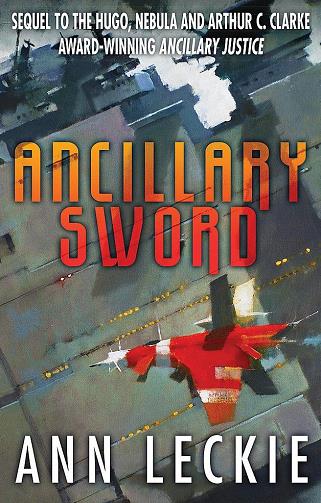
Ancillary Sword
By Ann Leckie
A continuation of the first novel, Ancillary Justice, this finds Breq, now with the surname Mianaai, appointed by the Lord of the Radch, Anaander Mianaai, to the position of Fleet Captain and off to guard the Athoek system from Anaander's split personality as the two sides (and possibly more) struggle for control.
This suits Breq just fine, as the sister of the person Breq loved and murdered lives in the Athoek station and Breq wants to talk to her. Also present at Athoek is the warship, Sword of Atagaris, commanded by Captain Hetnys. Unlike most of the Lord of the Radch's fleet, Sword of Atagaris is crewed by ancillaries, a humans reprogrammed to be similar to robots, which is what Breq is too.
Also on the station is a human, Dlique, raised by the Presger to serve as a translator between the Presger and humankind. The insectoid Presger are the enemy, although currently at peace due to a treaty. The war with the Presger was the beginning of the deterioration of Anaander's personality as it became clear that the Presger were an unbeatable foe.
One of Captain Hetnys' ancillaries shoots and kills Dlique, which could cause a breakdown in Radch/Presger relations. Breq and Hetnys stand in for Dlique's family and give Dlique all the funeral honors they would for any important personage, hoping to placate the Presger. Part of the funeral rites involve two weeks of mourning in which the mourners go into seclusion. A wealthy grower invites them to spend the mourning period on the grower's planet-side plantation.
While there, Breq discovers the plantation workers are virtual slaves, given starvation wages. Breq also begins to suspect that someone is selling the frozen bodies of future ancillaries to some unknown agent on the other side of the Ghost Gate. The Ghost Gate is supposed to lead to a dead system where no one lives. So who is buying these frozen bodies?
This was an OK read. Not a lot happens though. Dlique gets killed, a bomb goes off, and Breq gets in a gun battle at the end. But other than that, it is pretty tame. I would say that the book does little to further the Anaander plot line. Nor does it expand our knowledge about the implacable Presger. Nor does it say why, if the Presger are so unbeatable, they agreed to sign a treaty with the Radch.
Also, the whole using only the female gender to describe people is still quite annoying. Reading creates mind pictures but how can you picture a person if you can't tell if they are male or female?
Review by Kirkus Reviews.
A continuation of the first novel, Ancillary Justice, this finds Breq, now with the surname Mianaai, appointed by the Lord of the Radch, Anaander Mianaai, to the position of Fleet Captain and off to guard the Athoek system from Anaander's split personality as the two sides (and possibly more) struggle for control.
This suits Breq just fine, as the sister of the person Breq loved and murdered lives in the Athoek station and Breq wants to talk to her. Also present at Athoek is the warship, Sword of Atagaris, commanded by Captain Hetnys. Unlike most of the Lord of the Radch's fleet, Sword of Atagaris is crewed by ancillaries, a humans reprogrammed to be similar to robots, which is what Breq is too.
Also on the station is a human, Dlique, raised by the Presger to serve as a translator between the Presger and humankind. The insectoid Presger are the enemy, although currently at peace due to a treaty. The war with the Presger was the beginning of the deterioration of Anaander's personality as it became clear that the Presger were an unbeatable foe.
One of Captain Hetnys' ancillaries shoots and kills Dlique, which could cause a breakdown in Radch/Presger relations. Breq and Hetnys stand in for Dlique's family and give Dlique all the funeral honors they would for any important personage, hoping to placate the Presger. Part of the funeral rites involve two weeks of mourning in which the mourners go into seclusion. A wealthy grower invites them to spend the mourning period on the grower's planet-side plantation.
While there, Breq discovers the plantation workers are virtual slaves, given starvation wages. Breq also begins to suspect that someone is selling the frozen bodies of future ancillaries to some unknown agent on the other side of the Ghost Gate. The Ghost Gate is supposed to lead to a dead system where no one lives. So who is buying these frozen bodies?
This was an OK read. Not a lot happens though. Dlique gets killed, a bomb goes off, and Breq gets in a gun battle at the end. But other than that, it is pretty tame. I would say that the book does little to further the Anaander plot line. Nor does it expand our knowledge about the implacable Presger. Nor does it say why, if the Presger are so unbeatable, they agreed to sign a treaty with the Radch.
Also, the whole using only the female gender to describe people is still quite annoying. Reading creates mind pictures but how can you picture a person if you can't tell if they are male or female?
Review by Kirkus Reviews.
Friday, July 20, 2018
PEANUTS A Golden Celebration
A collection of Peanuts comic strips from the 1950s to the 1990s. Includes commentary by Schulz, a reminiscence of his life as a cartoonist. Simply fascinating and well worth a read for fans of Peanuts.
A couple of strips from the book, one from the 1970s and one from the 1980s:
~~~~~~~~~~~~~~~~~~~~~~~~~~~~~~
Tuesday, July 10, 2018
Terminal Alliance
By Jim C. Hines
Something terrible happened to humankind. People lost their higher intellectual abilities and became like wild beasts. Millions died. Only a few thousand survived, degraded and vicious. Then came the Krakau.
The Krakau gave humankind back its humanity. Now humans serve the Krakau as soldiers and workers in gratitude for being lifted out of mindlessness and brutality.
"Mops" and her small crew of humans work as janitors on the Krakau spaceship Pufferfish. She and her people are content in their positions, happy to be lifted up and restored to self-awareness and intelligence.
They are not the only humans on the ship. There are several hundred human members of the crew. On a routine rescue mission, something causes all the humans to revert back to their "feral" state. The Krakau officers on board all die. But Mops and her crew are safe as they were wearing hazmat suits while dealing with a messy and dangerous cleaning problem.
As the only senior officer on board the ship who hasn't reverted to unreasoning savageness, Mops is now in charge. And with the help of her small cleaning crew, she will figure out what went wrong with the rescue mission and expose the lies behind the disaster that afflicted humankind,
This was an OK story. The revelation that the Krakau were behind humanity's downfall was pretty apparent from the very beginning of the story, so no big surprise there. There are a lot of battle scenes, which I find tremendously boring to read. Towards the end of the book, I got tired of wading through the battle scenes and just started skipping those parts.
I enjoyed the story, for the most part. I do like stories with weird aliens and this book has plenty of those! But I would like this one better if it had a lot less combat and battle descriptions.
Review by Publishers Weekly.
Wednesday, June 27, 2018
It's a Magical World
Another wonderful collection of Calvin and Hobbes comic strips, this one ending with Watterson's last Calvin and Hobbes strip, where Calvin and Hobbes toboggan off down the snowy hill together for the last time.
Here are a couple of strips from the collection:
Ancillary Justice
By Ann Leckie
I will try to explain this science fiction novel, first of the Ancillary triology, but I must admit I found it very confusing.
First of all the ancillaries: just exactly what they are I never really grasped. Are they brainwashed humans? Are they bodies with robot brains? Are they people whose brains are partially replaced with computer components? The author never really explains what they are. It's like she just assumes you already know.
Second, the genders. For some reason, the author chooses to refer to everyone as if they are female. According to an interview Leckie did with Liz Bourke on Tor.com, she wanted to portray a society that does not care about genders. But to me, it was so confusing. It would have been less so if she had used a gender-neutral term like "it" instead of referring to everyone as "she."
So given my very imperfect understanding of this novel, I will attempt to give a brief synopsis of it.
Breq is an ancillary, a former human who was part of a larger, joined mind consisting of many other components, all based with a starship, Justice of Toren. One of those components was One Esq, who served Lieutenant Awn on a newly conquered planet, Shis'urna. The Radch are expansionist and brutal and they are relentless in bringing new planets into their sphere of influence. Awn is on Shis'urna as one of the Radch's representatives. She (or he) runs afoul of a political plot involving the supreme ruler of the Radch, Lord Anaander Mianaai. Mianaai is like the ancillaries in that he (or she or it) is composed of many bodies and one mind.
An uprising is put down but, as it turns out, the uprising was actually fomented by Mianaai. Mianaai is having an existential crisis. Although one mind in many bodies, part of Mianaai does not approve of what other parts of Mianaai are doing. The uprising plot was meant to be an initial move by one part against the other part of Mianaai. Because Awn succeeded in preventing the uprising, Mianaai orders One Esq to shoot Awn dead, which she/he/it does. Thing is, One Esq, even though an ancillary who is supposed to have no individuality, he/she/it loved Awn. And is devastated to be the instrument of Awn's death. And is now determined that Mianaai must die. So One Esq/Breq/Justice of Toren is on the hunt for a legendary weapon that can break through Mianaai's many sophisticated defenses and kill as many Mianaais as possible. Truly a futile suicide mission, as all of Mianaai is probably not stupid enough to have all of himself/herself/itself in one place at one time.
This is a complicated story made even more complicated by the author's refusal to explain the whole ancillary thing and by her insistence on referring to everyone as female. I don't have the kind of mind that, upon seeing every character as referred to as female, can instead picture them as neither male or female. So that was just annoying as was the whole lack of explanation of the ancillaries. And to top it off, the names with their double vowels were a further annoyance.
So I was rather inclined to despise this story as too confusing and annoying. But the fact is that it was really interesting and, even though I was never comfortable with the double vowels, the exclusively female genders and the whole concept of the ancillaries, I did still enjoy the story and I am looking forward to reading the other two books in the series, Ancillary Sword and Ancillary Mercy.
NPR has a review: https://www.npr.org/2013/10/08/228508903/a-skillfully-composed-space-opera-in-ancillary-justice.
I will try to explain this science fiction novel, first of the Ancillary triology, but I must admit I found it very confusing.
First of all the ancillaries: just exactly what they are I never really grasped. Are they brainwashed humans? Are they bodies with robot brains? Are they people whose brains are partially replaced with computer components? The author never really explains what they are. It's like she just assumes you already know.
Second, the genders. For some reason, the author chooses to refer to everyone as if they are female. According to an interview Leckie did with Liz Bourke on Tor.com, she wanted to portray a society that does not care about genders. But to me, it was so confusing. It would have been less so if she had used a gender-neutral term like "it" instead of referring to everyone as "she."
So given my very imperfect understanding of this novel, I will attempt to give a brief synopsis of it.
Breq is an ancillary, a former human who was part of a larger, joined mind consisting of many other components, all based with a starship, Justice of Toren. One of those components was One Esq, who served Lieutenant Awn on a newly conquered planet, Shis'urna. The Radch are expansionist and brutal and they are relentless in bringing new planets into their sphere of influence. Awn is on Shis'urna as one of the Radch's representatives. She (or he) runs afoul of a political plot involving the supreme ruler of the Radch, Lord Anaander Mianaai. Mianaai is like the ancillaries in that he (or she or it) is composed of many bodies and one mind.
An uprising is put down but, as it turns out, the uprising was actually fomented by Mianaai. Mianaai is having an existential crisis. Although one mind in many bodies, part of Mianaai does not approve of what other parts of Mianaai are doing. The uprising plot was meant to be an initial move by one part against the other part of Mianaai. Because Awn succeeded in preventing the uprising, Mianaai orders One Esq to shoot Awn dead, which she/he/it does. Thing is, One Esq, even though an ancillary who is supposed to have no individuality, he/she/it loved Awn. And is devastated to be the instrument of Awn's death. And is now determined that Mianaai must die. So One Esq/Breq/Justice of Toren is on the hunt for a legendary weapon that can break through Mianaai's many sophisticated defenses and kill as many Mianaais as possible. Truly a futile suicide mission, as all of Mianaai is probably not stupid enough to have all of himself/herself/itself in one place at one time.
This is a complicated story made even more complicated by the author's refusal to explain the whole ancillary thing and by her insistence on referring to everyone as female. I don't have the kind of mind that, upon seeing every character as referred to as female, can instead picture them as neither male or female. So that was just annoying as was the whole lack of explanation of the ancillaries. And to top it off, the names with their double vowels were a further annoyance.
So I was rather inclined to despise this story as too confusing and annoying. But the fact is that it was really interesting and, even though I was never comfortable with the double vowels, the exclusively female genders and the whole concept of the ancillaries, I did still enjoy the story and I am looking forward to reading the other two books in the series, Ancillary Sword and Ancillary Mercy.
NPR has a review: https://www.npr.org/2013/10/08/228508903/a-skillfully-composed-space-opera-in-ancillary-justice.
You Had Me at Halo
By Amanda Ashby
Holly Evans has just died. Which is a real shame because she was just getting started with her life. She had a great job, a handsome and successful boyfriend and the good fortune to have her best friend as a coworker.
But now it is all over and, to make it even worse, everyone thinks she committed suicide. But she as she adamantly tells her heavenly "spiritual realigner," Dr. Hill, she most certainly did not commit suicide and she is really angry that all her friends, family and coworkers think she did! And this is preventing her from transitioning from entry-level heaven to real heaven and her longed-for reunion with her parents, already residents of heaven.
But her baggage is keeping her from advancing and so Dr. Hill gives her 48 hours to return to life and deal with her problems. The catch is that she will have to inhabit the body of a very recently dead person and she ends up in the body of Vince Murphy, a nerdy techie coworker.
Although no one at work knew it, young Vince had a heart condition and he suddenly passed on, enabling Holly to move in and take over his life for 48 hours. She is desperate to contact her boyfriend and assure him that she did not, in fact, kill herself. That she loves him very much and was looking forward to becoming engaged and getting married.
But how can she approach her boyfriend wearing the surprisingly well-built body of a geeky young computer tech? Even worse, turns out Vince didn't actually die and he is quite perturbed to find out Holly has taken over his body!
This was a silly story and I quite enjoyed it. It was a fast, fun and amusing read although I did find the ending a bit weak.
It is another entry in the long line of romance fiction where the girl starts out blindly in love with a scoundrel and totally ignoring the good guy right under her nose. Of course the boyfriend turns out to be a selfish creep and the evil step-mother turns out to have a heart of gold and the wonderful job turns out to be an illusion. So Holly is not the most perceptive of girls and much of what she thought to be true turns out not to be. Pretty typical of this genre.
What is different about this story is how the author sets Holly up with her new love, Vince. Since Holly is actually dead and her 48 hours will soon be up and she will be called back to heaven to face her final evaluation, it seems hopeless that she and Vince can ever have the life they are meant to have together. How the author chooses to solve this dilemma was not very satisfactory.
But other than that, I truly did enjoy this light and fluffy story.
Review from Publishers Weekly.
Holly Evans has just died. Which is a real shame because she was just getting started with her life. She had a great job, a handsome and successful boyfriend and the good fortune to have her best friend as a coworker.
But now it is all over and, to make it even worse, everyone thinks she committed suicide. But she as she adamantly tells her heavenly "spiritual realigner," Dr. Hill, she most certainly did not commit suicide and she is really angry that all her friends, family and coworkers think she did! And this is preventing her from transitioning from entry-level heaven to real heaven and her longed-for reunion with her parents, already residents of heaven.
But her baggage is keeping her from advancing and so Dr. Hill gives her 48 hours to return to life and deal with her problems. The catch is that she will have to inhabit the body of a very recently dead person and she ends up in the body of Vince Murphy, a nerdy techie coworker.
Although no one at work knew it, young Vince had a heart condition and he suddenly passed on, enabling Holly to move in and take over his life for 48 hours. She is desperate to contact her boyfriend and assure him that she did not, in fact, kill herself. That she loves him very much and was looking forward to becoming engaged and getting married.
But how can she approach her boyfriend wearing the surprisingly well-built body of a geeky young computer tech? Even worse, turns out Vince didn't actually die and he is quite perturbed to find out Holly has taken over his body!
This was a silly story and I quite enjoyed it. It was a fast, fun and amusing read although I did find the ending a bit weak.
It is another entry in the long line of romance fiction where the girl starts out blindly in love with a scoundrel and totally ignoring the good guy right under her nose. Of course the boyfriend turns out to be a selfish creep and the evil step-mother turns out to have a heart of gold and the wonderful job turns out to be an illusion. So Holly is not the most perceptive of girls and much of what she thought to be true turns out not to be. Pretty typical of this genre.
What is different about this story is how the author sets Holly up with her new love, Vince. Since Holly is actually dead and her 48 hours will soon be up and she will be called back to heaven to face her final evaluation, it seems hopeless that she and Vince can ever have the life they are meant to have together. How the author chooses to solve this dilemma was not very satisfactory.
But other than that, I truly did enjoy this light and fluffy story.
Review from Publishers Weekly.
Subscribe to:
Posts (Atom)