Tuesday, March 21, 2017

Daddy's Girl

By Lisa Scottoline

Natalie Greco is a young professor when she is invited by a fellow professor to accompany him on a visit to the local prison where he teaches a clinic and provides legal aid to the inmates. Unfortunately, they get caught up in a prison riot where Natalie is attacked and nearly raped and where she stumbles upon a dying guard in just enough time to hear his dying words, "Tell my wife it's under the floor."
When Natalie tries to pass on the dead man's message to his wife, her life becomes extremely complicated. She ends up being accused of the murder of a policeman, the wife ends up in the hospital with two gunshot wounds to her chest, Natalie breaks up with her long time boyfriend and hooks up with the professor who got her involved in the whole mess, and she ends up on the run as a suspect for murder and drug dealing.

This was an OK read. I found much of it rather boring The reason for the professor taking Natalie to the prison to begin with is never really fully explained.  Also I am a lot foggy on why the  prisoner and the guard were murdered during the riot. Because they knew too much, it is said. But exactly what they knew or how they found out or which was the real target or were they both targets escaped me. Anyway, there is quite an amazing plot twist at the end, which I really didn't like and which seems to paint the heroine as a bit of a dope for not having good judgment. Too bad.

Sunday, March 19, 2017

The Unwanted Wedding

By Barbara Cartland

The Duke of Tynemouth is in a bit of a bind. Queen Victoria is rumored to have chosen a bride for the Duke, a fat, homely German princess. The Duke is involved with a married woman, Aline, the Countess of Langstone.  He is certainly not interested in having a wife, especially not the fat princess.
Aline convinces him that his only way out is find himself a willing bride and forestall the Queen's matchmaking. And she has the perfect candidate, Honora, her niece.
Honora, an orphan, has been away at school in France for years. Now she is returning home to England and to the only relatives she has, her aunt and uncle.  Her parents had no money and so Honora is dependent upon her aunt and uncle for her support. This is how Aline coerces Honora into agreeing to this arranged marriage. Either agree to wed the Duke or be shut away in a convent for the rest of her life.
Aline is a bit of a dope. She thinks the Duke will marry Honora then dump her at his country estate and return to London to be with herself. Of course, it doesn't work out that way. Honora is a young, beautiful innocent girl and the Duke, resentful at first, finds himself quickly thawing out, especially after having to rescue Honora from kidnappers. And the more time they spend together, the clearer it becomes that the two have many of the same interests and a lot in common. So what will the Duke do about Aline when she stupidly crashes his and Honora's honeymoon?

This was not a good read. The idea is kind of interesting but the story seems sparse and unfilled out. The characters are pretty much stock Cartland characters, the handsome Duke, the innocent beauty, the evil slutty woman. It is just the bare bones of a story though, kind of lifeless and rote. It just lacks the liveliness, the color, the juice of her earlier novels.

The Wings of Love

By Barbara Cartland

Amanda Burke is the innocent young daughter of an impoverished vicar in Regency England when she finds herself the unwilling focus of the very wealthy local lord's attention.
Lord Ravenscar is the sort of man that any decent, god-fearing young woman would most want to avoid. Cruel, dissipated and domineering, known to live a life of vice and corruption, when he finds Amanda in his garden, he is smitten by her beauty and innocence. Determined to make her his own, he approaches her parents, asking for Amanda to be his bride.
This puts Amanda is a very uncomfortable position. Her family needs the money. Her father, the vicar, owes his living to Lord Ravenscar. Ravenscar uses his power and position to woo Amanda's family, promising her father a new, better-funded vicarage, promising to introduce Amanda's younger sister to society, promising to get Amanda's little brother into college. But even these blandishments are not enough to overcome Amanda's distaste for Ravenscar.
Meanwhile, Amanda has stumbled across a handsome, young, wounded stranger on Ravenscar's grounds. He needs her help or the local dragoons will haul him off to be hanged as a smuggler or as a spy. In short order, the two young people know they are in love and clever Ravenscar is onto them. He gives Amanda a choice, agree to marry himself or see her young beau hauled away to certain death. She gives in and agrees to be his wife.
Lord Ravenscar is anxious to seal the deal and hauls Amanda off to London to be outfitted in a manner suitable to a man of his wealth and position, leaving behind her parents and siblings. The only one to stand between him and Amanda is his sister, a sad. older woman who, it turns out, actively despises her brother. She also rather despises Amanda who she thinks is marrying Ravenscar for his money. The sister is not the only one in London who hates Amanda. Ravenscar was involved with a society woman who was counting on being his bride. When she finds out that Ravenscar has chosen Amanda, she goes off the deep end, hatching a plan to have Amanda snatched and sold into sexual slavery. Amanda, finding out that her true love is dead and that Ravenscar is through waiting and has arranged for the marriage to take place shortly, leaves her feeling well and truly trapped and totally alone.

This was an Okay read. Given Ravenscar's unsavory reputation, you would think that Amanda's parents would keep their beautiful daughter at home every time he is known to be in the area. Instead, she is sent to gather flowers for the altar from his greenhouse and runs afoul of the evil lord. If her parents or herself had any foresight, all of this could have been easily avoided. Oh, well.
This book dates to the early 1960s and has a pretty decent plot, unlike Cartland's later works, when she was just coasting on her reputation.


Wednesday, March 15, 2017

Notorious Nineteen

By Janet Evanovich

Stephanie is after another bail skip, this time for a man accused of stealing $5,000,000.  While out on bond, the accused became ill with appendicitis and had to have his appendix removed. But he vanished from the hospital after the surgery. The mystery is that no one saw him leave. Nor did any of the security cameras show him leaving either.
Besides the main quest, Stephanie has two side quests. Track down a wooden tiki god that was pledged as collateral for a bond and help Ranger deal with an unknown person who has a vendetta against Ranger.
With the help of Lula, Grandma and the tiki god, Stephanie cracks the case, with Ranger doing most of the heavy lifting.

This was an OK read. The Stephanie Plum books have gotten very formulaic. The main character is still pretty much incompetent at her job, still lives in her apartment with her hamster and is still stringing along both Ranger and Morelli, the cop who is her other love interest. And her car is still getting destroyed. In other words, the Stephanie Plum stories have become stagnant. Too bad. It was fun in the beginning but now it has become too predictable.

Tuesday, February 28, 2017

The Spell of New Mexico

Edited by Tony Hillerman

A collection of essays by writers on their perceptions and feelings about New Mexico, both as residents and as visitors. They include Oliver La Farge, D.H. Lawrence, Ernie Pyle, Conrad Richter and C.G. Jung, among others.

This was an OK read. I found a lot of it a bit boring, but the descriptions of the countryside were like a visit to my childhood. I have never been back, but I still miss the place.

Aunt Erma's Cope Book

By Erma Bombeck

Written in the 1970s, Erma Bombeck takes on the self-help industry as she pretend tries to live her life according to the advice given in several popular books of the time.
Some of the books she lampoons, as near as I can figure out, are:
  • The Total Woman by Marabel Morgan (Erma's version is The Sub-Total Woman by Clarabelle Sweet)
  • Open Marriage: A New Life Style for Couples by Nema & George O'Neill (Erma's: Is There a Draft in Your Open Marriage by Pam & Richard McMeal)
  • Passages by Gail Sheehy (Packages by Gayle Teehee)
  • Astrology books by Jean Dixon (Get Off Your Cusp and Live! by Jeanne Vixon)
  • Meditation books by Maharishi Mahesh Yogi (Far Out and Far East by Edith Marishna)
  • The Complete Book of Running by Jim Fixx (The Complete Book of Jogging by Jim Fixit)
  • Looking Out for #1 by Robert Ringer (Looking Out for You-Know-Who by Robby Winner)
She also takes on books that analyze shoppers' buying habits, books on understanding body language, books on getting organized, books on living cheaply, books on dealing with guilt and, of course, weight loss advice.
Needless to say, these various self-help programs accomplish very little in her life and she reverts to her old ways, comfortable in her own skin at the conclusion. And she gives a nod to the Gail Sheehy book, Passages,  with a quote from the book on self-respect:
"Would that there were an award for people who come to understand the concept of enough. Good enough. Successful enough. Thin enough. Rich enough. Socially responsible enough. When you have self-respect you have enough, and when you have enough, you have self-respect."
 It was fun reading Erma Bombeck's take on the self-help industry and the havoc it can wreak on your life and relationships. I had a slight familiarity with the various books, having heard of them, but never having read any of them. Not that I haven't read self-help books, I have, Just not any of those lampooned by Bombeck in this book. I certainly heard of them, especially The Total Woman, Passages, The Complete Book of Running and Looking Out for #1. 
One of the things Bombeck points out is missing in the self-help industry of her day is a lack of humor:
"After reading sixty-two books and articles on how to deal with oneself, I realized something was missing . . . a sense of humor. I cannot believe that people look into the mirror that reflects their actions and behavior and keep a straight face."
This was an enjoyable read, and even though published in 1979, is very much relevant today.

City of Bones

By Cassandra Clare

Clary Fray is just a "mundane" teenage girl when she sees something she shouldn't: three teenage Shadowhunters killing a demon. And so begins her adventure in the world of the Mortal Instruments.
In the world of the Mortal Instruments, humans are blind to the other denizens of the world: demons, vampires, werewolves, fairies, witches, warlocks, and so on. All these others, except demons, co-exist with humankind fairly peacefully. Indeed all these others are the result of contamination of humans by demons. Demons are the true enemy, preying upon humanity and the Shadowhunters are there to take them out.
Things go south quickly after Clary's encounter with the Shadowhunters. Not only are they hostile to her and unpleasantly surprised that Clary can see through their enchantments but when Clary gets home, it is to find that her house has been ransacked, her mom is missing and a Clary herself is attacked by a demon-sent monster. Which she manages to kill. Because, as it soon becomes apparent, Clary is not a "mundane" teen girl, she is also a Shadowhunter whose heritage has been hidden from her for unknown reasons.

This is first book in the Mortal Instruments trilogy. It was an OK read. Just the typical story about a group of gorgeous teens who are "special" and set apart from us "mundane" humans. Most of the bad guys in the story, apart from the demons, are all adults that the beautiful, talented teenagers have to fight against and bring down.
So, in conclusion, the story did not capture my interest and towards the last third of it, I just wanted it to be over. I have no plans to read the second book in the trilogy, City of Ashes.

Monday, February 13, 2017

The Good Times

By Russell Baker

The sequel to Growing Up starts with young Russell getting his first job in the newspaper business: newspaper boy.
World War II intervenes and college, but he gets a job working for the hometown paper, The Baltimore Sun. He was assigned to the police beat, a common assignment for beginners.
He didn't really like the job, but it was a good way to learn the newspaper business. Money was a problem as the Sun did not pay its people well and Baker was desirous of getting married.
Baker didn't have to labor long on the police beat. Before much longer, he was in London, covering the coronation of Queen Elizabeth and living on an expense account. This experience he characterized as the best year of his life. Apparently, everything that followed just didn't measure up.
After London, he went on the White House Press Corps and eventually to working as a reporter for The New York Times.  He moved from being a reporter to being a columnist and father to three children. All in all, he had a very successful career, even to winning the Pulitzer Prize. But the best year of his life was still the year spent in London.
He concentrates on his career in this book, with his wife and kids barely mentioned at all. Towards the end, he realizes that he didn't make his family his top priority and worries about his failures as a father, for which he seems to blame his mother, who always pushed him to do better. He claims that his mother's obsession with success pushed him to focus on it at the expense of his wife and children.

This was an OK read. The first part was better than the latter part. After the London episode, the book starts to get pretty boring unless you are interested in newspapers and reporters. I am not. The book just didn't measure up to the first one for me.

See also, the LA Times.

Wednesday, February 01, 2017

Where Angels Walk

By Joan Wester Anderson

A collection of anecdotes of people's encounters with heavenly messengers or angels. Many of the stories recount instances of angels intervening to prevent people and especially children from being injured.

This was a very interesting read, although I remain skeptical. The stories are supposed to be true, but I have my doubts. I think a lot of this sort of thing is made up or just a delusion. But still I enjoyed reading the tales.


Tuesday, January 31, 2017

Don't You Know There's a War On?

By Avi

It's World War II and Howard Crispers is eleven years old and lives in Brooklyn, New York. He and his best friend Denny both have fathers off serving in the war, so naturally the two boys are very caught up in all the drama of that time. They believe their public school principal is a German spy.
One day, Howard is late getting off to school and he sees the principal on the street. Normally, the principal is the first one to arrive at school in the morning and so seeing him sets off all Howard's alarm bells and he follows the man to see where he is going. He ends up eavesdropping on a conversation between the man and an unknown woman. To his consternation, he hears that his very own teacher is slated to be fired, for reasons unknown.
Thus begins Howard's and Denny's campaign to save their teacher from losing her job, against the background of the United States in the depth of World War II.

This was a pretty good story, even though it is intended for children. The end of the story is very much like that of real life endings, bittersweet.

No Time for Sergeants

By Mac Hyman

It's World War II and Will Stockdale hasn't received the four letters sent to him from the draft board and now they are coming to forcibly remove him from his rural home with his father and stick Will in the military.
Will is not reluctant to go but his father puts up a fight, the end result of which is that Will goes but with a reputation for trouble-making, a reputation that will dog him from the very start of his time in the military.
Will is a sort of yokel superman, expert at shooting pool, strong enough to bend steel with his bare hands, and able to drink experienced drinkers under the table. But really he is an amiable guy who just wants to get along with people but whose lack of experience and understanding constantly cause him to get into trouble. But, despite the ill will of his superiors in the military, Will keeps coming out on top.

This was an amusing book. Will is a sort of unbelievable character, with his powers and abilities so much greater than that of his fellow humans. But the fixes he gets himself into and out of are well worth the read.

Monday, January 30, 2017

M.D.

By Neil Ravin

William Ryan has just started his internship at a prestigious New York City hospital. A young man of strong principles, nevertheless he becomes involved with a beautiful, successful but married cardiologist. He also has a series of on again off again romantic entanglements with nurses and a patient being treated for recurring bouts of cancer.
However, his principles do cause him to fall victim to hospital politics and jeopardize his blossoming medical career.
But mainly this book is more about being an intern in a big city hospital and less about Ryan's less-than-satisfying romantic life. It has lots of medical details, some of it quite gruesome. Because, unlike horror stories, the horrors of illness are reality.

This was a pretty interesting story. But if you are  the least bit of a hypochondriac, avoid this book. There are just too many disturbing descriptions of the many ways your body can screw you over.

Saturday, January 14, 2017

If Life Is a Bowl of Cherries -- What Am I Doing in the Pits?

By Erma Bombeck

Erma Bombeck was a humor columnist who wrote about the joys and chores not only of parenthood but of coping with life in general. Her columns appeared in numerous newspapers and were collected into book form, including this one, which was the second of her books.
I suppose her humor can best be appreciated by those in the throes of parenthood, who no doubt will see themselves in her depictions. But even those who are not yet or who may never be parents will still probably enjoy her amusing columns. Though a bit dated by now, she still makes for a diverting read.


Wednesday, January 11, 2017

Queen Bee of Mimosa Branch

By Haywood Smith

Lin Scott is recovering from her divorce, which left her destitute. She ends up moving back in with her parents, a sorry situation as far as she, a woman in her fifties, is concerned.
Tension is high at home. Her mom is a bit controlling, her dad is fading into senility. Her alcoholic brother also lives there as does her elderly aunt and uncle. The uncle is also senile and off his medication.
Lin was a wife and mother. Her husband was successful and she never had to have a job outside of the home. She has never used a computer, she never graduated from college and she has arthritis, so a job where she has to be on her feet is out. But somehow she has to figure out a way to support herself. Relying on her elderly parents is not fair to them even though they are glad to have her back home.
She lucks into a job when she stops by the local drugstore. One of the clerks has collapsed and been taken to the hospital and won't be fit to return to work for many weeks. Since Lin used to work at this drugstore when she was a high schooler, she steps in to lend a hand and lands a temporary job. She is also going to night school, studying to get a real estate license.
Things are definitely looking up for Lin and the hunky new owner of the drugstore is more than just a little interested in his new employee.

This is an okay story. It is mainly about Lin finding her way in her new situation, with a little romance thrown in. There is also a political subplot that I found completely boring and uninteresting. Also, a one point early in the story, it is revealed that Lin's parents are having money troubles but that is never dealt with beyond a few mentions. Plus, even knowing this, she still lets her mother pay for the real estate course. Also, Lin dreads moving back in with the parents because they are such a pain to live with. But they don't seem to be that horrible in the story and her judgment of them as difficult is not really illustrated.
I think the story has quite a few gaps and would have been more interesting without the politics story.

Saturday, December 31, 2016

Confessions of a Pregnant Father

By Dan Greenburg

As a young man, Dan Greenburg was sure he didn't want to ever be a father. But moving into middle age and gaining a new, young wife changed his mind. And so, at the age of 49, Dan Greenburg became the father of baby Zack. This book is his chronicle of going through the experience of conceiving a child. bearing the child and caring for it for the first months of the child's life, with the help of a nanny.

If you are a parent or are thinking of parenthood, this book is a valuable record of the fears and pleasures of the whole process and probably pretty entertaining.
However, if you are not a parent and you don't really get that worked up over kids and babies, you might find it rather boring. I know I did. The amount of detail gets really old really fast and there are way too many descriptions of baby poop and baby pee.

On a side note, when baby Zack was five years old, he played the role of Lorenzo in the movie, Lorenzo's Oil. As a further side note, Lorenzo's Oil was not a cure, merely a treatment and the real Lorenzo died of his ailment at the age of thirty.

A final side note: Dan and his wife were divorced when Zack was a young teen, after a five year separation. I also know his ex-wife took him to court for back child support of over $30,000. That is something to think about as you read his rapturous descriptions.  Sounds like he got over the thrill of being a father pretty fast.

Friday, December 30, 2016

Miss Julia Throws a Wedding

By Ann B. Ross

Miss Julia's handsome border, Deputy Bates has popped the question and been accepted. But he and Binkie, his betrothed, say they are going to get married in a week at the courthouse. They claim it is the only time they can do it, as they are both busy professionals.
Miss Julia is horrified. She feels that a proper ceremony is required to get a marriage off to a good start. (Never mind that it didn't work for her marriage to her cheating husband who is now, fortunately, deceased.) She talks them into it by promising she will put it all together herself: the preacher, the flowers, the church, the music, the invitations, the food, everything! All in the space of one week!
She plunges into creating a wedding, with the help of her other border, Hazel Marie and Hazel Marie's young son, Little Lloyd, and her cook/housekeeper, Lillian. The church is booked up and so the wedding will be at her house instead.  The preacher requires the young couple to attend counseling sessions and that is when it all starts to fall apart. Something the preacher says has given the bride cold feet and she is backing out.
But Miss Julia is not going to stand for it. She and her helpers have been busting their humps getting this wedding set up and she is determined to talk some sense into Binkie, especially after she learns that Binkie is pregnant. Even if it takes a miracle. Which might not be that hard to achieve, as a "miracle" has appeared at the building site across the street from Miss Julia's house!

This was an enjoyable read, if a bit contrived, plot-wise. Miss Julia can be a tad uncharitable and bit too rigid, but that just keeps her from being too good to be true. A fun, lighthearted read.


Thursday, December 29, 2016

Toujours Provence

By Peter Mayle

Mayle continues his love affair with Provence, France. His book is a tour through his daily life. He talks about encounters with the locals, foods enjoyed and beverages consumed. Events attended and weather experienced. He rarely has a critical thing to say about Provence and seems much more accepting of the people than he did in the first book, A Year in Provence. Maybe he has just become used to the locals' way of doing things. He does make it seem very appealing, especially the cuisine. Seems like the only drawbacks are the growing popularity of the area with vacationers and the hot and sometime dry summers.

This was an enjoyable read, if a bit less interesting than the first book.


I'm a Stranger Here Myself

By Bill Bryson

After living in England for a long time, Bryson decided it was time to move back home to the United States with his wife and children. They settled into a college town in New England.
Moving to England had required some adjustments to the English way of doing things. And moving back home also required some adjustments.
This book is some of Bryson's newspaper columns he wrote while living in America. He enjoyed the contrasts between here and there. He also enjoyed pointing out each country's foibles. Even though he is not really a foreigner, he had been gone long enough to see things through a different eye.
His columns are amusing and also thought-provoking. A very nice read.


Sunday, November 27, 2016

Escape

By Carolyn Jessop and Laura Palmer

Carolyn was born into the FLDS church, the Fundamentalist Church of the Latter-Day Saints. Her family and her ancestors were polygamists. She was raised to believe the teachings of her church and she believed wholeheartedly in its teachings. She was, in fact, proud of her heritage. even as she began to find it rather constricting and stifling as she grew up.
Like most women in her small community, she was not given a choice in who she was to marry. Her parents arranged for her to marry a man who was more than thirty years older than she, Merril Jessop.
Jessop already had three wives and many children, some perhaps as old or older than Carolyn herself. But he was greedy for more. And he continued to acquire wives through the years, selecting younger and younger girls as his brides.
Being a younger wife in a family with three older wives was not an easy position in which to be. Carolyn soon realized that Merril's first wife was the wife of his heart and this woman's word was the law in the family. Carolyn also figured out that the only way to achieve and maintain status in the family was to have lots of children for her husband. A wife's ability to bear children and her sexual attractiveness to her husband were her main badges of status within the family and within the community.
Their religion taught that women were subservient to men, little more than property. A man's wishes were the law and abuse was rampant, both physical and sexual. Women and girls were required to be "sweet" and not question or rebel and to obey and submit. And this is what Carolyn tried to do, through the years, until the rise of Warren Jeffs.
Jeffs began to institute a kind of religious dictatorship. He began to pass all sorts of new rules, restricting the community's access to the outside world. He set up rules for how to dress, how to wear your hair and he told the people to remove their children from public school. Women began to find their already constricted world even more constricted than ever.
But it was only when Jeffs started marrying off younger and younger girls to old men that Carolyn started to think it was time to quit the FLDS and get away before her young daughters were given away into sexual slavery. But Jeffs' and Jessop's influence and reach were wide spread in their part of the world and they were known to be vengeful and remorseless in pursuit. How in the world would Carolyn manage to spirit her eight children away with no money and no help that she could trust? And how would she support her children if she did manage to escape? Not to mention that one of her kids was just an infant and the other very disabled and requiring medical care? Could she count on the states of Utah and Arizona to give her the help and support she so desperately needed? As far as she knew, no woman who had fled the FLDS had managed to retain custody of her children. But she didn't let that stop her and she went on to be the first escaped wife to defy the FLDS and her abusive husband and gain sole custody of her eight children.

This is an amazing and totally engrossing account of one woman's experience in a polygamous society. She starts out totally committed to the precepts of the religion but gradually begins to rebel when she admits to herself that she is tremendously unhappy and that her children are at risk of ending up in similar miserable situations. It was quite a journey, living it with her and sharing her story.

Tuesday, November 15, 2016

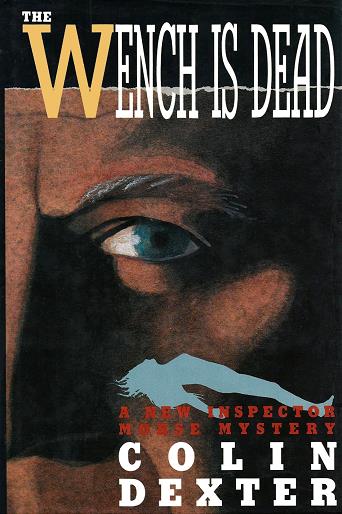
The Wench Is Dead

By Colin Dexter

Inspector Morse is laid up in the hospital with serious stomach problems. To help him pass the time, Sergeant Lewis brings him a book about a murder that took place in the 1800s. Morse finds himself completely caught up in the story of a young woman who was traveling to join her husband and was attacked by the crew of the canal boat on which she was traveling. Two of the men were hanged for the crime and one was "transported" to Australia.
On the face of it, it seems a pretty straight-forward case, a pretty young woman traveling alone on a boat with a crew of men who have been over-indulging in alcohol. But this is an Inspector Morse novel, so of course, things are not as they seem, as Morse dives deep into this old mystery.

This was an OK read. Morse is in the hospital for most of it and all of his investigations are just reading old accounts dating from that time. Not the most action-packed story, for sure.