Showing posts with label religion. Show all posts

Wednesday, April 15, 2026

Oranges Are Not the Only Fruit


By Jeanette Waterson


An novel, even though the main character is also named Jeanette and her and the author were both adopted by religious fanatics. So that's something.

Anyway, fictional Jeanette is adopted by Christian fundamentalists. Well, actually the mother is the religious nutter. The father is a nonentity in the story. The mother, Louie, is quite devoted to her religion and her adopted daughter is being raised in the faith too. No problem, the daughter is nearly as gung-ho as the mother. That is until love enters the picture, in the form of another girl.

So Jeanette's first love is a girl and so is her second love and her third love and so on. Which is ok until Louie finds out and blabs everything to the church she is devoted to. And the churchy people decide Jeanette is possessed by the devil and needs an exorcism. Jeanette doesn't respond well to the exorcism and becomes quite ill. 

When she recovers, it soon become apparent that the exorcism was a failure because Jeanette is still falling in loves with girls. Eventually her sexual preference results in not only being kicked out of their little church but out of the only home she has ever known. Now nearly grown, she has to find work and make her own way in the world without the love and support of her adoptive parents. 


This supposedly comic novel, per the blurbs on the cover ("[Waterson] has mastered both comedy and tragedy in this rich little novel." "A daring, unconventional comic novel . . . told with romping humor" "quirky and subtle hilarity of Winterson's autobiographical first novel") was boring and not what I would call comical or subtly hilarious. And it is interspersed with some weird fantasy stuff that was puzzling and I supposed was an allegory for the character's feelings or life or whatever, but I didn't care for those intrusions into the story. 

But apparently the literary world loves this novel, so what do I know? Nothing, most likely.


This is not a review but is a distillation by John Crace (Digested Classics it's called) from The Guardian. It pretty much covers the main points and I get the feeling he didn't really care much for the fantasy bits either.


Friday, May 09, 2025

The Romance Readers' Book Club


By Julie L. Cannon


Fifteen-year-old Tammi lives with religious fanatic Granny Elco. Granny works Tammi hard and keeps a tight rein on the girl. Tammi tries to live up to Granny's expectation but at fifteen she is starting to think for herself and is secretly rebellious against all Granny's rules, to a limited extent.

Granny is trying to raise Tammi in the faith just like she raised her daughters. Oddly, though, her daughters grew up to live their own lives without much concern for their mother's rules and restrictions. One daughter, Nanette, ended up married to a unfaithful alcoholic and living in Las Vegas. The other daughter, Minna, lives near her mother but dresses as she pleases with short skirts, heels, makeup. Poor Tammi has to wear the dowdy, churchy clothes Granny chooses for her. 

One day, while out trick-or-treating with her Uncle Orr, they stopped by one house but the woman who lived there didn't have any Halloween treats to give out. Instead she filled their sack with trashy romance novels.

This was a new world of reading for Tammi and reading these semi-explicit stories got her teenage juices flowing. She shared the stories with Orr, but he was just confused by them. (He is mentally slow.) She told Granny's daughter Minna about the books and together they started the Romance Reader's book club, which consisted of Minna, Tammi, Orr, LaDonna (a schoolmate of Tammi's) and LaDonna's cousin Parks.

Nannette comes home from Vegas for Christmas with her teenage son, Leon. Leon is a couple of years older than Tammi and gorgeous. But he seems indifferent to Tammi's charms and she is determined to win him, just like the girls in the romance books she and the book club have been reading (minus Orr because the stories got him too upset and they had to continue the readings without him). 

Meanwhile, the state of Georgia is experiencing an extended drought and the local minister is haranguing his congregation that the Lord is withholding the rain as a punishment for the people's sins and that they need to get right with God and give up their sinful ways. Young and inexperienced Tammi takes this warning to heart and decides that her reading of suggestive romance novels is what is keeping the life-giving rain away. And so she ends the book club. But the temptation is too great and she falls back into sin. She just can't resist these books. And she just can't tame her passion for the unresponsive Leon and starts her campaign to win him based on the plots of the romance novels she is reading. But he remains elusive. Turns out he has decided to dedicate his life to God and saving souls from eternal damnation. Poor Tammi. 


This was an OK read. Everybody caves to religion at the end including Tammi who fails to see through the nonsense. Disappointing read. 

Normally I wouldn't read a book about religious people. But the blurbs on the book fooled me. The blurbs hinted that Tammi finds her way out of the religious nonsense. I did look at the publisher before reading it to see if it was by a religious publisher but it is Penguin/Plume publishing and that is not a publisher that focuses on religious books.


Just for fun, here is an example of the "steamy" sections of the books the club is reading:

"Running Bear emerged from the Atawah River, his biceps bulging and glistening beneath his lovely red skin. Nekoosa, crouched behind a pine, was keeping her eyes on the small indents at his waist. They begged for the caress of her lips. She would never forget his scent—elusive, musky, laced with traces of the river. Nor could she forget their wild, abandoned love in the shadowed forest. Without a sound, she crept out, her soft mound aching as she remembered all too well how he brought her to the point of ecstasy many times.

She approached him, her tightened nipples pointing the way, desire so strong it was as if she'd lived only for the moment when they would be united in the flesh again, until his hardness pressed against her with a savagery all its own."


Yeah, pretty dorky stuff. 😃


Here is a review of the novel by the All About Romance website.


Monday, September 30, 2024

Sisters of the Confederacy


By Lauraine Snelling


Book Two of the A Secret Refuge series, a three-part series.


The story of two young women, Jesselynn Highwood, who goes by Jesse, and Louisa Highwood. Jesse, in Missouri, is passing as a teenage boy, trying to lead her people to Oregon to start a new life away from the Civil War and to freedom for the black members of her group. Louisa is in Virginia, helping her brother take care of several wounded Rebel soldiers in their home. The brother, Zachary, was gravely wounded in the war, having lost an eye and two limbs, but has recovered and has also put a stop to Louisa helping take care of the wounded at the army hospital. 

Jesse has all the weight of trying to shepherd her people and animals safely to Oregon while Louisa has all the irritation of being limited in what she is allowed to do since her brother returned home and put a stop to her work at the army hospital. Her situation is the opposite of that of Jesse's, who is overburdened, while Louisa is feeling put aside.

It takes the story quite a while to get Jesse's group headed west. Bored Louisa spends most of the story being upset at her brother but finally turns, with his help, to smuggling opium, a pain reliever that the army hospital has run out of and sorely needs but is no longer available. When Jesse finally gets her group attached to a wagon train and headed west, her masquerade as a boy is quickly discovered, not surprisingly. And back at Louisa's tale, her disabled brother has vanished without an explanation. Will it turn out ok for the two young women? The reader will have to read the third book in the series, The Long Way Home, to find out.


It's a good story although it gets off to a slow start. It has a lot of religious stuff in it though. I picked this book to read from a recommendation online and it did not mention how much of the book was about the main character's religion. I also did not notice that the publisher is Bethany House, a publisher that specializes in Christian publications. 

I'm not going to blame the book for being too religious. But most of the way through the story, it felt to me like it was a Christian tract disguised as a novel. That was before I noticed the publisher was Bethany House.

Also, the book is the second in the series of three. Probably should read the first book, Daughter of Twin Oaks, before starting on this one. I didn't and there is a lot that happens in the first book that is touched on in this story and that makes it sound much more exciting and dramatic than this one. Like how Twin Oaks burned and how Zachary nearly died. And how they got their horses away and safely hidden away from being taken by the military. 


Friday, June 14, 2024

Voices of Heaven


By Frederik Pohl


Barry di Hoa was doing pretty good, considering. Because he had been locked up when he was younger due to his mental illness. He describes it thus: "I had a 'psychosis' that closely resembled 'schizophrenia' of the type once called 'manic-depressive.'" He goes on to add that it, "came from my genetic heritage; my mother and my father just happened to carry some very rare recessive genes." Fortunately there was treatment that enabled Barry to live a normal life, with his symptoms under control. Unfortunately, it required injections several times a year, injections that he would have to have all his life. 

Barry lived on the moon and worked with antimatter fuel pods. Antimatter is very dangerous stuff but Barry was good at his job. And it paid very well. He had a girl friend that he loved and who loved him. The girl friend, Alma, used to belong to a religious cult, the Penitential Church of the Millenium, aka Millenarists. Which was basically a death cult that believed merely being alive was a sin, as was having children. And the best thing to do was kill yourself. However,  Alma tried hanging herself but only nearly died. That brush with death gave her a new outlook and she left the cult. 

So what does this have to do with the story? Quite a lot. Because a ship from a colony plant, Pava, had arrived on the moon and Barry was in charge of loading their large order of antimatter fuel pods on their vessel, the Corsair. The captain of the vessel, Garold and his close friend, Reverend Tuckman, were both Millenarists. And many of the colonists back on Pava are also Millenarists. They had legitimate reasons for their large order of fuel pods, though, so Barry thought nothing more about it.

Back to Alma, who had an ex-boyfriend, Rannulf. Who no longer wanted to be her ex. Surprisingly, Rannulf declared that he would be joining Garold on board the Corsair, to become a colonist on Pava. Before he left, though, he wanted to talk to Barry privately. Barry agreed to meet with Rannulf and as a result he was drugged and stashed in one of the freezer capsules by Rannulf used for space travelers because of the immense amount of time required for long trips, in this case, twenty five years from the moon to Pava. 

So Barry wakes up on Pava, and even if he did travel back to the moon, it would  be fifty years since he was kidnapped.  Alma would be fifty years older and Barry would still be a young man, thanks to the freezer capsules.

Life on Pava is harsh and the colony is struggling. Mostly because the planet is tectonically very active. They had recently experienced a serious earthquake that had destroyed a dam they were using for hydroelectric power. Although Barry is regretting his lost life on the moon with Alma, he gets to work, doing his part to help the colony survive. But he knows his medical issue will soon become a problem and that the colony doesn't have the medical experts or equipment to make the medications he needs in order to stay sane. The best the local doctor (who is actually a dentist) can do is give him medicines to combat depression and to calm him down when he is manic. Which sort of works, until Barry starts abusing the anti-depression medication to boost his spirits. And then the colony experiences another major earthquake and everybody is miserable. Except the native peoples, large caterpillar-like creatures, who had been quite helpful to the colony people, providing much needed labor. But they have all disappeared, for reasons unknown, and their contributions to the humans' survival is sorely missed. 

Finally Barry figures out something that was quite obvious from the beginning of the story, namely, Garold's real intentions with all those fuel pods of antimatter. Garold is going to do what so many religious fanatics love to do: kill nonbelievers.


My main problem with this book was the interrogation technique of telling the story. Person or persons unknown are questioning Barry and he is trying to explain his actions. I found that style of telling the story boring. So boring. The reader doesn't find out until quite far in the story who is doing the questioning. We also don't find out why until near the end. 

Like so many novels these days, the book was too long. Editors don't like edit any more, I guess. I don't think this story needed over 300 pages in order to be told. 

Another thing I didn't care for was the characters. Most of the characters are annoying at best, even Barry with his pathetic obtuseness. The most interesting characters were the natives but they don't get a lot of attention from the author. I guess they are only there to draw a contrast between the shitty humans and the virtuous caterpillar people. 

Finally, the title, Voices of Heaven. I never figured out if that referred to the caterpillar people or the religious fanaticism that seems to have overtaken the humans of this imaginary future. 


Here is a review by Kirkus Reviews.


Tuesday, November 30, 2021

A Psalm for the Wild-Built


By Becky Chambers


Sibling Dex is a monk at Meadow Den Monastery. Dex is feeling a bit discontented and decides they (throughout the story, Dex is never referred to as he or she, only as they) want to be a tea monk. Tea monks are monks who travel around making tea. They brew the tea they feel their clients need and listen to their problems and give the client feedback. Sometimes it is just sympathy, sometimes it is gentle advice, sometimes it is just a quiet moment in which to relax and enjoy their tea. Tea monks hitch a camper to a bike-like vehicle and peddle along to the next destination on their route. They are very popular with the communities they visit.

Back before Dex's time, the people on this world were just like us, with their factories and their technology. Part of the technology was intelligent, humanoid robots. Who suddenly one day became self-aware and who walked away from their robot jobs and into the wilderness. This event caused the people to rethink their way of life and they shut down most of the factories and put aside much of the land to let it return to wilderness. And they tried their best live their lives in the most sustainable way possible and with the fewest negative impacts on their world.

So Dex learns to be a very skillful and valued tea monk. People enjoy his teas and they appreciate his care of them. But Dex is not satisfied. The same feelings that caused him to leave the monastery now push him to leave his tea route and venture off into the wilderness, ostensibly to search for an abandoned monastery, Hart's Brow Hermitage. But soon after setting forth on his search, a robot wanders into his camp and kind of attaches itself to Dex. So together Dex and his new companion, the robot Mosscap, will travel through the wilderness, searching for Hart's Brow and getting to know each other and possibly becoming fast friends.


The first part of this story was the best part, with Dex setting forth to become a tea monk and learning his craft. But after Dex is joined by Mosscap it became a lot more philosophical. And I'm not the least bit interested in philosophy. 


Here's a review by Publishers Weekly.


Saturday, February 29, 2020

The Angry Christian

By Bert Ghezzi

Are you a Christian who finds themselves losing their temper and feel like you need to do something about that? This little book is intended to give some guidance for Christians in dealing with anger.
Basically, the author has a three step method for bringing anger under control:
1. Do not supress anger.
2. Express it righteously.
3. Settle things quickly.

The author uses the Bible to back up his thinking on anger with appropriate references. He points out that anger is inevitable and not a sin. He says anger can be channeled  in positive ways. However, he does caution that those with extreme anger and emotional problems should seek professional help.

His suggestions can be applied to nonbelievers too, except for the parts where he recommends turning it over to the Holy Spirit. Anyone who feels their anger is getting in the way of their happiness can use his advice to improve their peace of mind, believer or nonbeliever, in my opinion.


Monday, December 11, 2017

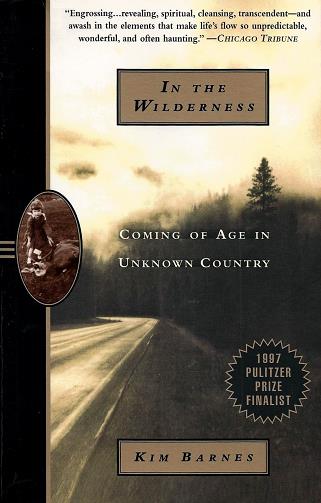
In the Wilderness

By Kim Barnes

Kim grew up in the logging communities of Idaho. Her parents had fled poverty from the southwestern states and settled in the woodsy towns and company towns of the logging industry. Her father worked as a logger and they were joined by other family members looking for a better life too. Kim's parents came from backgrounds of alcoholism, poverty, abusiveness, and failure.  Her father and mother found direction and solace by joining a Pentacostal church whose teachings helped them overcome the addictions inherent in their very DNA. The father became the demanding authoritarian figure he believed the Bible required him to be. The mother became the submissive, subdued and obedient servant she believed the Bible required her to be.
Raised to believe the inerrant truth of the Bible, Kim followed her parents' lead and tried to be the submissive, subdued and obedient daughter she was told the Bible required her to be. But then she became an adolescent and the family moved from the woods to town.  The pressures of teenage life and the urge to conform to her peers created conflict between Kim and her parents. She began to rebel. She no longer wanted to wear the long dresses, the knee stockings and the braids in her hair deemed proper for a girl her age. She wanted to be like the other kids and wear jeans, and shave her legs and wear makeup and go to parties. She didn't like being an outsider, like most kids, she wanted to be part of the group. Her anger about the restrictions of her parents' fundamentalist religion drove her to more extreme forms of rebellion, ending up with her running away from home. But she was soon back home and her parents gave her a choice: reform school or back to the woodsy community to live with the Pentacostal preacher and his family. She chose the preacher.
Once settled in with the preacher's family, Kim again conformed to behavior expected of her gender. Cook and clean, do the chores, be quiet, be submissive and obedient. But despite her best efforts, the preacher and his family turned against her and claimed she had brought demons into the home and that she was trying to seduce one of the men of the family.
So back home with her parents and little brother, once again Kim toed the line and tried to fit herself into the mold required of her. But, now moving into adulthood, she began to question the unfairness of it all. How she was made to feel sinful simply because she was female, simply because she was pretty. At eighteen, after graduating from high school, she moved out when her father wouldn't let her go on a camping trip with a group of teens from her school.  He gave her an ultimatum: if she left to go on the trip, she couldn't come back home to live. So she left and made her way in the world on her own.

This book describes way of a life that is pretty much anti everything I care about. They were deeply religious. They hunted and fished. They cut down the forest and damned the rivers, polluted the air and poisoned the water and saw nothing wrong with it. Their religion imposed ridiculous standards on people but completely failed to teach reverence for God's creation.
I found it hard to sympathize with her story and of how she went from one extreme to the other, from super-pious, super-religious (she even spoke in tongues and was a faith healer) to out-of-control, raging teen rebellion. I found it shocking how blind she and her family were to the destruction of the wilderness they supposedly loved and how gutless they seemed in their willingness to bow to the silly dictates of their extremist religion.
So even though I didn't have a lot of sympathy for her or her religion-addled parents, I still enjoyed the story and I am glad she was able to free herself in the end.

Kirkus Review: https://www.kirkusreviews.com/book-reviews/kim-barnes/in-the-wilderness/.


Wednesday, February 01, 2017

Where Angels Walk

By Joan Wester Anderson

A collection of anecdotes of people's encounters with heavenly messengers or angels. Many of the stories recount instances of angels intervening to prevent people and especially children from being injured.

This was a very interesting read, although I remain skeptical. The stories are supposed to be true, but I have my doubts. I think a lot of this sort of thing is made up or just a delusion. But still I enjoyed reading the tales.


Sunday, November 27, 2016

Escape

By Carolyn Jessop and Laura Palmer

Carolyn was born into the FLDS church, the Fundamentalist Church of the Latter-Day Saints. Her family and her ancestors were polygamists. She was raised to believe the teachings of her church and she believed wholeheartedly in its teachings. She was, in fact, proud of her heritage. even as she began to find it rather constricting and stifling as she grew up.
Like most women in her small community, she was not given a choice in who she was to marry. Her parents arranged for her to marry a man who was more than thirty years older than she, Merril Jessop.
Jessop already had three wives and many children, some perhaps as old or older than Carolyn herself. But he was greedy for more. And he continued to acquire wives through the years, selecting younger and younger girls as his brides.
Being a younger wife in a family with three older wives was not an easy position in which to be. Carolyn soon realized that Merril's first wife was the wife of his heart and this woman's word was the law in the family. Carolyn also figured out that the only way to achieve and maintain status in the family was to have lots of children for her husband. A wife's ability to bear children and her sexual attractiveness to her husband were her main badges of status within the family and within the community.
Their religion taught that women were subservient to men, little more than property. A man's wishes were the law and abuse was rampant, both physical and sexual. Women and girls were required to be "sweet" and not question or rebel and to obey and submit. And this is what Carolyn tried to do, through the years, until the rise of Warren Jeffs.
Jeffs began to institute a kind of religious dictatorship. He began to pass all sorts of new rules, restricting the community's access to the outside world. He set up rules for how to dress, how to wear your hair and he told the people to remove their children from public school. Women began to find their already constricted world even more constricted than ever.
But it was only when Jeffs started marrying off younger and younger girls to old men that Carolyn started to think it was time to quit the FLDS and get away before her young daughters were given away into sexual slavery. But Jeffs' and Jessop's influence and reach were wide spread in their part of the world and they were known to be vengeful and remorseless in pursuit. How in the world would Carolyn manage to spirit her eight children away with no money and no help that she could trust? And how would she support her children if she did manage to escape? Not to mention that one of her kids was just an infant and the other very disabled and requiring medical care? Could she count on the states of Utah and Arizona to give her the help and support she so desperately needed? As far as she knew, no woman who had fled the FLDS had managed to retain custody of her children. But she didn't let that stop her and she went on to be the first escaped wife to defy the FLDS and her abusive husband and gain sole custody of her eight children.

This is an amazing and totally engrossing account of one woman's experience in a polygamous society. She starts out totally committed to the precepts of the religion but gradually begins to rebel when she admits to herself that she is tremendously unhappy and that her children are at risk of ending up in similar miserable situations. It was quite a journey, living it with her and sharing her story.

Wednesday, August 31, 2016

Under the Banner of Heaven

By Jon Krakauer

In 1984, two brothers, Ron and Dan Lafferty murdered their other brother Allen's wife, Brenda, and their baby daughter, Erica. According to the Laffertys, Brenda was a bad person and her baby was a bad person too because she would grow up to be just like her mother.
Ron Lafferty hated Brenda because his wife turned to Brenda for advice and eventually left her husband. He blamed Brenda for this and claimed he had a revelation from God that Brenda, Erica and some other people needed to be killed. The other people were also people that Ron was angry with.
Ron and Dan belonged to the Mormon religion and were fundamentalists. One of the tenets of their religion, as I understand it, is that individual men can have valid revelations directly from God. In fact, I think the head of the Mormon church is regarded as a prophet. So when Ron became angry, he claimed he had a revelation from God saying his particular enemies must be killed. So he and his brother, who, from what I have read about him, is a bit of a lunatic, along with two other men, drove over to Allen & Brenda's place, and burst in on Brenda at a time when Allen was not home. Ron beat Brenda to a bloody pulp and Dan cut Brenda and Erica's throats, nearly decapitating the two victims. All this because one hate-filled, resentful man mistook his anger for divine revelation and talked his gullible brother into joining him in a terrible crime.
Ron and Dan were raised Mormon and the author makes the case for the Mormon religion as a co-conspirator in the murders. Apparently, Mormonism has a bloody and violent history and a persecution complex that, along with any man can have a divine revelation teaching, encourages the kind of extremism practiced by the Lafferty brothers and others of their ilk like Brian David Mitchell, the man who kidnapped Elizabeth Smart and forced her to become his second wife.

This was a very interesting story. Although the actions of the Lafferty brothers is the framework of the story, it is really about Mormonism and delves into the beginnings of it and of the schisms within it. After reading this book, I can't help but feel that Mormonism has many things in common with Islam and the potential to become as dangerous as Islam, given the right circumstances.

A review by The New York Times: http://www.nytimes.com/2003/08/03/books/thou-shalt-kill.html?pagewanted=all.

Thursday, March 03, 2016

Amish Confidential

By Levi Stoltzfus and Ellis Henican

Levi Stoltzfus was born and raised in the world of the Amish in Pennsylvania. So he knows Amish.
Not everyone born Amish stays Amish. When Amish youngsters become teens, the parental reins are loosened and they are given the freedom to learn more about the wide world beyond Amish-land. Most return to the fold and settle down into the traditional Amish life, get married, go to church, follow all the Amish rules and have as many kids as humanely possible.
Levi Stoltzfus rejected this path. He was always a bit of a rebel. He didn't like the black hat. He didn't like the bowl-style haircuts. He liked cars. He liked music, even learned to play bass guitar. He even went on to star in a TV series about the Amish, Amish Mafia. So when he became an adult, he was baptized in the New Amish Church and not in the Old Amish Church in which he was raised. (New Amish Church is a modernized version of the Old Amish Church.)
So when it comes to telling the truth about the Amish, good and bad, Stoltzfus knows it all.

People are curious about these throwbacks to the 18th Century. The Amish are a huge tourist attraction in Pennsylvania, with visitors spending billions of dollars while there to gawk at them. So keeping the reputation of the Amish gleaming white is very important to the tourist industry. But Levi Stoltzfus doesn't pull any punches, he doesn't whitewash the Amish community. He also is quick to point out the many virtues of his people, a people he clearly loves and appreciates, warts and all. A worthy, inspiring and revealing look at the Amish by one of their own, this book was an informative and enjoyable read.

Tuesday, September 29, 2015

Growing Up Catholic

By Mary Jane Meara, Jeffrey Stone, Maureen Kelly, and Richard Davis

A mildly amusing look at the Catholic Church. Not at all harsh or critical, it is rather nostalgic look back in time for people who were raised Catholic. Has lots of Catholic trivia, with various lists and lots of illustrations.

I was hoping for something a little more sharply funny but this is not that book. I found it rather boring and  didn't finish reading it for most of the summer. Finally forced myself to finish it. It wasn't a bad book, but it wasn't very funny and it just didn't capture my interest.
Catholics will probably not be offended by anything this book has to say about their church.
For another review, see: http://www.nytimes.com/1986/02/13/books/growing-up-catholic-the-making-of-a-spoof.html.

Monday, February 05, 2007

The Battle for God

By Karen Armstrong

This interesting book takes a look at the root causes of the development of religious fundamentalism in the three main monotheistic religions: Judaism, Christianity and Islam. It starts by explaining the history of these three religions and how they changed over time in response to changing culture. Then it looks at how fundamentalism has become such a powerful and mostly harmful force in the world today. Armstrong's theory is that fundamentalism arose as a response to fear and a loss of identity as people faced the secular & technological trends of modern society. Rejecting mainstream, worldly values, people sought to create a return to a simpler, purer life through a study and application of precepts taught in the scriptures of each different religion. However, in their fear of losing themselves, they overreact with violence and intolerance, justifying their hate-filled doctrines as vital to the survival of their religion and to the ultimate perfection of society in their search for a godly culture. Of course, each fundamentalist regime sees its path as the only true path to God and all others as deceived and tools of Satan.
Fundamentalism in the three religions has followed a very similar path, amazingly so. The basic arguments put forth by fundamentalists in all three are pretty much interchangeable.
Review from Publisher's Weekly: https://www.publishersweekly.com/978-0-679-43597-6.


Tuesday, October 24, 2006

Walking the Bible

By Bruce Feiler

Bruce Feiler undertakes a fantastic and difficult journey, a trek to the places spoken of in the Pentateuch, the first five books of the Bible. Starting in Turkey, near Mount Ararat, he travels through the Middle East and Egypt, including Israel, the Palestine territories and Jordan, and crossing four war zones. He and his traveling companion, Avner Goren, an Israeli archaeologist, talk to everyone about religion, faith and the Bible. He spends a lot of time in the company of Bedouins, camping out in the desert wilderness. He learns as much about being a people of the desert as he does about his own Jewish roots.
I really enjoyed this book. It is almost as good as traveling there yourself but without all the dangers and hassles.

Publishers Weekly review:  https://www.publishersweekly.com/978-0-380-97775-8.