Monday, November 21, 2011

Getting Over It


By Anna Maxted

Helen Bradshaw works at a magazine and her life is pretty much OK. She doesn't like her boss who treats her like a go-fer instead of a journalist. She doesn't like her boyfriend because he keeps hooking up with his ex. She doesn't like her landlord although she does lust for him. But everything is pretty much OK. Then her father dies suddenly and Helen finds herself mourning not only the loss of her father but also that she never had the kind of loving relationship with him that she always wanted. Meanwhile she has to cope with her needy, depressed mother, her increasingly hostile landlord, her on-again, off-again relationship with her new boyfriend and one of her best friends who is locked into an abusive and violent relationship. And still come to terms with her own deeply buried grief.

This was an OK story, if pretty typical of the "chick-lit" genre, following the usual pattern of girl who undervalues herself and ends up jumping from man to man until she straightens up, realizes her mistakes and finally gets the man of her dreams. Only this book adds the trauma of losing a parent.
Oddly, this book is covered with blurbs describing it as "laugh-out-loud," "always funny," and "hilarious" despite its rather grim subject matter, the death of and coping with the loss of a loved one. I will admit it has a few amusing moments and some that I suppose some would consider funny (like when Helen gets so drunk she pees her pants in public) but that I thought were more sad than funny. Also, the book seemed a lot longer that it needed to be, some 400 pages long, one of those books that go on and on and on. Anyway, it was an OK book but nowhere near as funny as the blurbs indicated.

Where the Boys Are


By Glendon Swarthout

Set and written in the late 1950s, this is the story of a young woman and her friends who go to Florida for spring break. And like college kids today, Merrit and Tuggle are looking to have a whole lot of fun, fun that includes days on the beach, evenings drinking and partying and nights having sex. About the only thing missing from this 1950s story is obvious drug use (the author mentions "herbs" a few times and I don't know if this is code for marijuana or just plain cigarettes: "He chauffeured us everywhere, served our Cokes, lit my herbs, bought our movie tickets...") and intentional nudity. They even refer to other kids as "nurds" but spelled differently and I couldn't tell from the context if it meant the same as nerd does today: "I feel any guy who chickens out on an easy, part-time operation like this is a nurd. In fact he's a green nurd."
Anyway, Merrit and Tuggle achieve their goal of meeting eligible males and Merrit ends up falling in love with three different men and having to figure out what she wants to do with the rest of her life. She and Tuggle have a lot of fun, drink too much beer and liquor, have lots of sex, get involved in a conspiracy to send arms and sympathizers to Cuba and in general make asses of themselves.

I was interested in this book because I saw the movie on which it was based. The movie stayed pretty close to the narrative of the book, but I was surprised that the line I remember from the movie where the Paula Prentiss character says she her ambition is to be a "walking, talking baby factory" is not in the book. So kudos to the script writer that came up with that very memorable line.
But other than that minor disappointment, I did enjoy this book a whole lot. A real trip back to a time that it turns out was not simpler or more innocent than today. It was a lot of fun reading about the antics of our parents and grandparents and shows that things really haven't changed that much at all. Except we are perhaps more open about it than back then.

Such a Pretty Fat


By Jen Lancaster

Last time Jen had just sold her first book and was in that in between time of selling the book and waiting for it to be published. This memoir starts after she has sold her second book, Bright Lights, Big Ass and she is looking for a subject to write about, having pretty much exhausted the topic of personal memoir. But then she gets an idea: why not write about going on a diet?
So that is what this book is, Jen's weight loss journey and her experiences with exercise trainers, Jenny Craig, and Weight Watchers. Like her first two books, this one is amusing and fun and even informative as Jen relates her experiences with diet and exercise. I enjoyed it a lot even though it took her to about the middle of the book to finally start the whole process.

Tuesday, November 15, 2011

Farewell, My Subaru


By Doug Fine

Doug Fine wanted to reduce his carbon footprint and yet still enjoy all the advantages that modern life offers. His solution -- move to a ranch in southeastern New Mexico and raise goats and grow vegetables. But that part of the world is rather arid and so one of the first things he had to do was install an solar-powered water pump to provide water for the house, the livestock and irrigation for his garden. He also bought himself a used diesel pickup truck which he then had converted to run on waste grease procured from restaurants at no cost to him. He also acquired a couple of young female goats intended to provide milk in due time. This was a vital part of his plan because he loves ice cream and the idea of giving up ice cream was intolerable. He also raised chickens for awhile but eventually lost most of them to predation. In fact, at times the threat to his livestock became so bad that he had to sleep out in the goat pen to protect his two goats. But all in all, he found that he was meeting his carbon footprint goals and pretty much really enjoying himself in the process.

This was a fun and amusing book to read. Doug has his struggles and manages to cope pretty well and he seems to be really enjoying his new lifestyle, raising vegetables and taking care of his goats and chickens. Of course, one thing became pretty apparent after awhile: Doug has plenty of money with which to indulge his fantasy life style: a solar-powered well pump which, with just two hours of sunlight a day, will be able to fill 500 gallon water tank; a Ford F-150 pickup truck; a super-efficient drip-irrigation system and $12000 dollars worth of solar panels. Not to mention buying a whole ranch on which to live. But even though most of us can't do what Doug Fine did, it still made for a very enjoyable and even exciting read.

The Secrets of Harry Bright


By Joseph Wambaugh

Sidney Blackpool is a homicide detective in Los Angeles. His son drowned while surfing and, even though it has been quite some time since that happened, Blackpool is not coping too well with his loss. He is guilt-ridden because of harsh words exchanged with his dillitent and drug-using son shortly before the teenager died. So when the opportunity arises for Sidney to give up police work and take a job as head of security for a cushy salary at private business, Sidney is raring to go. All he has to do is look into the death of the son of the man who owns the business.
The man is convinced that his son, who died near Palm Springs, was killed by kidnappers, but the Palm Springs police have not been able to close the investigation and the case is so far unsolved.
Sidney and his partner head to Palm Springs, all expenses paid, to follow up on the investigation and also to play a little golf. But what Sidney finds out reveals more about himself than he would probably like to know and even though he solves the riddle of the dead boy's death, it doesn't quite pan out the way he and the boy's father had imagined.

I really enjoyed this book a lot. It has lots of intriguing secrets to be solved, colorful and amusing characters, quite a bit of humor and a compelling and engaging mystery to be solved.

Bright Lights, Big Ass


By Jen Lancaster

After losing her job and then her husband losing his job and then nearly ending up bankrupt, Jen Lancaster decided to write a book about it all, which was Bitter Is the New Black.
After she wrote the book, she had a gap of several months between selling the book and having it published. This next book, Bright Lights, Big Ass, covers that gap.
As the book starts out, things are looking up for Jen and Fletch. Fletch has a new job, they have moved to a better apartment, but money is still a worry. Jen is now working for a temp agency and she has found out that it suits her and she is happier as a temp than she ever was as a high-paid professional when her boss at a temp job thanks her for making copies:

Back when I made the kind of decisions that impacted stock prices...no one verbalized appreciation. Ever. Nobody valued my fourteen-hour days. No one cared when I sacrificed my weekends to tweak proposals and prepare RFPs. I was barely ever congratulated for projects implemented, deals closed, agreements struck, and when I was, it was in a backhanded, what-have-you-done-for-me-lately sense. Even though I gave my company my all, nothing I did was ever good enough.
Yet for the act of making a simple stack of copies, something any child could do, I receive the kind of accolade I used to dream about. At this moment, I realize I never had a professional job I didn't loathe on some level. NYSE parties not withstanding, I despised almost every aspect of all the real jobs I ever had -- the backstabbing, the premeeting meetings, the protracted "mission statement" discussions. I detested the bullshit conference calls, the ridiculous panty hose-mandatory meetings even in hundred-degree August humidity, redundant results reporting. Although I was unaware of it at the time, getting up every morning and facing chaotic day after chaotic day managing people and products I hated was an exercise in futility. In short, I despised every bit of Corporate America and now it makes sense why I was so mean to people and why I tried to bolster my happiness with multiple $150 Ralph Lauren skirt purchases.


Written in her usual fun and open style, Lancaster paints an amusing picture of her life in the months before she became a successful author. While not as compelling as her first book, still this book was quite engaging and definitely in the same light vein as Bitter Is the New Black.

Monday, October 31, 2011

Child of Fire


By Harry Connolly

Ray Lilly is a wooden man. His role is to serve as a decoy while his boss, Annalise, moves in for the kill. As a wooden man, his life expectancy is nil. Which is fine by Annalise because she hates him. He caused the death of a very good friend of hers and she cannot forgive him for that. The sooner Lilly is dead the better as far as she is concerned.
Annalise is a powerful sorcerer, member of the Twenty Palace Society. Their goal is to hunt down and exterminate dangerous renegade magicians. She and Lilly are off to investigate a very successful toy company in a small town where it seems much of the company's success may be based on illicit magic. Before they even arrive at the town, they discover the townsfolk are paying a terrible price for the success of the toy company: the destruction of their children. To feed the demon powering the rogue magician, the children are gradually being consumed in a fiery blaze and all memory of them erased from the community.
The townsfolk love the prosperity the toy company has brought to them and, since they don't remember the many children lost to the demon, they are putting every obstruction in the way of Annalise's and Lilly's investigation. But the demon behind the magician doesn't care about humans and many more will perish in fiery oblivion as it fights to stay in a world that will soon fall victim to its terrible power. This is what Annalise and Lilly must prevent even if it means their own deaths.

This was an exciting story. The relationship between the implacable Annalise and Lilly adds a real depth to the story as Lilly struggles to build trust between himself and his ruthless boss. The story is jammed packed with action as Lilly pretty much fights a running battle between himself and the angry townsfolk who fear Lilly is there to mess up their sweet deal. Meanwhile, the rogue magician remains elusive and protected not only by the townsfolk but also by the demon who is only using the magician in an attempt to gain access to our world. And speaking of the demon, this is no horns, pointy tail and pitchfork kind of demon. It is a creature from another dimension, completely alien to our universe, and with an appetite that would result in the destruction of all humanity if it ever managed to free itself from the magician's control. So not only are Lilly and Annalise trying to save one small town, they are trying to save the whole world.
On the other hand, even though this is a very exciting and engaging story, the body count is really high, starting with a little boy who burns up in front of his parent's and Annalise's and Lilly's eyes. And the the body count continues to mount as the demon possesses its victims and turns them into living flame throwers as weapons against Annalise and Lilly. So even though I did enjoy the story very much, I found all the death and destruction, especially of the little kids, rather depressing and I am not planning to continue on with the series. It's is just too gruesome and grim for me.

Wednesday, October 26, 2011

The Spellman Files


By Lisa Lutz

Izzy Spellman has a big problem: her family. They are nosy and intrusive and demand to know everything that is going on her life. Which is probably one of the hazards of their profession: private investigators. And they have their reasons for being concerned: in her teens, Izzy was not exactly the best behaved kid. She drank, drugged, broke curfew, stole, vandalized. But now she is in her late twenties and she wants her P.I. parents to give her a little space. Which they seem unwilling to do, going so far as to plant a bug in her room and hire her uncle to tail her.
Izzy finally puts her foot down and they come to an agreement. Izzy, who also works for her parents as an investigator, will do one last case and then they will let her be.

Here are some of the words used to describe this book in the blurbs on the cover: delightful, droll, fun, funny, hilarious. It is true that is does have a few amusing moments but mostly it is just annoying. The behavior of these people, the parents and Izzy's bratty sister is very off-putting. Especially the sister whose parents seem not to have a grasp of how to discipline their out-of-control child. I didn't not find her antics amusing nor did I find the parents spy tactics against Izzy amusing. And Izzy comes off as an odd combination of gutsy and gutless. She grouses about how impossible it is for her to get away from her family and I kept thinking, if you want to leave just go. It's that simple. Just go. So, although the book does have a few funny moments, mostly it was just irritating and about halfway through it just seemed to drag on forever.

Saturday, October 22, 2011

Shameless


By Karen Robards

Lady Elizabeth has a reputation for breaking betrothals. She has been engaged three times and three times broke it off. The last fellow she dumped didn't take it so well, though. He arranged to have Lady Elizabeth kidnapped and taken to be sold as a sex slave. And the only man who can save her is a ruthless assassin who wouldn't think twice about snapping her neck if he had to.

This book starts off as a pretty ordinary period romance. But when Lady Elizabeth gets kidnapped it turns into quite an entertaining adventure story. Lady Elizabeth and some of her fellow captives make a break for freedom, with the assassin, Neil Severin, luckily showing up to help them on their way. They narrowly escape, but Neil gets shot in the process. They end up in a smuggler's cave and have to climb to safety only to be stopped by a rock slide. They escape the rock slide but Neil is captured by the authorities. And the adventure continues from there, with the ladies he rescued helping him and Lady Elizabeth escape.

This was a pretty entertaining romantic adventure story. Actually, I enjoyed the adventure story more than I did the romance. There are some sex scenes but fortunately not too graphic.
But as much as I enjoyed the adventure part of the story is how much I didn't enjoy the last part of the story, where Lady Elizabeth is safely returned home and Neil and she are trying to take their place in society. It felt like the obligatory nod to a Regency romance, with dances at Almacks and rides in the park and damped petticoats and stolen kisses and the threat of scandal. Nothing new there and all pretty boring. But the adventure part of the story was first rate!

Friday, October 21, 2011

Garlic and Sapphires


By Ruth Reichl

When Ruth Reichl accepted the position of restaurant critic at The New York Times, she soon found out that the local restaurants were ready and waiting, with photos posted and staff briefings. The key to reviewing restaurants is to be anonymous, so they can't put their best face on for the critic. So Reichl came up with a strategy: disguises.
With the help of a couple of experts, she developed some characters to hide her true identity behind. First was Molly, a rather staid, older woman. And Brenda, a flamboyant and kind-hearted redhead. And the woman in tweed, who didn't have a kind word for anyone. The disguises worked and Reichl was able to give honest and impartial reviews of area restaurants. But after awhile, she began to question herself and wonder about all these strange women lurking inside her own head.

After reading Reichl's book, I know that she would eat almost anything. She would probably eat a pig fetus. In fact, I bet she has eaten pig fetus and loved it! I bet she has eaten those unhatched ducklings still in the shell and raved about how their little bones cracked between her teeth. But even though her very evocative descriptions of the food she ate left me unmoved I still enjoyed this book very much.

Sunday, October 16, 2011

Sex and the Single Vampire


By Katie MacAlister

Allie is a Summoner, or rather she hopes she is. A Summoner is a person who has the power to call up ghosts, poltergeists and demons. For Allie, the trouble is, although she is highly trained, she has yet to actually summon anything. So her boss has given her one last chance to prove herself. She has been sent to London and if she can't manage to summon some spirits while there, she is out of a job. Things are not looking good until one night in her hotel room she does summon a spirit: a three-legged ghost cat.
Buoyed by this dubious success, Allie pays a visit to an old building that is rumored to be haunted. But although she can't get any spirits to appear, she does stumble across a wounded vampire, a very handsome and manly vampire who is an angry and upset vampire who doesn't want Allie interfering in whatever scheme he is running. But for Allie this vampire is the man of her dreams, literally. She has had some very bad and intense dreams about this vampire, dreams in which the vampire is in terrible trouble and Allie is the only one who can save him. Now it looks like her dream has become reality.

This was an OK story, even if the plot was a little on the weak side. The bad guys kidnap a vampire who is a friend of Allie's vampire, then they grab Allie's vampire and they are also holding various ghosts captive, but the explanation for why all this was done didn't make a lot of sense to me. Still, the author includes a lot of comic relief in the story, mainly provided by the various ghosts that end up attached to Allie. And since this is also a romance story, there is a lot of sex, but it is not excessively graphic.

Lily Pond


By Hope Ryden

For four years naturalist Hope Ryden studied a family of beavers that lived on a stream in a park in New York State. She was able to observe the beavers even in winter and at night, when the animals were most active. She was with them as their family grew with the arrival of babies every spring. She brought them branches to supplement their food supply when she was concerned they might starve. She and a friend helped the beavers repair their dam when vandals tore a huge hole in it. And she drove away a trio of people who were possibly trying to raid the beaver lodge for the vulnerable beaver kits inside, the kits to be sold as pets. She came to identify with the beavers and gave them all names and worried about their welfare. Eventually she realized it was time to move on and leave the beavers to manage on their own after the matriarch of the beaver family died of old age.

If you have ever been at all curious about beavers then this is a great book to read. It details the lives of the Lily Pond beavers, their trials and tribulations, their triumphs and accomplishments and their remarkable ability to engineer their environment to suit their purposes. Really, beavers are amazing animals and this book is an excellent window on the their hidden world.

The Professor and the Madman


By Simon Winchester

For centuries, the English language went without a complete, comprehensive dictionary. Finally, it was decided that such a dictionary should be created, backed up by extensive scholarship and quotations from literary works and other writings illustrating the meanings of words and how the meanings changed as the language did.
Professor James Murray became the chief editor of the dictionary as it was being created. Coming from a ordinary family, it was soon apparent that young James was no ordinary child. Extremely intelligent and consumed with a hunger for knowledge, James excelled in school. But since his parents were not able to pay for his further schooling, he quit at the age of 14. That didn't mean an end to his scholarship, as he continued to educate himself in a wide variety of fields, including archaeology, languages, and history. By the age of twenty he was the headmaster of the local academy for boys. It was at about this time that he discovered his passion for Anglo-Saxon and was soon presenting learned papers on the subject.
Meanwhile, across the ocean in America was another young man of about the same age as Murray. William Minor, unlike Murray, was born to a family of distinction and wealth. Like Murray, however, Minor too was a bright, intelligent and gifted lad, if a little on the sensitive side. He pursued the study of medicine and became a talented and competent surgeon, this at the time of the American Civil War. Dr. Murray enlisted and before long found himself performing surgery on the battlefield. But his sensitive nature was overwhelmed by horror of war and his fragile mind cracked. He left the military in an attempt to recover his mental balance and eventually decided a trip abroad might help, which is how he came to be in London. The change of scenery did not help, his private demons still plagued Minor. Early one morning, in the grip of his delusion of persecution, Minor shot and killed a man, a man Minor didn't know and who had never met and who was simply on his way to work.
The courts were lenient and recognized Minor's illness so instead of hanging he was incarcerated at Broadmoor, a prison for the criminally insane. He lived pretty well there, in a private room and with money from his military pension and funds from his family back in the USA, Minor amassed quite a large library of books which he was allowed to keep in his room.
Meanwhile Professor Murray was sending out a call to the public asking for volunteers to read and look for words and note down the passages where the word's context helped to reveal its meaning. Thousand of slips of papers poured into the Scriptorium, the building where the dictionary was being created, and one of the most prolific and helpful of the volunteers was Dr. Minor. And while Professor Murray relied on and valued the contributions that Dr. Minor was making to the dictionary, he had no idea for many years that one of his most important volunteers was a madman locked up in an insane asylum.

It sounds like a dry subject, the creation of a dictionary. But the human drama behind the fact makes this anything but a dry subject. Dr. Minor's story is so sad and compelling and his life was such a waste, except for the work he did to help with the creation of the dictionary. It was the one of the few bright spots in his otherwise blighted life. Reading about his story and the story of the dictionary and its editor, Professor Murray, was really interesting. It was a very good read.

Friday, October 07, 2011

Ready Player One


By Ernest Cline

It's 2044 and things are not good for planet Earth. Overpopulation, declining resources, rampant poverty and crime are worldwide. Wade Watts, a high-schooler, is a typical example of the times. He lives in the Stacks, an urban slum that used to be a trailer park but now is trailers, piled on trailers, each trailer crowded with multiple families. But there is one place that anyone with Internet access can go to escape the harsh realities of life: the Oasis. The Oasis is a virtual universe, with thousands of planets and uncounted adventures to be had. It was created by gaming genius James Halliday and can be accessed free of charge.
But then Halliday died and left no heirs. What he did leave was a challenge -- anyone who could solve the puzzle he created would inherit his vast fortune and control of Oasis!
Thus challenged, millions of people set out to solve the puzzle set in the Oasis universe, including young Wade Watts. But individuals were not the only ones who wanted to solve the puzzle. Also determined to solve the puzzle and gain control of Oasis is IOI, an near-monopoly Internet service provider. If IOI wins, it will limit access to Oasis to only those who are willing to pay a fee to use it. Naturally, everyone is up in arms over this and determined to prevent IOI from winning. But IOI is willing to go to any lengths to win, including mass-murder, as Wade finds out when his home is blown up by IOI because he has become the first person in years to solve the first part of the multi-part puzzle and IOI wants to take out any one who even gets close to solving the puzzle.
Before he came into conflict with IOI, Wade was like the thousands of other "gunters" trying to figure out Halliday's puzzle. The person who will be successful at it will be the one who understands and knows the most about the puzzle's creator, James Halliday. Halliday loved American culture of the 1980s, especially science fiction, fantasy and video games. The solution to the puzzle lies in Halliday's obsession with that time. As a result, gunters spend their time researching Halliday and Wade is one of the best gunters. He has a "quest journal" with meticulous and detailed notes on Halliday's life and Halliday's obsessions. He has played and mastered the games Halliday loved, viewed, read and memorized the shows, movies and books Halliday enjoyed. He is the first person to solve the first part of the puzzle but he is soon followed by four other young gunters, Aech, Art3mis, Daito and Shoto. They all find themselves targets of IOI and together and apart will work to solve the puzzle and keep themselves alive despite IOI's dirty tricks and financial muscle.

I loved this book. And I am not a video gamer. You really don't have to be a gamer to understand and enjoy this fun and engaging action-adventure story. Wade has lots of adventures, gets to be on top for a while then falls back but stages a tremendous rally at the end. I don't know if this is true, and it isn't meant to disparage the book, but it reads like it was written to be a huge special-effects movie. It is chock full of 1980s sci-fi culture, movies, books, TV shows, games, comics and music. Anyways, I enjoyed it so much, that I was sorry to reach the end of the story.

Tuesday, October 04, 2011

Hellspark


By Janet Kagan

Tocohl Susumo is a Hellspark, an interplanetary trader. Like other Hellsparks, she is an expert linguist and fluent not only in several languages but also in the customs and cultures of the peoples who speak those languages. She is called upon to bring her expertise to bear on the question of whether the denizens of a newly-discovered planet are sentient or not. If they are found to not be sentient, then the planet will be open to exploitation. But if they are, then the planet will be closed to development.
The corporation that is doing the initial survey of the planet would prefer that the natives be declared not sentient and the planet open to exploitation. But one of the expedition members is sure that the sprookjes, large, humanoid, bird-like beings are intelligent. The leader of the expedition has decided they are not, because they simply parrot what the people in their midst say, they don't really communicate. And that is where a Hellspark like Tocohl may be able to help. Because Hellsparks are not only expert linguists, they are also experts in body language and culture and may have the necessary knowledge to determine if the sprookjes are indeed sapient or just good at imitation.
But that is not the only reason Tocohl is there. She is also investigating the death of one of the expedition members who died under suspicious circumstances, including the fact that he was one of the staunchest defenders of the sprookjes. As her investigation continues, whoever killed the first man is definitely trying to eliminate Tocohl too.

I enjoyed this book. I liked Tocohl, she is smart, competent and cool. Although she is there to figure out if the sprookjes are intelligent, the main thrust of the novel is about how expedition members all try to get along in a very stressful situation and coming from widely separated backgrounds and clashing cultures. For instance, one woman comes from a planet where the people regard the bare human foot as shocking and indecent and another woman likes to run around bare foot, which produces tension between the two women. The different customs and cultures were interesting, as was Tocohl's near-sentient computer, Maggie. The only problem I had with the story was the rather minor role the humanoid alien sprookjes played in it. I would have liked a lot more about them.

Tuesday, September 27, 2011

Dave Barry Is Not Taking This Sitting Down


By Dave Barry

Dave Barry is a humor columnist for The Miami Herald and this book is collection of his columns, published in 2000.

Dave Barry is a funny guy and this collection of his columns certainly bears this out. They are funny and a good way to spend a few lighthearted hours. Very enjoyable.

The Goblin Reservation


By Clifford D. Simak

Peter Maxwell is a specialist in the "Little People": creatures like trolls, goblins and fairies. He travels by matter transmitter to a planet where a dragon has been sighted. In the process, unknown to him, he is duplicated. One Peter arrives at his intended destination, discovers the dragon sighting is false and soon returns to Earth. The other Peter finds himself on a strange crystal planet that is a storehouse of information, most of which is unknown to Earth. The owners of the planet desire to sell it to Earth, if their price can be met. Peter is sent back to Earth to handle the sale.
But when he returns home, he finds out about the other Peter and that the other Peter had arrived first and was killed soon after. Now Peter has no home, no job, and no legal status. And yet he has to carry on with his vital mission, a mission that becomes even more vital as Peter finds out that implacable aliens also desire to own the crystal planet.

This was a boring book. Mostly the character just sit around and drink and talk about their problems. Most of the action occurs at the very end of the story. And the ending seemed long way to go for very little.

Sunday, September 25, 2011

Two Much


By Donald E. Westlake

Art Dodge is not a good person. He doesn't pay his bills, he cheats on his taxes, he sleeps with his best friend's wife. When he meets a beautiful woman on the beach and finds out she is a twin, he quickly invents a twin brother, Bart, just to get closer to the woman, Liz.
That's where it should have ended. But instead he decides two is better than one and so he pursues the other sister, Betty, as his twin brother, Bart. Betty seems to be smitten by Bart, and before he knows it, somehow Bart & Betty are secretly married.
Now Art knows this is probably one of the stupidest things he has ever done, but Betty and Liz are wealthy and he is enjoying their privileged lifestyle. But after about a week, he tries to break it off with Betty, accusing her of having sex with his brother Art, which she did do, so theirs is not the world's best marriage. Liz makes Art an offer in which she will pay him $10,000 and buy him a car and other perks in exchange for a marriage in name only. It turns out that Liz and Betty are in a dispute over their inheritance from their recently deceased parents and that both sisters have gotten married to strengthen their cases against each other. Art agrees to the deal and soon finds himself married to Liz too. Things are getting really complicated, especially when Liz's suspicious lawyer starts snooping around, trying to dig up dirt on Art and his imaginary brother, Bart.

Nobody in this story is worth a crap except for Art's best friend Ralph, whose wife Art has been doing. Other than poor old Ralph, they all pretty much suck. Liz is a slut and a bitch and Betty is a two-timing, two-faced prig. They don't care about each other and they don't care about anyone else, either. Art is wise ass, a con man, completely unreliable and cares only about himself. Well, it's not very inspiring but reading about Art's antics and the mess he gets himself in makes for an engaging, amusing story.

Georgia Boy


By Erskine Caldwell

A collection of fourteen short stories set in rural Georgia in about the 1920s or 30s featuring the Stroup family consisting of 12-year-old William, his shiftless father Morris, his hard-working mother Martha and their unpaid servant/yard boy, Handsome Brown, an orphan.
The first story, My Old Man's Baling Machine sets the tone for the rest of the book. Morris Stroup buys a baling machine designed to bail up scrap paper which can then be sold. He is pretty sure he has hit upon an easy way to make lots of money. Trouble is finding enough paper to put in the bailer. He even goes so far as to rip the covers off brand new books and even toss his wife's recipe books and old love letters into the bailer, much to her extreme displeasure and distress.
The other stories are in a similar vein, with Morris Stroup's shenanigans as the main theme. But not to worry, Mrs. Stroup, long-suffering and put-upon as she may be, gets even with her worthless husband in the last story, My Old Man Hasn't Been the Same Since.

I think these stories are meant to be humorous but I found them to be rather sad, the way the father cheats his son, his wife and the yard boy. He takes what may be Handsome Brown's only possession, a banjo, and sells it to buy tickets to a nudey show at the carnival. He messes around with other women and disappears for days at a time without telling his wife where he will be. He destroys his wife's rocking chair because he is angry at her when she got upset that he came home drunk with a young woman on his arm. Maybe he is meant to be comical but I just found him repulsive. However, as much as I disliked Morris Stroup, I still enjoyed reading these stories as a trip back to a different, simpler time.

Incident at Badamya


By Dorothy Gilman

Set in 1950 Burma, the story begins with the suicide of the father of a young teenage girl, Gen Ferris. Her parents had come to Burma as missionaries shortly before the start of World War II and they were captured by the Japanese and placed in a prison camp where the mother died.
After the end of the war, through despair or inertia, the father stayed with his baby daughter in Burma, eventually ending up in a small rural village. Overcome by his mounting depression and financial troubles, the father killed himself, leaving his daughter to make her way alone back to the only relative she knows of, an aunt in the United States.
Unfortunately, Burma is in a state of civil unrest and Gen is taken by the
communist insurgents and held for ransom along with several other Americans and Europeans. The small group of strangers is locked into an old temple and together they will try to escape or die in the attempt.

This was a really interesting and fascinating story, reading about the determined yet inexperienced young teen left to fend for herself in a hostile world. She makes some new friends, is helped out by some old friends and has a few mystical encounters that add a nice touch to the story. It's a story of a group of strangers who don't really like or trust each other coming to know themselves and each other better and learning to rely on each other.

Friday, September 23, 2011

Heaven Is for Real


By Todd Burpo and Lynn Vincent

When Colton Burpo was three years old, his appendix ruptured and he became gravely ill. During surgery, Colton had an out-of-body experience where he saw his parents praying for him and then he went to heaven where he met Jesus, God, the Holy Spirit, his grandfather and his little sister who had died in utero and whom Colton had never been told about. When he recovered from surgery, he mentioned these things to his parents who were astounded and who believed that what he saw while under was a true vision of heaven.
As the years passed, Colton continued to astound and amaze his family with his revelations of his heavenly experience and his parents eventually decided to share his story with the world.

I don't know if what is described in the book really occurred. It certainly is an appealing picture of what Heaven could be. I don't think it is any kind of proof of the reality of heaven, despite the title. But I also don't see any harm in it either. Maybe it is a fantasy, maybe not. But I think a lot of people have found the book inspiring.
This was a very easy book to read. In fact I read it in less that two hours. I will admit that I skipped a lot of the Biblical references and quotes and most of the back story, since I was mainly interested in what the author claims his son said. But even if you took the time to read the superfluous info, it would still be a pretty fast and easy read and pretty entertaining even if you have your doubts about the honesty and truthfulness of the author.

Scorpio Rising


By Alex McDonough

Part two of the Scorpio trilogy finds Scorpio and his new friend Leah in the London of Queen Elizabeth I. Here they find shelter with the Queen's astrologer, Dr. Dee, who believes he can help them solve the puzzle of Scorpio's golden orb. However, Dr. Dee's assistant Kelley becomes jealous of Scorpio's growing relationship with Dr. Dee and Kelley also wants to possess the orb. Meanwhile, Leah is off studying thievery with the notorious Lord Foistwell with a view to gaining skill enough to rob an old man of an ancient scroll that may have information on how to control the orb. But just as she and Scorpio begin to learn how to communicate with the orb, the deadly Hunters appear, intent on killing Scorpio and Leah, now that she has allied with Scorpio.

This was a pretty good story as Scorpio and Leah get to experience Elizabethan England. However, I do think that a girl like Leah, alone in that den of thieves run by Lord Foistwell would have soon been in terrible trouble. Also I found the characters acceptance of Scorpio's alien appearance more than just a little unbelievable, especially the Queen's refusal to turn him over to the witch hunters.The characters reactions to the alien just didn't ring true to me. But, despite that, I still found the story enjoyable and entertaining.

Monday, September 12, 2011

One of Our Thursdays Is Missing


By Jasper Fforde

The real Thursday is missing and the written Thursday gets entangled with all sorts of nefarious characters in an attempt to track down the real Thursday.

In the world of Thursday Next, books live in a land of their own, populated by their characters. As an agent of Jurisfiction, Thursday helps keep the books and their characters in line and uncorrupted by outside influences. But some of the books are on the verge of war and Thursday's services are required to help broker a peace settlement. But she has disappeared and the fictional Thursday finds herself trying to maintain her own book and its attendant characters and also conduct an investigation into some strange occurrences in the world of books that leads her on the trail of the lost Thursday and into the middle of a war zone.


I always find it hard to wrap my mind around the whole concept of a world populated by books, their settings, plots and characters. But even though I found the story rather confusing and dense and often hard to follow, I still enjoyed it quite a lot. It's a hugely complicated world and very strange and anything can happen but also very engrossing and frequently funny and a real wild ride.

Bossypants


By Tina Fey

Tina Fey's very funny memoir of how she got to be where she is today: successful, rich and famous, the holy grail of American life. A great, light and wacky read!

Headlong


By Michael Frayn

Martin and his wife and baby are off to the country to spend the summer while Martin is supposed to be working on his book. A neighbor asks his advice on some old paintings and Martin gets a glimpse of what he thinks is a lost Bruegel. The neighbor needs money and hopes his old paintings might be valuable. Of course, if the painting is a Bruegel it would be worth millions.
But Martin doesn't tell the neighbor. Instead he plots and finagles to get his hands on the painting himself, in the process doing tons of research on Bruegel in order to convince himself that the painting is what he thinks it is. But his obsession eventually alienates his wife and gets him tangled up with the neighbor's wife and the whole thing turns out to be an exercise in futility.

The book starts out pretty good and Martin's obsession is very understandable. And the tons of Bruegel information in the book is interesting too. But towards the last part of the book I lost interest and it sat for a couple weeks before I picked it up to finish it. The ending was disappointing and harsh.

Do Black Patent Leather Shoes Really Reflect Up?


By John R. Powers

Published in the middle 1970s, the author writes a fictionalized account of his student years in Catholic high school in the 1960s in Chicago. Mildly amusing and a pretty good read except for its excursions into more serious reflection.

Wednesday, August 31, 2011

The Many Loves of Dobie Gillis


By Max Shulman

A collection of short stories featuring the many incarnations of Dobie Gillis, a young college fellow with money problems and girl problems who, finagle though he may, usually ends up paying the price of his own stupidity. A really funny trip back to 1940s and 1950s middle America and still amusing decades later.

Daisy Fay and the Miracle Man


By Fannie Flagg

Daisy Fay is eleven years old in 1952 when her parents moved them to Shell Beach, Mississippi, a small resort community where her parents will be running a little malt shop. Too bad the philandering, alcoholic father is incapable of running a business profitably. Being in a resort community, the malt shop is only open during the summer months but after the first summer running the shop, the father not only didn't make a profit, but is in debt. So he sets fire to the malt shop only to find out too late that the insurance is inadequate. The mother finally gets fed up and walks out and Daisy Fay elects to stay with her father. But despite all the family drama and disaster, she still stays optimistic, energetic and a lot of fun to read about.

Probably not the best thing of Flagg's that I have read. I kept waiting for the "miracle man" of the story to appear and it wasn't until the end that I guessed that the drunken father is the miracle man. To me, though, it was a miracle that Daisy Fay managed to survive her father's inept care. But even though I found both parents unsympathetic, it was still an enjoyable and entertaining read.

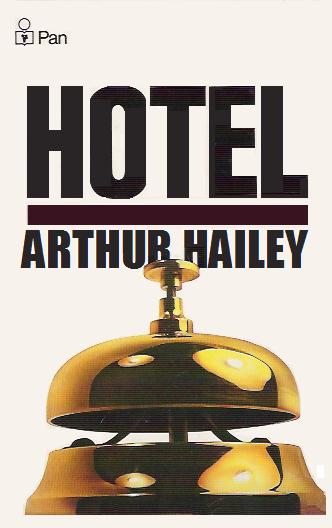
Hotel


By Arthur Hailey

A few days in the life of a privately-owned hotel in New Orleans in the early 1960s. Due to the ineptitude or indifference of the owner, an elderly man who lives at the hotel, it is experiencing difficulties including graft, criminal activity, and a dilapidated air conditioning system and faltering elevators. The owner is also in trouble since he can't find a lender who is willing to refinance the $2 million note on the hotel which is due in a few days. Meanwhile trouble is brewing among the guests with some upset about the hotel's refusal to allow a black man to stay at the hotel and a sneak thief at work in the hotel and a couple of guests who are guilty of a hit and run accident. Mix in employees on the take doing their best to enrich themselves at the hotel's expense, elderly employees who are set in their ways and maids walking out of the hotel with expensive beef steaks strapped to their thighs and you have a hotel in serious trouble.

This was a pretty good story if a little predictable. The characters are interesting even if the situations they find themselves in are not all that unexpected or different. I suppose at the time it was written the book was a lot more surprising and exciting than it is more than fifty years later. But it was still a good read with a nice bit of local color thrown in.

Wednesday, August 17, 2011

American Gods


By Neil Gaiman

There's a war brewing in America between the old gods who came to America with the immigrants from all over the world and the new gods of technology, entertainment, finance, etc. Caught in the middle of it all is Shadow, a guy with a history of bad luck who has just gotten out of prison and lost his wife in car crash.
He has been brought into the god war by Odin as a kind of protege of his and in the process of Odin's trying to organize his fellow old timers to take a stand against the pushy new American gods, Shadow finds himself up to his neck in various human incarnations of these old timey gods, helped out on occasion by his dead wife that Shadow accidentally reanimated when he tossed a magic coin into her grave.

This was a very interesting story with lots of old mythology and strange old gods and creepy new gods and poor Shadow trying to land on his feet in the midst of all the tumult. A very engrossing story and an enjoyable read.

Friday, August 12, 2011

Speech-less: Tales of a White House Survivor


By Matt Latimer

Even though Matt was raised by liberal, Democrat parents who, according to him, loved and treated him well, he turned against his upbringing and became a conservative Republican. He eventually ended up as a speechwriter to Donald Rumsfeld and then for George W. Bush in the White House. This book is the story of his experiences and his eventual disenchantment with politicians and their cronies.
As he discovered, a lot of the power in politics lies not with elected officials but with their handlers, their entourages. The handlers decide who gets in and who gets ignored, filtering even communications and leaving out anything that doesn't conform with their agenda.
After dealing with these types of people for years and seeing how much influence they wield over their patrons, Latimer has this to say about his party:

Professional Republicans no longer cared, it seemed, about supporting candidates who believed in our ideals. They were more interested in keeping their cushy houses in Georgetown or Cleveland Park, and their contracts with the revolving door of Republican bigwigs. It was all about being close to power for the sake of power. The Republican Party I believed in -- smaller, smarter government -- was unidentifiable. We'd thrown it all away amid excessive spending, corruption, dishonesty, and petty partisanship.

Of course, the same most likely holds true for the Democratic Party.

This was a really interesting book, often amusing, very informative and a true insider look at the real life of the talking heads of politics. I enjoyed it tremendously.

Thursday, July 28, 2011

Memories


By Mike McQuay

David Wolf finds his life invaded by a traveler from the future, a distant relative on a quest for an escaped murderer. The relative, Silv, is looking to stop Hersh, the killer, from changing the course of history as he has taken up residence in the mind of Napoleon Bonaparte of France. These travelers from the future do not travel in their physical bodies, but through the blood lines of their ancestors, taking over the minds and bodies and controlling them.
Wolf, whose descendant is Silv, is enlisted by her to travel back in time to France and attempt to reason with Hersch to return to his own time and stop meddling with the past. Wolf is a skilled psychiatrist who Silv hopes has the expertise to convince Hersh to go back to where he came from. While on his quest, Wolf will travel the blood lines of his distant ancestors, and in trying to persuade and understand Hersh, will come to an understanding of his own basic unhappiness and failures as a person.

Parts of this novel were really interesting and parts were like reading a history of Bonaparte. The parts about Wolf and his problems and about his relationship with Silv were very interesting and engrossing. But most of the story is about Wolf's and Silv's interactions with Bonaparte which I didn't enjoy. In fact, as I read further in the story, I found myself just skipping over those pages concerning Bonaparte. So I found the story half good and half boring.

Rally Round the Flag, Boys!


By Max Shulman

Is it a good thing or a bad thing that the U.S. Army wants to install a missile base on the outskirts of Putnam's Landing, Connecticut, a commuter community near New York City? Of course, there are those for and against. But young Lieut. Guido DiMaggio manages to sweet talk the locals, and, in short order, Putnam's Landing has a missile base. But that doesn't mean everything is all peachy-keen, especially when the soldiers start making time with the local maidens, putting their teenage rivals collective noses completely out of joint. Trouble is brewing and tempers are flaring and the Fourth of July is shaping up to be even more "explosive" than usual.

Although it is nominally about the conflict between the locals and the military, much of the story is taken up with Harry Bannerman and his wife, Grace. Grace is an enthusiastic participant in all things civic, while Harry is yearning for the good old days back in NYC before the arrival of the kids and the house and all the responsibilities he so much resents. His resentment and immaturity lead him into and ill-advised affair with a man-hungry local housewife who is looking for a new hubby to replace the current one.
Also featured are the aforementioned DiMaggio, who is enamored of a local girl, Maggie, a young school teacher who has recently been fired for teaching her second graders about sex, with helpful illustrations.
Parts of the story were mildly amusing and the big Fourth of July debacle at the of the story was really funny, but overall it really didn't appeal to me much.

The Year of Living Biblically


By A. J. Jacobs

A. J. Jacobs was raised as a secular Jew and, as an adult, described himself as an agnostic, not sure that God exists but also not sure God doesn't exist. So he went on a quest to follow the rules and advice given in the Bible, both the Old and New Testaments. In this way, maybe he would find God and, as an added bonus, he would write about his experience and hopefully make some money too.
No stranger to the Bible, he had an idea of what following all the laws of the Old Testament would entail. Still following the laws was quite a challenge, especially trying to follow all the advice given in books like Proverbs and Ecclesiastes. He let his beard grow, attached tassels to the "corners" of his clothes, bathed after ejaculating, wouldn't sit an any seat that had been occupied by a woman because of possibility of it being "unclean", smeared lamb's blood (actually lamb's juice because he couldn't find any where to buy the blood) on the door of his apartment, and so on, trying to follow the plethora of rules and admonishments in the Bible. Needless to say, it was not easy, not only for him but for his wife and young son, who, while not partaking of the experiment, were still affected by it. His wife found the rule about not sitting where a woman has sat who is menstruating so perturbing that she made sure to sit on every chair in the house so that they were all "unclean" and A. J. had to so out and buy himself a small, portable stool for his sole use.

This was quite a journey for the author and for the reader. Makes you wonder how anyone could ever fool themselves into thinking that it is truly possible to follow every law, rule and proverb in the bible. As the author found out, it is a hopeless task, as he repeatedly failed to meet his goals, especially in regard to controlling his thoughts, emotions and speech and remaining pure in mind, deed and body. Still it was fun and enlightening to read about his valiant attempt to live a pure and Biblically correct, godly life. Even though in the end, he went back to his regular life, the experience did affect him in profound and spiritual ways.

Monday, July 18, 2011

Life in a Medieval Castle


By Joseph and Frances Gies

A brief history of the medieval castle, with the main focus on castles in England. Explains their role as outposts, forts, military installations and as centers of government in their communities. Looks at the roles of the lord of the castle and at how the castle supported and also fed off the local populace. Goes into the knighthood and the relationship of the lords of the castles to the kingdom and how the castles functioned during times of war and rebellion. Concludes with a look at the decline of the castle system.

This was a pretty good book, especially in explaining how the castle functioned as a part of the community and in its role as a military installation, not only as a method of defense but often as a center of rebellion. The explanation of the relationship between the lord of the castle and the local people was very informative.
It was an interesting book, not at all difficult to read and with two handy glossaries in the back.

Tuesday, July 12, 2011

Heaven


By Ian Stewart and Jack Cohen

Second-Best Sailor lives on the planet of No Moon. As his name implies, he is a sailor. He is not a human, he is a squid-like creature, the male, free-swimming mate of the coral reef that lives in No Moon's ocean. His ancestors fled to No Moon to escape a deadly and implacable enemy. And now that enemy is once again after the denizens of No Moon and Second-Best Sailor is sent forth to discover a refuge his people can flee to before it is too late. For the enemy is nigh and they will demand complete submission to their will or they will destroy everyone.

This is a story of religion run amok. Similar to the Catholic Inquisition, the leaders of this religion believe that it is better for unbelievers to be tortured, even to death, if it means their souls are saved, although it hides its implacability from its adherents. And it has a huge carrot to offer to potential converts: a Heaven you don't have to die to enter. Converts' bodies are maintained for centuries by machines while their minds roam free in whatever fantasy they can imagine. It is a living bliss but it is based on a religion as cruel and intolerant as a religion can be, as one of their most fervent acolytes is shocked to discover as he rises higher in the church hierarchy.

I liked this story quite a bit, for the most part. I like reading about aliens, and this story abounds with aliens. What I didn't find very entertaining was the acolytes indoctrination into the Church's philosophy, that was pretty dull stuff. But other than that, it was a good read, full of aliens and adventures and lots of weird stuff and ideas, just what I enjoy most in a science fiction story.

Angry Housewives Eating Bon Bons


By Lorna Landvik

Thirty years in the lives of several women living in the same Minnesota neighborhood who share a love of books and who get together monthly for their book club, Angry Housewives Eating Bon Bons, a name they got from one of their husband, who said it rather snidely.

I enjoyed this book a lot. The characters are interesting, even if their problems are the usual: abuse, infidelity, homosexuality. Nothing very new or shocking in what the women are dealing with. But their stories are nevertheless very engaging and make for a good read.

Wednesday, July 06, 2011

The Light-Years Beneath My Feet


By Alan Dean Foster

A continuation of the story begun in Lost and Found, we find Marcus Walker and his companions stuck on the planet of the beings who rescued them from their imprisonment on the slave ship that stole them from their homes. Marcus has become a master chef and, when a representative from another planet desires to hire him, he and his friends figure why not? It just might be a step closer to getting home.
But it soon becomes apparent that his new employers have no desire to lose their unusual new chef and his strange and intriguing companions. So Marcus hatches a plot designed to spur his hosts into helping them on their way and he will soon be neck-deep in alien politics.

Gosh, this was such a boring story. All that political intrigue and warfare strategy was just a pain to read through. So disappointing after all the strangeness and fun of the first book. Also, Walker falls for an alien girl with a mouth like a sucker fish, three tails, arms like snakes and whose voice sounds like nails on a blackboard. Just unbelievable he could find that combination attractive. He might as well fall for his squid-like compatriot, Sque. All in all, just not a good read.

The Klone and I


By Danielle Steel

Stephanie's marriage ended suddenly when her husband of thirteen years declared one morning that he didn't love her, that he had never loved her. Of course, she asked him if there was someone else, which he denied. But of course there was.
All that didn't matter when Stephanie met Peter. Peter seemed like the ideal guy and it wasn't too long before it got serious. Then one day, Peter had to go on a business trip for a couple of weeks and he told Stephanie that he had a surprise for her to make up for his absence. The surprise turned out to be Paul.
Paul looked exactly like Peter and at first Stephanie assumed he was Peter pretending to be the wild, outrageous and just a bit crazy Paul. He wasn't. In fact, Paul wasn't even human, he was a bionic version of Peter, but with a few personality kinks that Peter didn't have. However, he was a lot of fun to be with and good with the kids and generous to a fault and Stephanie found herself falling hard for him. Then Peter returned from his trip and Stephanie loved being with him too. Now she has two lovers, one of which isn't really human, and can't make up her mind which one she wants.

This was an OK story. I don't know anything about bionics and in the story Paul has his head removed when he returns to the lab and his wiring replaced and yet, when reassembled, he is able to eat and drink and have sex and even catch cold. I mean, is he alive or is he a machine? It is never very clear in the story. I found that rather off-putting. Plus I just never believed any of it, not the bionic man, not Stephanie's dilemma, not Paul's ridiculous sexual acrobatics. It never really engaged me, I guess. It's an interesting idea but just not very well developed.

Sunday, July 03, 2011

The Legacy of Heorot


By Larry Niven, Jerry Pournelle, and Steven Barnes

Beowulf came to Heorot Hall to fight Grendel, the monster plaguing the people there. He was a professional monster killer and he soon took care of the terrible Grendel.
Like Beowulf, Cadmann Weyland is also a professional, a security expert with a military background. He alone of the 200 people settling on an island of the planet Tau Ceti Four sees a need for caution and defensive measures. But most of the settlers believe they have landed in a near paradise with a benign climate and no predators beyond a pterodactyl-like flying animal. They sneer at Cadmann's warnings and precautions and claim he is creating problems to justify his position.
But after months of calm, Cadmann is proven correct when a monster makes its presence known and many settlers die before it can be overcome.
Once this fierce predator is revealed, the settlers proceed to hunt down and destroy them all. What they don't know is that they have disturbed their island's ecosystem and that, as far as monsters go, they ain't seen nothing yet...

This was an OK story, typical science fiction horror story. It's not a genre I usually read or enjoy. It's a lot like the movie Alien, brave humans struggling to outwit and survive a terrible and strange beast bent on killing them all.

Monday, June 27, 2011

Gentle People: A Case Study of Rockport Colony Hutterites


By Joanita Kant

What is a Hutterite? Well, they are kind of like the Amish, but with trucks, computers and tractors. They embrace a similar religious lifestyle but they also are not afraid of modern devices or conveniences. They live in a commune and they dress different and they keep themselves separate from the rest of society because they wish to keep their focus on leading a Christian life, as they define it.
They came to the upper Midwestern United States to escape military conscription. They are pacifist and refuse to serve in the military.
Although they came to America from a region under Russian domination in the nineteenth century, they are not Russians and they are not really Germans, although they speak a dialect of German. They spent so many decades, centuries, even, wandering Europe, trying to find a safe haven, that they became pretty mixed with other Europeans. Kind of like a lot of people in the upper Midwest.
Anyway, they came to America hoping for religious freedom and tolerance and once again were disappointed. Other folks viewed them with a leery eye and their refusal to serve in the military became a very sore point during World War I, so sore, indeed, that most of the Hutterites left America and migrated to Canada. But not all, and later some of them returned to the places they left behind. And since the U.S. military has developed a program of alternate service for conscientious objectors, maybe they feel more secure back in America.
Still, they are different, the women in their long flowery dresses and head scarves, and the men with the black pants and suspenders and the plaid shirts. Religious fanatics, that's for sure, but unlike those Middle Eastern religious fanatics who also demand their adherents conform to an archaic dress code, Hutterites are non-violent pacifists. It's is a good thing to know, considering that the average Hutterite family has about seven kids. Which means we can expect to see a lot more of these oddly-dressed throwbacks to the nineteenth century from now on.

This was a very informative little book about the Hutterites in South Dakota. I see these people almost every time I go to Walmart. I knew they were some old-timey religious group, similar to the Amish but not Amish, since they don't arrive at Walmart in a horse and buggy but in large, multi-passenger vans and pickup trucks. But other than that, I didn't really know anything about them, except that they all live together in what is known as a colony. I also didn't know how widespread the Hutterites are but they have colonies all over the upper Midwest in Minnesota, North Dakota, South Dakota and Montana. And, of course, Canada, the land they fled to to escape persecution in the United States. Yes, the United States persecuted them, they even have two martyrs who died in federal custody where they were being held for refusing to serve in the military in World War I and these two martyrs are buried in Rockport Colony in South Dakota.
So if you too have noticed these odd-looking people and have wondered about them, this book is an easy primer with a short history of the Hutterites and of their society today. And at only 119 pages, it's a breeze to read.

Wednesday, June 22, 2011

A Transatlantic Tunnel, Hurrah!


By Harry Harrison

In an alternate history, where the American Revolution failed and George Washington was executed as traitor, his distant descendant Augustine Washington is one of the chief engineers in charge of building a transatlantic tunnel between Europe and North America. If he succeeds, he will redeem his family name from the disgrace brought on it by his traitor ancestor. And win the hand of the woman he has loved for many hopeless years.

The genre of this story is a branch of science fiction known as steampunk, a kind of Victorian take on modern times. Wikipedia describes the book thus: "Harry Harrison's novel A Transatlantic Tunnel, Hurrah! (1973) portrays a British Empire of an alternate 1973, full of atomic locomotives, coal-powered flying boats, ornate submarines, and Victorian dialogue." And that is pretty much what it is. If you like descriptions of mechanical devices and engineering exploits or you like reading tales of alternate history, this would be the book for you. But if you don't, then pass on by. It is heavy on engineering but pretty short on anything else to engage the reader. The conspiracy plot is very lean and the romance is practically nonexistent. I managed to finish reading it and it was a chore to get through, even skipping most of the engineering babble.
I generally avoid stories of alternate history as I usually find them very boring but the reviews I read about this one portrayed it as being funny and humorous, which is my weak spot. I love to read a funny story. But once again the reviews were misleading. I didn't find this story to be the least bit funny. I kept waiting for the funny part but it never showed up. Maybe the funny bit is supposed to be the Victorian machines, but since I am not mechanically-minded, all that mechanical engineering stuff meant nothing to me.
It's probably a good story but I was the wrong audience. For that reason, even though I personally didn't like it, I will rate it a fair read.

Farm Fatale


By Wendy Holden

Rosie has always dreamed of living in the country. She has been bugging her live-in boyfriend, Mark, to leave London and move to a small rural community but he is not interested. That is until it occurs to Mark that rural doings might make an interesting newspaper column and Mark's boss agrees to the idea. So Rosie and Mark start scouring the countryside for a small house in their very limited price range. After much fruitless searching they find one in the village of Eight Mile Bottom.
Meanwhile, Samantha, the wife of wealthy businessman Guy, has decided that she too wants to leave the big city for the charms of small town living. Samantha, who is socially ambitious, sees herself becoming the grand dame of the rural set but is unable to budge Guy, until Guy has a nearly fatal heart attack and is forced into semi-retirement. As Samantha argues, the quiet of a rural village is just what Guy needs during his recovery.
So two urban couples both end up, at opposite ends of the economic strata, in the small town of Eight Mile Bottom. And their lives will never be the same.

This was an OK story. Like most romances, it was pretty predictable. It quickly become apparent that our two couples are both mismatched. Samantha is selfish, ambitious and uncaring and Mark is self-indulgent and whiny. Both Guy and Rosie will figure out that they are better off without their current partners. Both Samantha and Mark are in for rude awakenings. And quiet, self-effacing Rosie ends up on top.

Like a Hole in the Head


By Jen Banbury

Jill is on the run from life. She nursed her dying mother and it took a terrible toll on Jill. So now she is OK with just getting by, living in her little apartment, working at her undemanding job as a clerk in a used book store. It's easy, it's quiet and it lets her just float through her days. Until that little man came into the store with a rare book to sell.
Normally she would summon her boss to handle such a transaction. But the man only wanted a few dollars for the book which Jill figured was worth at least $400. So she bought the book herself, intending to turn around and sell it for a huge profit. But then it turns out that the book was stolen, not once but twice. And the people it was stolen from are not nice. They really want that book back and will do whatever they have to to get it, up to and including torture and murder. Jill's quiet little world is about to turn really ugly and she will be in for the struggle of her life. And in the process maybe she will find out that life really is worth living.

This was an OK story. In the beginning, it was rather amusing. But it got really nasty and mean and just plain gruesome. And the ending was kind of disappointing and not very satisfying. But I did enjoy the humorous bits.

Animal Dreams


By Barbara Kingsolver

Codi's mother died shortly after giving birth to Codi's little sister, Hallie. Their father, Homer, had to raise his two little girls on his own. One thing that Codi never really understood about her father was how very much he loved his children. He wasn't a man for showing or telling his feelings. As a consequence, Codi grew up feeling alone and unloved; her closest relationship was with her little sister.
Homer was a physician in a small Arizona town. Previously the economy of the town was based on the local gold mine but after that petered out the towns people planted orchards and the economy was then centered on agriculture.
Codi and Hallie both moved away when they grew up. Hallie became an agronomist and Codi studied medicine but quit during the last few months of her residency. After that she just drifted from job to job. Hallie went to Nicaragua to help the peasants improve their farming practices. She was killed during the unrest there.
Codi finally ended up back home to keep an eye on her father, who had recently been diagnosed with Alzheimer's. She took a job teaching biology at the high school and it was during a class field trip that she and her students discovered that the river that was used to irrigate the orchards was seriously polluted with chemical run off from the old mine tailings, thus threatening the little towns very survival.
But the town's environmental problems are only part of the story. Mainly it is about Codi's struggle to understand herself and why she let life overwhelm her. Her time back home is her opportunity to clear up several misunderstanding she had about her childhood and realize that maybe things weren't as dire as she remembered.

This was a pretty good story. Codi is one of those people who likes to make mountains out of molehills and all the drama of her childhood was not nearly as terrible as she remembered. Her dad's weird ways were all based in love and in logic and he did the best he knew how as a man trying to raise two daughters on his own. He was standoffish and withdrawn, but not from meanness. As Codi reconnects with her neighbors and relatives she begins to get a better picture of what her childhood was really like and discovers that you really can go home again.

Wednesday, June 01, 2011

The Chapman Report


By Irving Wallace

Dr Chapman and his team of researchers is traveling the country interviewing married women about their sex lives in preparation for publishing a book on the subject. Their last stop is The Briars, an upscale Los Angeles community.
In the story, we get to meet a sampling of the ladies to be interviewed. There's the ambitious career woman, and the adulteress, the bored intellectual, the frigid one, the slut and daddy's little girl. Each begins to examine their own lives after being exposed to the searching and revealing questions of the sex survey.

This was an OK story if a little predictable. It wasn't to hard to figure out that one woman would end up raped, one would end up dead, and that the frigid one just needed a good screw to straighten her out. The premise of the sex survey promises to be titillating but actually, the sex survey part of the story was rather dull. It was the lives of the women themselves that held my interest, not the obsessed professor and his team of researchers. But even though it was predictable and some parts kind of boring, all in all I enjoyed it.